
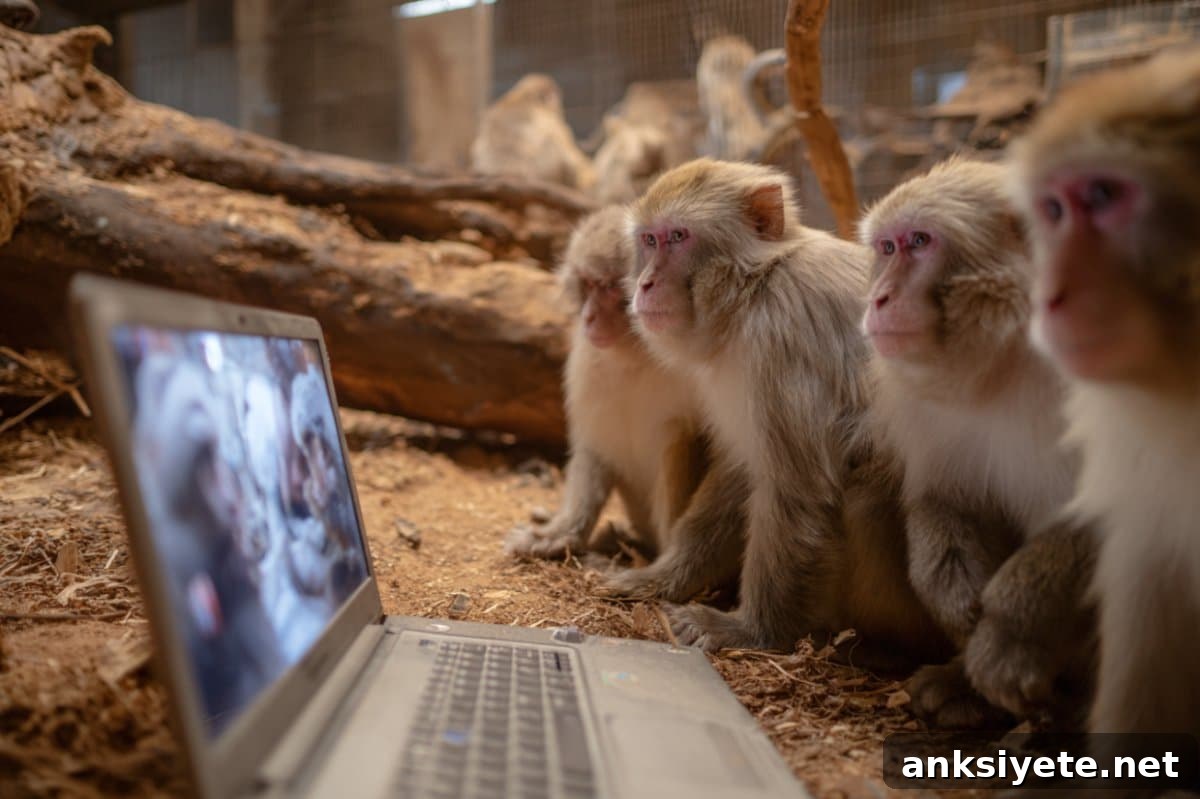
Summary: A new study shows that long-tailed macaques, like humans, pay the most attention to videos that show social conflict and familiar group members. Researchers presented short clips of monkeys fighting, grooming, running, or sitting and measured how long the macaques watched and how they reacted. Aggressive interactions attracted the most viewing time, and monkeys watched members of their own group more than strangers.
The results suggest primates share an evolved tendency to monitor social dynamics. Individual traits such as dominance rank and stress sensitivity also shaped how closely animals attended to the clips, offering insight into how personality and social position influence attention in group-living species.
Key facts:
- Conflict focus: Macaques watched aggression-focused videos the longest.
- Familiar faces: They paid more attention to clips showing group members than to clips of strangers.
- Personality and rank: Lower-ranking, less aggressive monkeys monitored the videos more closely than dominant individuals; stress-sensitive animals showed different patterns of attention.
Source: Ohio State University
What kinds of videos capture a monkey’s attention?
A recent experiment with long-tailed macaques indicates these primates are especially drawn to footage that helps them understand social relationships—not unlike human viewers who often gravitate toward dramatic or familiar content. The study was led by Elisabeth H.M. Sterck of Utrecht University and published in the journal Animal Cognition. Brad Bushman of Ohio State University is a co-author.
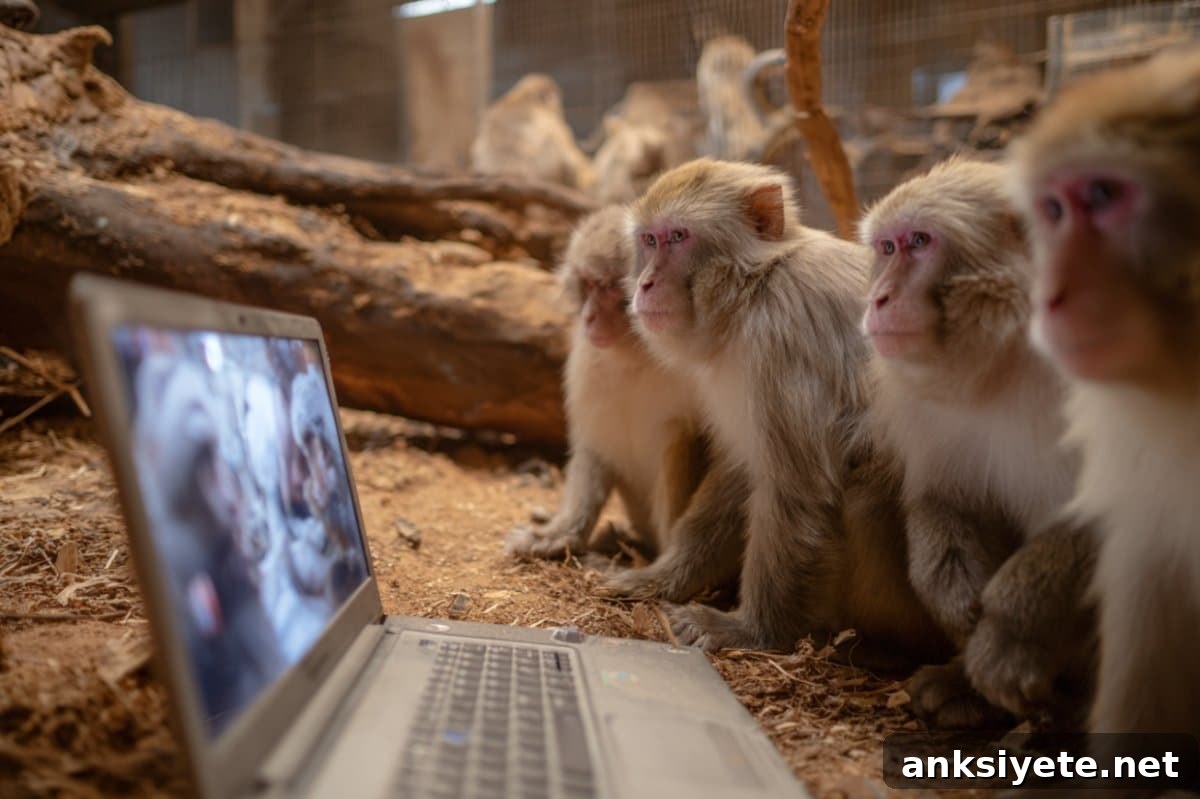
The team tested 28 macaques housed at a primate research facility in the Netherlands. Each animal viewed a series of two-minute videos over multiple sessions. The clips featured monkeys either from the viewer’s own social group or from an unfamiliar group, and each clip showed one of four behaviors: aggressive interaction, grooming, running, or sitting quietly.
Observers measured the time each macaque looked directly at the screen and recorded behavioral responses, such as movement and signs of stress. This allowed the researchers to compare attention levels across social content, familiarity, and individual characteristics.
Across conditions, videos showing aggression were most effective at capturing attention. Clips of running behavior attracted the next highest level of interest, while grooming and sitting scenes held attention the least. This pattern mirrors human preferences for dramatic or conflict-driven media and suggests an adaptive sensitivity to potentially threatening or informative social events.
Macaques also invested more attention in footage of group members than in footage of strangers. The researchers interpret this as evidence that social monitoring within one’s own group is especially valuable: knowing the relationships, rivals, and allies in your group has direct consequences for daily life and survival.
Individual differences mattered as well. Lower-ranking monkeys and those described as less aggressive were more attentive to the videos than dominant individuals. The authors suggest that high-ranking animals may feel more secure and therefore need to monitor others less closely, whereas subordinate animals benefit from paying close attention to social interactions that could threaten them.
Animals with higher baseline stress or reactivity paid less attention to group members than calmer animals. In some cases younger monkeys displayed more self-directed behaviors (a sign of arousal or anxiety) when viewing strangers, whereas experienced or less stressed individuals did not show the same change.
The macaques participated voluntarily: each enclosure contained a corridor used for cognitive testing with four compartments where individuals could watch videos on a laptop. Subjects entered on their own and were temporarily isolated from groupmates during the two-minute presentations, which helped ensure measured reactions reflected each individual’s interest and temperament.
Because macaques have visual systems similar to humans and are naturally attentive to moving images, the researchers emphasize that short exposures to socially relevant media reliably reveal what types of social information animals prioritize. The parallels with human preferences for conflict and familiar actors in media point to shared evolutionary pressures that favor attention to social dynamics.
The paper’s co-authors from Utrecht University include Sophie Kamp, Ive Rouart, Lisette van den Berg, Dian Zijlmans, and Tom Roth. The findings contribute to our understanding of primate social cognition by showing how context, familiarity, dominance, and personality interact to shape attention to social information.
About this animal psychology research news
Author: Jeff Grabmeier
Source: Ohio State University
Contact: Jeff Grabmeier – Ohio State University
Image: Image credited to Neuroscience News
Original Research: Open access. “Reactions to social videos in long-tailed macaques” by Elisabeth H.M. Sterck et al., Animal Cognition. DOI: 10.1007/s10071-025-01970-1
Abstract
Reactions to social videos in long-tailed macaques
Animals can obtain vital social information by observing interactions among conspecifics. The content of those interactions—whether familiar or unfamiliar individuals are involved, and whether the interaction is aggressive or affiliative—affects attention, movement, and stress responses. Individual characteristics may also shape these reactions.
In this study we presented short video fragments of running, conflict, sitting, and grooming involving either group members or strangers to captive long-tailed macaques living in multi-generational groups. We measured visual attention and behavioral responses and related these to each individual’s social behavior and self-directed behavior in their social group.
Subjects attended more to videos of group members than to those of strangers, particularly subordinate individuals and those less sensitive to stress when observing aggression. Self-directed behavior increased in younger animals when they viewed strangers, and in those with high baseline self-directed behavior and limited grooming. Context mattered as well: active and aggressive content drew more attention than sitting or grooming scenes.
Overall, macaques in multi-generational groups show a strong interest in gathering social information about group members, and this attentional pattern is modulated by social role and individual coping style.