
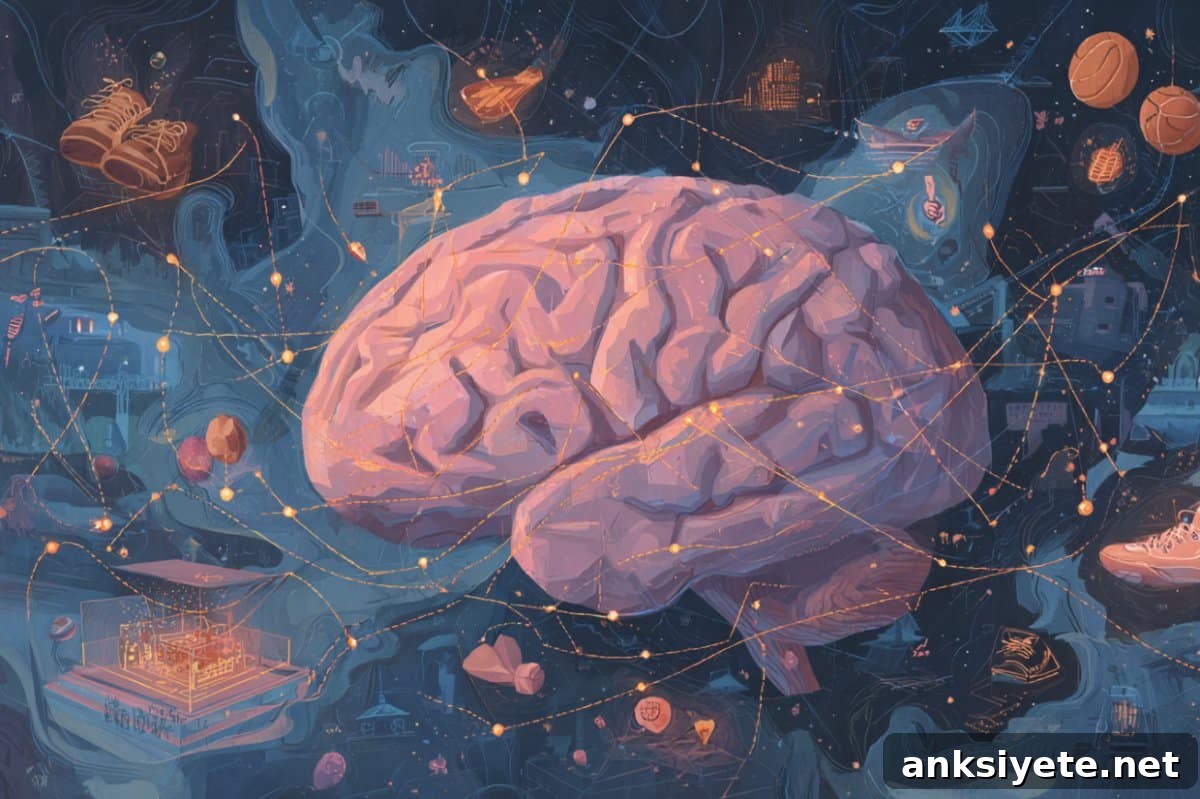
Summary: Memory helps us interpret the present by retrieving past experiences that match either surface features (same places, people, or sensations) or deeper conceptual patterns (similar intentions, problems, or actions). New research from the University of Geneva shows that when a familiar mental category—such as “excuses,” “conflicts,” or “superstition”—is available, memory prioritizes these abstract, structural links over superficial cues. When no such category is present, memory tends to rely on surface-level similarities.
This finding clarifies when and why memory draws on meaningful patterns, with direct implications for teaching methods that aim to develop conceptual thinking and improve the transfer of knowledge across different contexts.
Key Facts:
- Concept Over Context: When a mental category is available, retrieval favors structural, conceptual similarities.
- Surface Default: Absent such categories, memory defaults to surface cues like shared settings or people.
- Educational Impact: Introducing mental categories in instruction can help students apply concepts across varied examples.
Source: University of Geneva
If memories are a black box of our past, they also illuminate the present: we constantly map current situations to prior experiences to give them meaning. But what determines whether a past event is retrieved because it shares visible details with a present situation or because it shares an underlying structure? A research team at UNIGE’s IDEA lab (Instruction, Development, Education and Learning) tackled this question by reviewing decades of experimental work and proposing a conceptual model that explains when memory favors one kind of cue over another.
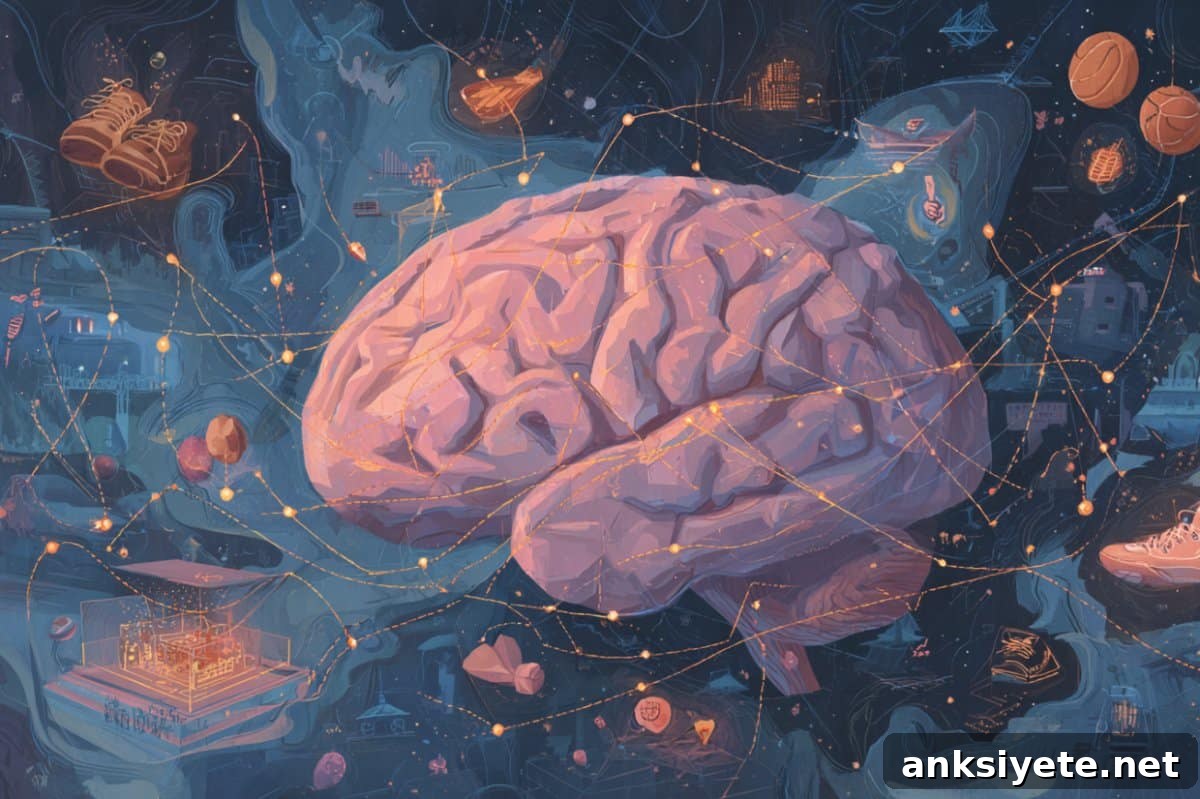
The team’s review indicates that the availability of familiar mental categories strongly shapes how situations are encoded and later retrieved. When people encode an event with a specific category in mind—say, “an excuse” or “a conflict”—they are more likely to later recall episodes that match that category’s structure, even if surface details differ. When no relevant category is accessible, retrieval is more likely to be driven by visible similarities such as the same location or the same people involved.
A classic example is Proust’s madeleine: a sensory cue revives a memory because the present sensation closely matches a past one. By contrast, structural retrieval would involve recalling a different episode that shares the same function or intent—like remembering a time you used a health complaint as an excuse to skip an event when someone declines an invitation for an ostensibly unrelated reason.
Resolving a long-standing debate
The question of whether retrieval is guided more by surface or structural similarities has generated long-standing debate. The UNIGE team’s analysis of around a hundred studies published over fifty years provides a reconciliatory view: the dominant determinant of analogical retrieval is how a situation was encoded, and encoding itself is influenced by the mental categories available at the time of experience.
“Structural memories reflect a higher level of abstraction—and therefore a deeper understanding,” says Lucas Raynal, postdoctoral researcher with the IDEA team and lead author of the study. Emmanuel Sander, full professor and lead researcher, adds that the literature review allowed the team to identify consistent patterns and build a psychological model explaining when memory favors structural over surface cues.
Their conceptual model, called ADAPTER (As Deep As Possible Target Encoding and Retrieval), proposes that available categories determine the level of abstraction at encoding and, in turn, the type of retrieval that will be accessible. The model also accounts for how encoding contexts and the specifics of a target description influence the likelihood of relational (structural) encoding and retrieval.
The ADAPTER framework unifies prior findings and generates testable predictions. It also offers novel perspectives on how structurally driven retrievals develop over time and suggests practical teaching interventions to foster spontaneous transfer—helping learners apply concepts across superficially different situations.
For example, students who learn a mathematical concept only within one contextual story (a bakery problem) may struggle to recognize the same underlying calculation in a very different story (a sports scenario). Teaching that explicitly introduces the relevant mental category or highlights relational structure can promote deeper encoding and improve transfer across contexts.
About this memory research news
Author: Antoine Guenot
Source: University of Geneva
Contact: Antoine Guenot – University of Geneva
Image: The image is credited to Neuroscience News
Original Research: Closed access.
“ADAPTER: A Conceptual Model of Category-Driven Analogical Retrieval” by Emmanuel Sander et al. Wiley Interdisciplinary Reviews: Cognitive Science
Abstract
ADAPTER: A Conceptual Model of Category-Driven Analogical Retrieval
Research on analogy-making agrees that mapping supports finding structural similarities between situations. But whether memory retrieval is guided more by surface or structural similarities has remained controversial. This contribution addresses that controversy by reviewing experimental evidence showing that the determinants of analogical retrieval depend largely on how situations are encoded—an encoding shaped by preexisting categories available to the individual.
From this review, the ADAPTER model is proposed: available categories influence the depth of target encoding and therefore the type of retrieval that will be available. The model also incorporates the roles of encoding context and the descriptive features of target events in determining the likelihood of relational encoding and subsequent retrieval.
ADAPTER offers a unified account that clarifies prior findings and generates empirical predictions for future research. The framework further sheds light on the developmental trajectory of structural retrievals and points to educational interventions designed to promote conceptual transfer and spontaneous analogical reasoning.