
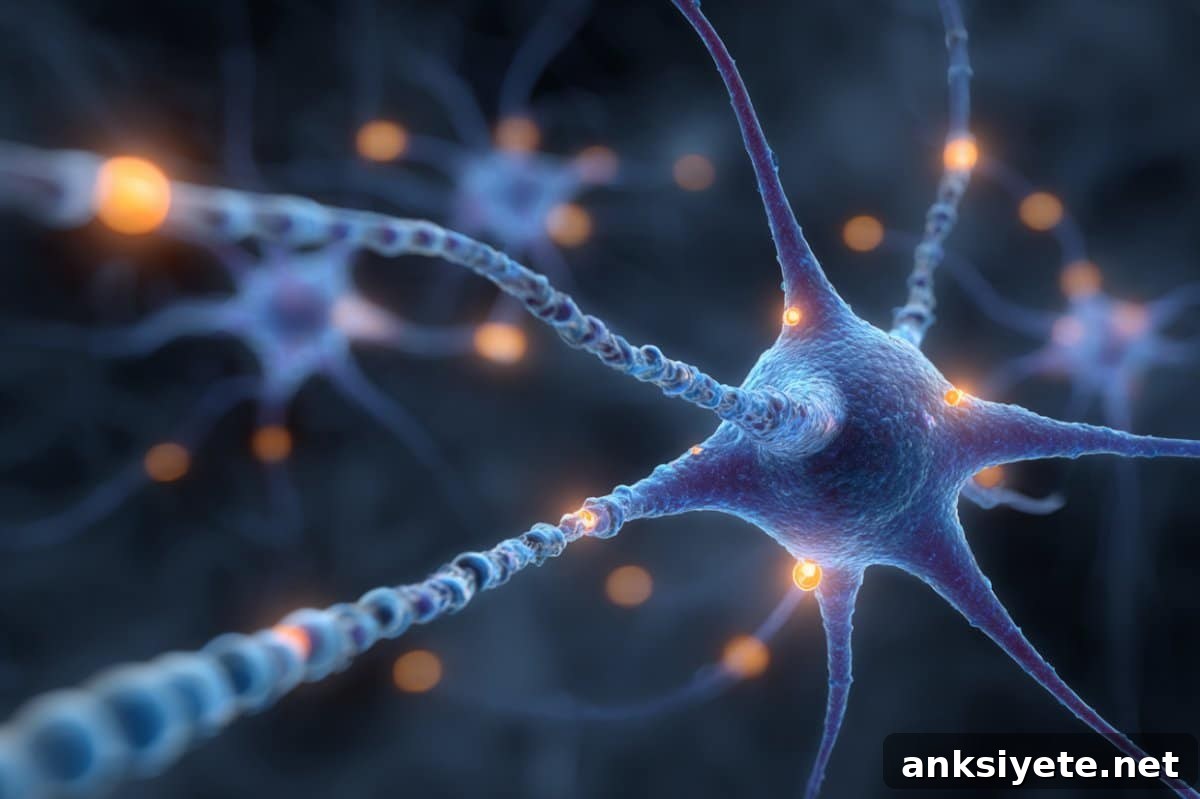
Summary: New research overturns a long-held view of how dopamine communicates in the brain, showing it signals with remarkable spatial and temporal precision rather than by broadly diffusing across large regions. Scientists have identified localized dopamine “hotspots” that deliver targeted, time-sensitive messages to specific branches of nerve cells, enabling highly specific modulation of neural activity.
This study describes a dual signaling system in which dopamine can act both locally—fine-tuning individual synapses and dendritic branches—and more globally—coordinating slower, large-scale changes that influence behaviors such as movement, motivation, decision-making and learning. The discovery has important implications for understanding and treating conditions tied to dopamine dysfunction, including Parkinson’s disease, addiction, schizophrenia, ADHD and depression, by shifting attention from simply restoring overall dopamine levels to restoring its precise spatial and temporal patterns.
Key facts:
- Hotspot signaling: Dopamine is released in concentrated, localized sites rather than uniformly flooding broad brain areas.
- Dual function: Localized, rapid dopamine signals coexist with broader, slower signals, allowing both microcircuit tuning and large-scale behavioral coordination.
- Therapeutic potential: Targeting the precision of dopamine signaling may open new strategies for treating dopamine-related neurological and psychiatric disorders.
Source: University of Colorado
A new study from the University of Colorado Anschutz Medical Campus challenges decades of neuroscience assumptions by demonstrating that dopamine—long thought to act mainly as a diffuse chemical broadcast—can transmit highly localized, temporally precise signals in the brain.
For decades, dopamine has often been described as a neuromodulator that broadly influences brain regions involved in reward, motivation and movement. The new work shows that, in addition to those broader actions, dopamine release can be spatially and temporally discrete, functioning more like a targeted delivery system that sends specific messages to particular dendritic branches and synapses.
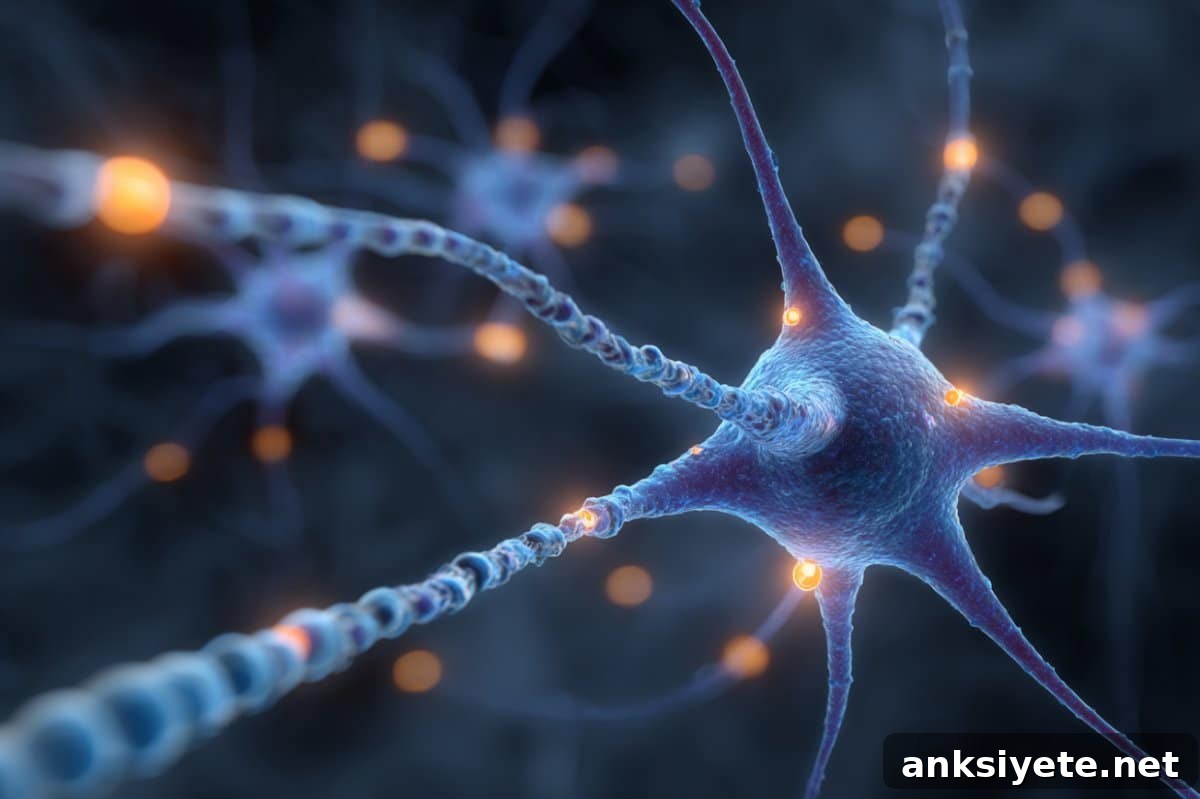
Published in Science, the study’s authors describe dopamine release as occurring in concentrated hotspots that produce rapid, localized responses in nearby neurons, while separate, broader dopamine signals generate slower, more diffuse effects. This arrangement enables a single neuromodulator to regulate both individual synaptic events and complex behaviors across neural circuits.
“Our findings show that dopamine signaling in the brain is far more complex and nuanced than previously recognized,” said Christopher Ford, PhD, a professor at the University of Colorado School of Medicine and lead author of the study. He emphasized that this work provides an initial framework for how dopamine can regulate a wide variety of behaviors through distinct signaling modes.
Using advanced two-photon imaging and whole-cell electrophysiology, the research team measured spatiotemporal properties of dopamine transmission onto striatal neurons. They observed that sparse activation of dopamine release sites produced spatially restricted signals that triggered D2 receptor–mediated responses in discrete regions of dendritic trees. Meanwhile, different downstream intracellular signaling pathways showed distinct spatial and temporal dynamics, suggesting parallel mechanisms for decoding dopamine input at the subcellular level.
The study proposes that membrane-delimited Gβγ signaling operates alongside intracellular second messenger pathways but at different spatial and temporal scales. This parallel organization could allow striatal neurons to interpret and respond to multiple types of dopamine signals simultaneously, providing precise computational control over basal ganglia–dependent behaviors.
Because dopamine dysfunction underlies many neurological and psychiatric illnesses, these findings may change how researchers and clinicians approach treatment. Current therapies typically aim to raise or stabilize global dopamine levels, but the new evidence suggests that restoring the correct spatial and temporal patterns of dopamine release could be equally or more important for improving function and outcomes.
“We are only beginning to understand how specific alterations in dopamine signaling contribute to disorders such as Parkinson’s disease, schizophrenia and addiction,” Ford said. “Further work is essential to determine how these precise signaling patterns are disrupted across conditions and to translate that knowledge into more targeted, effective interventions.”
About this dopamine and neuroscience research news
Author: Kelsea Pieters ([email protected])
Source: University of Colorado
Contact: Kelsea Pieters – University of Colorado
Image: Image credited to Neuroscience News
Original Research: Closed access. “Discrete spatiotemporal encoding of striatal dopamine transmission” by Christopher Ford et al., Science. DOI reference: 10.1126/science.adp9833 (as cited by the authors).
Abstract
Discrete spatiotemporal encoding of striatal dopamine transmission
Dopamine transmission critically regulates diverse, basal ganglia–dependent behaviors by activating distinct subtypes of G protein–coupled receptors. While spatially broad dopamine release has been well described, the subcellular impact of dopamine on striatal function remained unclear. Using two-photon imaging and whole-cell electrophysiology, the study characterized the spatiotemporal features of dopamine transmission onto striatal indirect pathway spiny projection neurons. Sparse activation of dopamine release sites produced localized dopamine signals that elicited spatially discrete, D2 receptor–mediated responses across dendrites. The spatiotemporal dynamics of dopamine receptor signaling varied among downstream intracellular pathways. The authors propose that membrane-delimited Gβγ signaling operates in parallel with intracellular second messenger cascades on different spatial and temporal scales, providing a mechanism for precise decoding of dopamine signals by striatal neurons.