
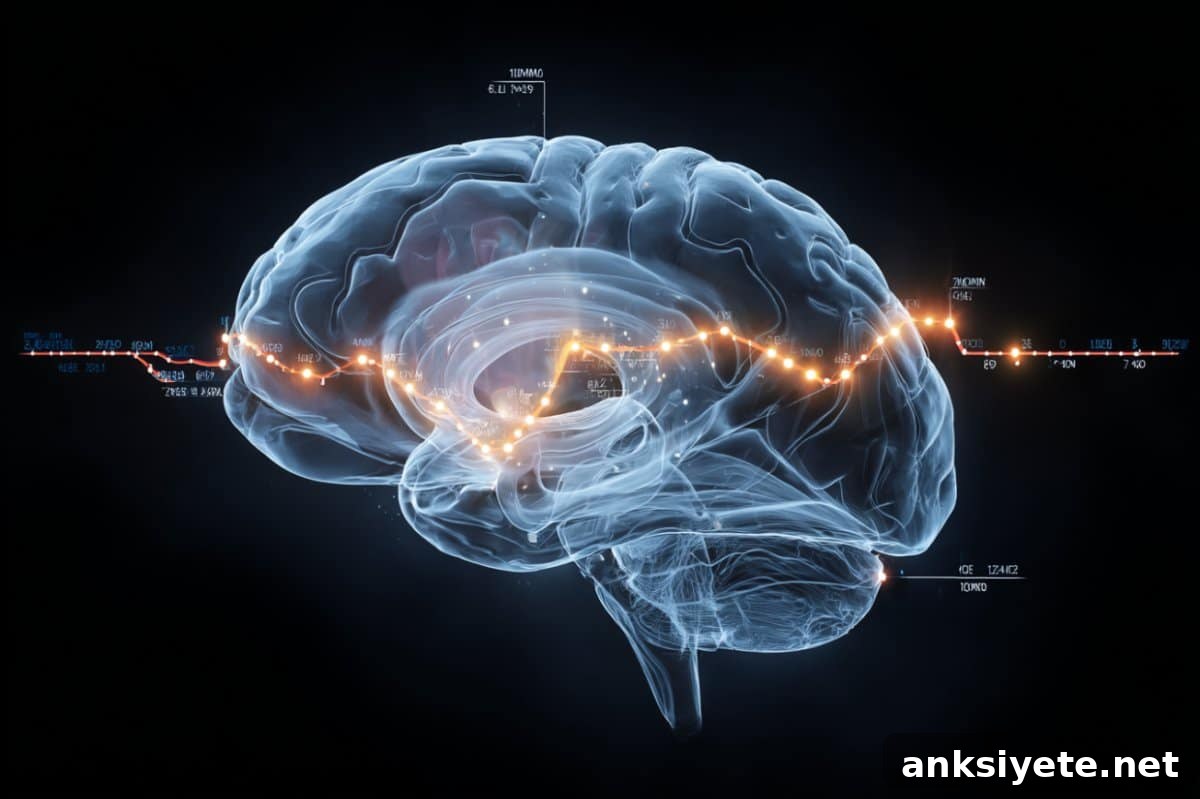
Summary: Our brain does more than record the passage of time—it segments and organizes experience into distinct, retrievable moments. New research from the Kavli Institute for Systems Neuroscience at NTNU shows that neurons in the lateral entorhinal cortex (LEC) produce sudden, distinctive shifts in activity when meaningful events occur. These neural “bookmarks” separate the continuous flow of sensory input into ordered episodes, enriching memory and improving recall.
Those abrupt changes in LEC activity divide perception into individual events, so our lives are not just a blur but a chain of meaningful moments. The same system appears to break down early in Alzheimer’s disease, offering an explanation for the disorder’s characteristic problems with memory and event sequencing.
Key Facts:
- Neurons in the lateral entorhinal cortex produce unique, rapid changes in activity to mark important events.
- These neural bookmarks allow the brain to segment and order experiences for storage and retrieval.
- Alzheimer’s disease often disrupts the LEC early, impairing the brain’s ability to organize memories in time.
Source: NTNU
Our brain doesn’t merely register time – it structures it, research from the Kavli Institute for Systems Neuroscience shows.
The study, led by Nobel Laureates May-Britt and Edvard Moser and colleagues, builds on the group’s prior discoveries about the brain’s spatial map. Here they describe a mechanism by which the brain weaves time into a coherent sequence of episodes: the lateral entorhinal cortex slowly drifts through unique patterns of population activity and makes rapid, event-linked jumps that act like bookmarks for memories.
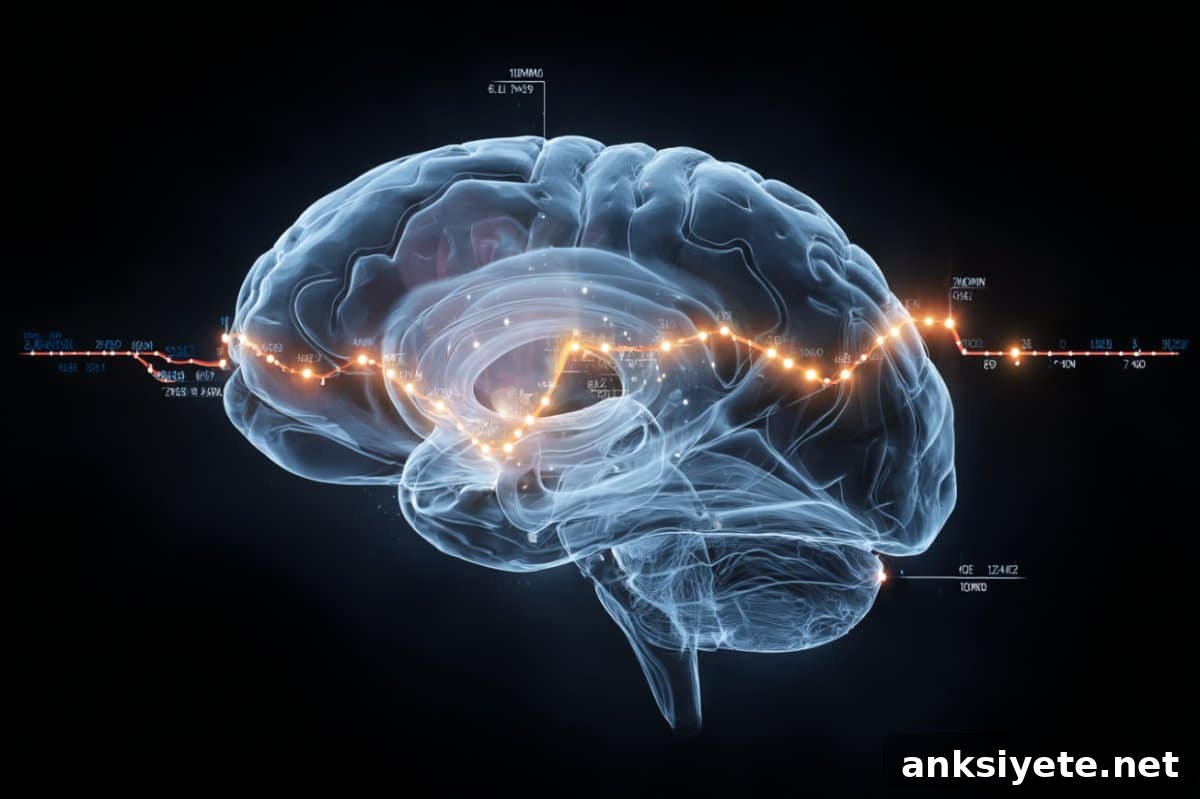
We live amid a steady flow of sensory information. How does the brain select which parts of that flow become lasting memories? The new study, published in Science, points to a combined process of continuous drift and discrete jumps within the LEC.
A signal that never repeats
Using high-density Neuropixels probes, the team recorded activity from thousands of neurons in the lateral entorhinal cortex. They found that population activity in this region slowly drifts along a trajectory that does not repeat—even across different behaviors and during sleep. This drift appears intrinsic to the LEC network rather than driven by external stimuli.
Edvard Moser explains that the pattern behaves like an internal clock that continuously changes its state. The drift provides a moving temporal backdrop against which significant moments are marked.
The brain creates bookmarks
When a meaningful or unexpected event occurs—such as a reward, a change of place, or a surprise—the drifting LEC signal makes a sudden jump. These jumps occur at the start and end of experiences and give each episode a distinctive neural signature.
The researchers use the analogy of beads on a string to describe this process: the underlying string represents the drifting sense of time, and each jump lifts the string and attaches a marker, like a paperclip, to denote the beginning of a new event. The string then continues to drift while additional events are threaded in the correct sequence, forming an ordered series of memories.
First author Ben Kanter notes that each jump produces a unique “barcode” across the population of LEC cells. Those barcodes timestamp experiences, making it possible to store and later retrieve individual episodes from the continuous stream of perception.
How time shapes memory
The study helps explain why our subjective sense of time differs between lived experience and later recollection. A monotonous hour can feel long while it happens but leaves few distinct marks in memory, so it seems short in retrospect. By contrast, a busy, eventful period may pass quickly yet leave many rich memory traces that expand its apparent duration in hindsight.
May-Britt Moser emphasizes that the brain does not directly measure elapsed time; it measures and encodes experiences. The density of stored events and details determines how long a period feels when we remember it.
An important piece in the Alzheimer’s puzzle
These findings have direct relevance to dementia research. Alzheimer’s disease often begins in the lateral entorhinal cortex, and degeneration in this region can undermine the brain’s ability to organize memories and preserve event order.
When LEC cells deteriorate, the internal thread that links events can be severed, causing memories to lose their sequence and context. Understanding the healthy mechanisms of time organization could lead to earlier detection of Alzheimer’s and interventions that protect LEC neurons before extensive damage occurs.
Researchers at the K.G. Jebsen Centre for Alzheimer’s Disease are collaborating with clinical partners to translate these insights into biomarkers and diagnostic tools that might reveal disease onset earlier than current methods allow.
The study was carried out by Ben Kanter (first author), Christine Marie Lykken, Ignacio Polti, May-Britt Moser (senior author), and Edvard Moser (senior author) from the Moser Group at the Kavli Institute for Systems Neuroscience, NTNU.
A signal that drifts and jumps
Key experimental observations include:
- LEC population activity drifts continuously along a one-dimensional manifold during awake behavior and during REM sleep, without repeating patterns.
- When meaningful or surprising events occur, the LEC signal shifts suddenly: neural activity spikes at the start of a new event and then returns to the drifting baseline.
- Those shifts are produced by coordinated responses of distinct ensembles of LEC neurons, creating unique neural patterns that timestamp experiences and enable memory segmentation and retrieval.
About this neuroscience research news
Author: Rita Elmkvist Nilsen
Source: NTNU
Contact: Rita Elmkvist Nilsen – NTNU
Image: The image is credited to Neuroscience News
Original Research: Closed access. “Event structure sculpts neural population dynamics in the lateral entorhinal cortex” by May-Britt Moser et al. Science
Abstract
Event structure sculpts neural population dynamics in the lateral entorhinal cortex
INTRODUCTION
Our experience unfolds as a stream of events that can later be reconstructed in rich episodic detail. The hippocampal formation, critical for episodic memory, shows slow changes in neural activity over time, most prominently in the lateral entorhinal cortex (LEC). How this ongoing drift contributes to temporal organization of episodic memories remained unclear.
RATIONALE
Events are segmented across multiple timescales, from seconds to minutes and longer. Event boundaries—transitions such as changes in location, setting, or behavior—affect memory for duration and order. To identify neural mechanisms that segment experience and organize events in time, the team used Neuropixels probes to record from large numbers of LEC neurons in freely moving rats across diverse behaviors and states.
RESULTS
LEC population activity drifted continuously along a one-dimensional manifold during foraging, while medial entorhinal cortex (MEC) and hippocampal CA1 showed minimal drift. LEC dynamics during REM sleep closely matched foraging, indicating drift is an intrinsic network property. During wakefulness, abrupt shifts at event boundaries segmented neural activity into discrete units. The LEC encoded events across multiple timescales by adding orthogonal trajectories to the drift. Minute-scale variability in firing rates across many neurons explained drift, while synchronous ensemble responses produced boundary-driven shifts that timestamped events.
CONCLUSION
Drift of LEC activity is an inherent network phenomenon that continues during wakefulness and sleep but is intermittently interrupted by abrupt shifts at event transitions. This mechanism can segment continuous experience into discrete episodic memories across hierarchical timescales, offering a candidate neural code for organizing events in time.