
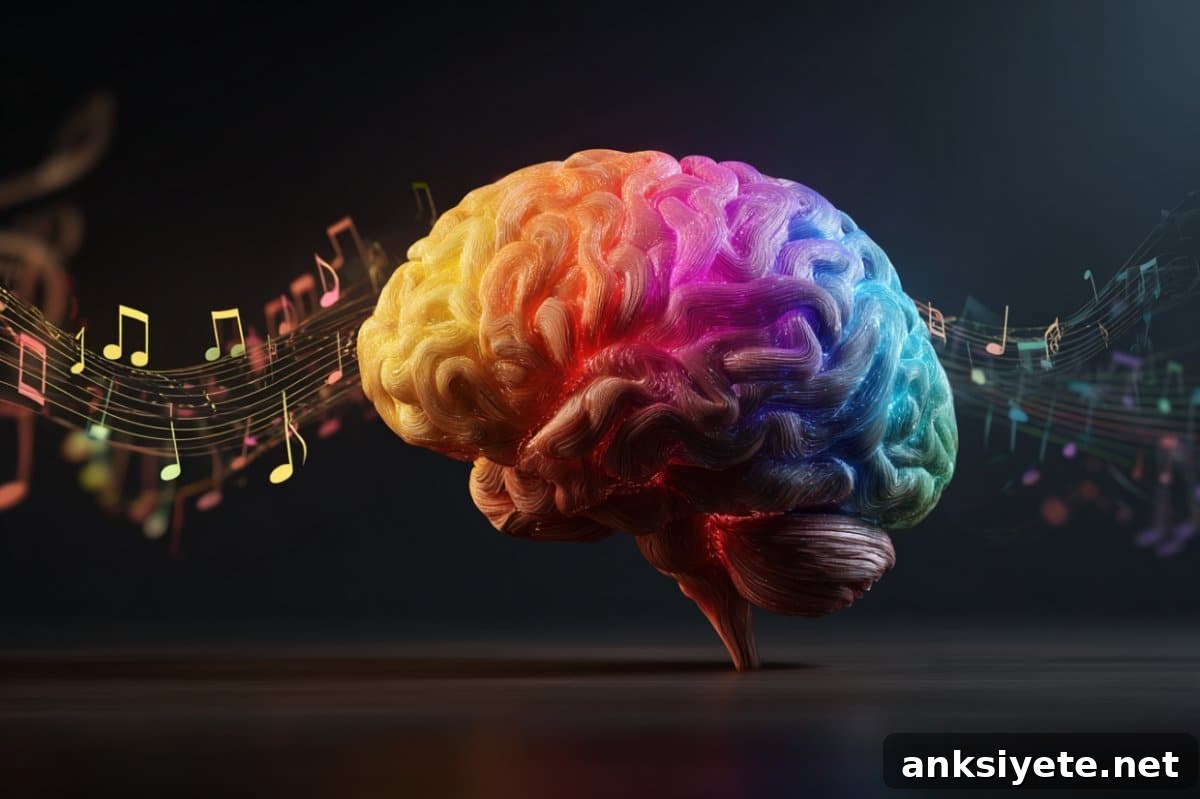
Summary: New research maps how the brain navigates emotional shifts by using music to evoke and measure changing neural patterns. The study shows that responses to a given emotion are strongly shaped by the emotional state that immediately preceded it, a finding with potential relevance for understanding and treating emotional inflexibility in mood disorders.
For example, hearing an upbeat melody before a sad passage alters the brain’s response to that sadness compared with hearing a tense passage first. These context-dependent shifts in neural activity suggest new ways to identify and possibly intervene on emotional rigidity seen in conditions such as depression.
Key Facts:
- Context Matters: The brain’s response to new emotions is shaped by the immediately preceding emotional state.
- Music as an Experimental Tool: Composer-created musical sequences were used to reliably evoke and measure transitions between emotions.
- Clinical Relevance: Findings may inform future approaches to treating mood disorders characterized by difficulty shifting out of negative emotional states.
Source: SfN
How does the human brain track emotions and support transitions between them?
In a new eNeuro paper, Matthew Sachs and colleagues at Columbia University combined custom-composed music with advanced neuroimaging and analytic techniques to investigate how emotional transitions are represented in the brain. Using functional MRI and data-driven modeling, the team examined how neural activity patterns evolve as listeners move from one music-evoked feeling to another.
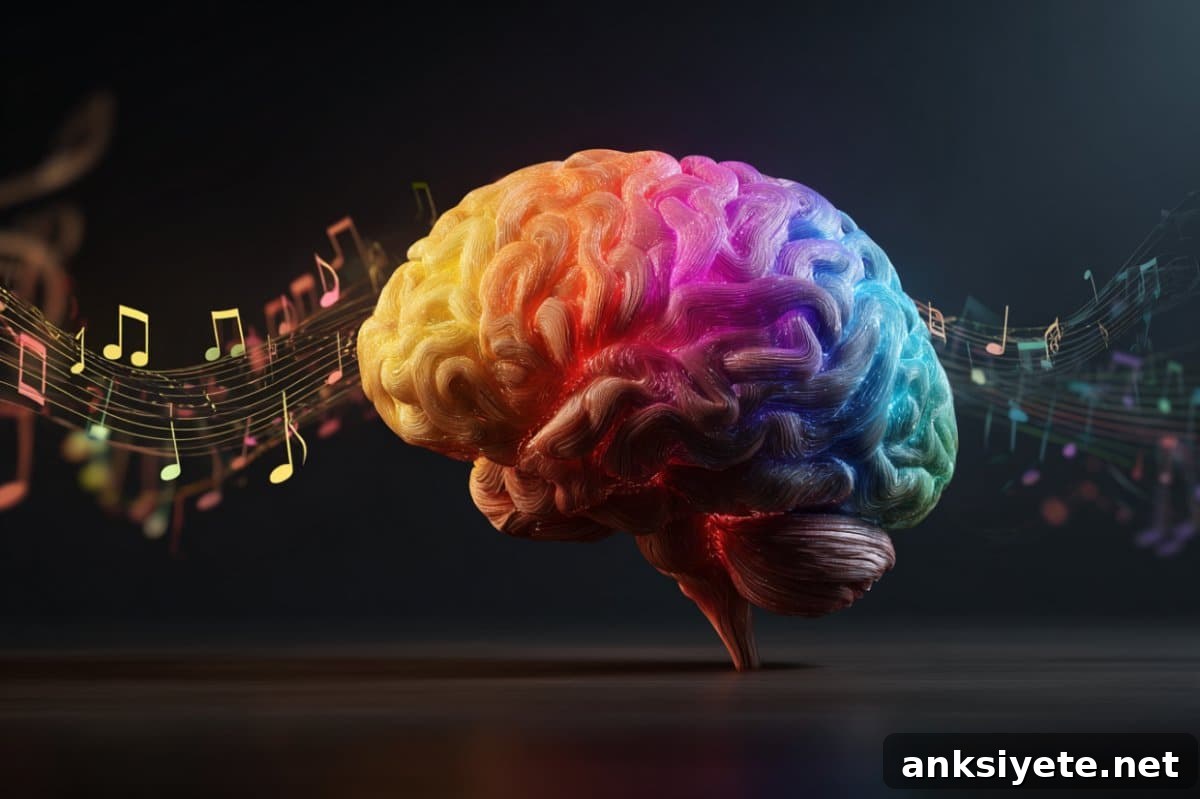
The researchers worked with composers to create musical pieces that intentionally moved listeners through distinct emotional moments. While participants listened to these sequences, the team recorded brain activity and applied both hypothesis-driven and data-driven analyses—specifically Hidden Markov modeling—to identify spatiotemporal brain patterns associated with emotional states and transitions.
Sachs and colleagues reported that dynamic patterns of activation along the temporal-parietal axis—brain regions involved in sound processing and aspects of social cognition—tracked transitions between the emotions evoked by the music. In other words, as the music changed emotional character, corresponding neural states shifted in predictable ways.
Crucially, the timing and character of these neural transitions depended on emotional context. When the emotional quality of the prior musical passage was more similar in valence to the new passage, the brain-state transition occurred earlier. Conversely, when the previous emotion was dissimilar, transitions in the measured neural patterns were delayed. Self-reported emotion ratings mirrored these context effects, supporting the link between subjective experience and measurable brain dynamics.
These results indicate that the brain does not respond to isolated emotional events in a vacuum; instead, it interprets and represents emotional moments in light of what just occurred. That contextual dependence helps explain why the same stimulus can feel different depending on prior mood or experience and why emotional processing is inherently dynamic.
The study also highlights potential clinical applications. Many people with mood disorders exhibit emotional rigidity—difficulty shifting out of prolonged negative states. By identifying neural markers of affective transitions and their dependence on recent emotional context, researchers may eventually develop targeted interventions that help patients move more flexibly between emotional states.
As Sachs and colleagues suggest, the approach used in this study could be adapted to identify individual neural signatures of emotional inflexibility and to evaluate whether targeted therapies—behavioral, musical, or neuromodulatory—promote healthier emotional transitions.
About this music and emotion research news
Author: SfN Media
Source: SfN
Contact: SfN Media – SfN
Image: The image is credited to Neuroscience News
Original Research: Closed access. “Emotions in the Brain Are Dynamic and Contextually Dependent: Using Music to Measure Affective Transitions” by Matthew Sachs et al., eNeuro
Abstract
Emotions in the Brain Are Dynamic and Contextually Dependent: Using Music to Measure Affective Transitions
Our ability to shift from one emotion to the next allows us to adapt our behavior to a changing and often uncertain environment. While prior research has identified cortical and subcortical regions involved in affective responding, little was known about how these regions represent transitions between different emotional states or how recent emotional context modulates those representations.
To examine this, the team commissioned original musical pieces designed to carry participants (N = 39; 20 males and 19 females) through a sequence of emotional states during fMRI scanning and to manipulate the emotional context in which specific motifs were heard. Combining data-driven Hidden Markov modeling with hypothesis-driven analyses, they showed that spatiotemporal activation patterns along the temporal-parietal axis reflect transitions between music-evoked emotions.
The spatial and temporal signatures of these neural response patterns, together with participants’ self-reported emotion ratings, were sensitive to the emotional context in which the music was heard. In particular, brain-state transitions tied to emotional changes occurred earlier when the preceding affective state shared a similar valence with the current state.
These findings support the idea that temporoparietal regions help segment continuous sensory experience into meaningful emotional events and clarify how changes in external auditory signals relate to dynamic, context-dependent emotional responses.