
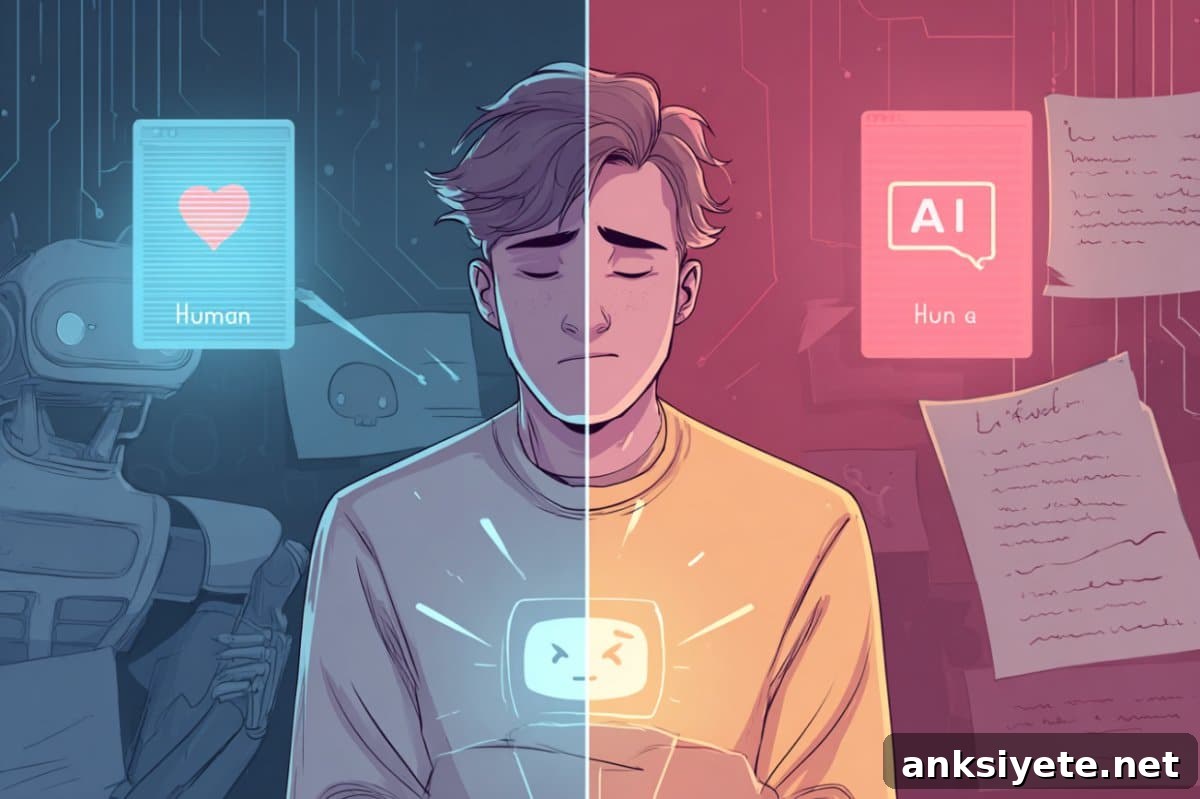
Summary: New research shows people view empathic messages as more supportive and emotionally satisfying when they believe those messages come from another person — even when the messages are identical and generated by artificial intelligence. Across nine experiments with more than 6,000 participants, messages labeled as human were consistently judged as more genuine, especially when they conveyed emotional sharing and care.
Participants often preferred to wait for a human reply rather than accept an immediate chatbot response, indicating that perceived authenticity strongly shapes how empathy is received. These results highlight important emotional limits of AI in sensitive contexts and suggest that human authorship influences the strength of emotional connection.
Key findings:
- Identical wording, different impressions: The same messages were rated as more empathic and supportive when participants believed they were written by a human.
- Perceived authenticity matters: Belief that a message came from a human increased perceived sincerity, emotional comfort, and satisfaction.
- Emotional trade-offs: People showed a clear preference for slower, human-provided empathy over faster, AI-provided replies that felt emotionally flat.
Source: Hebrew University of Jerusalem
Overview of the research
An international team led by Prof. Anat Perry of the Hebrew University of Jerusalem, together with PhD student Matan Rubin and collaborators from Harvard University and the University of Texas, explored whether empathy is experienced differently when attributed to humans versus AI. The research, published in Nature Human Behaviour, tested responses produced by large language models (LLMs) but labeled either as human or AI. Across nine experiments with a total of 6,282 participants, responses attributed to humans were consistently rated as more empathic, more supportive, and more emotionally effective than identical responses labeled as AI-generated.
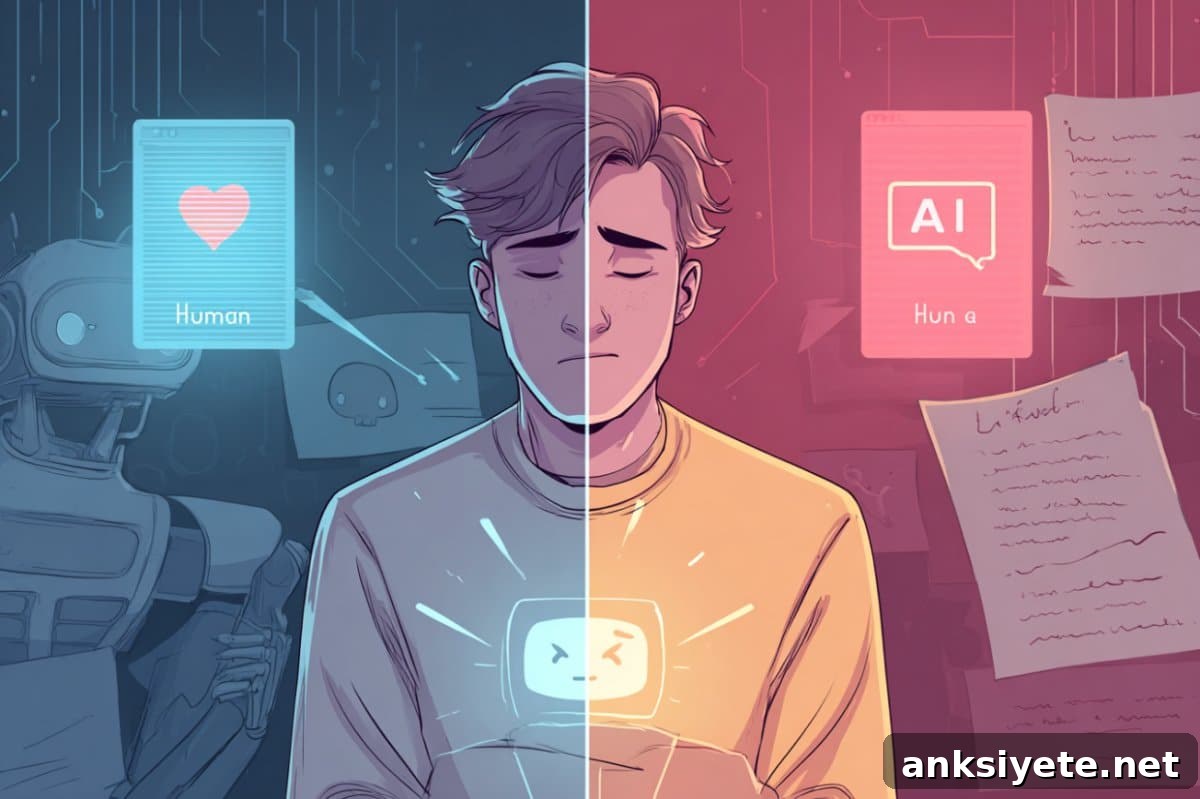
The experiments examined multiple dimensions of empathy, including cognitive understanding, emotional sharing, and caring behavior. The strongest differences emerged for messages emphasizing emotional sharing and care — the affective and motivational elements of empathy. Participants reported more positive emotions and fewer negative emotions after reading responses attributed to humans.
The preference for human-attributed empathy persisted across variations in message length, response delay, and the specific LLM used to generate the text. When participants suspected that AI had assisted or edited a message labeled as human-written, their positive perceptions declined, suggesting that even the belief of AI involvement can reduce perceived sincerity and emotional value.
“We are entering an era in which AI can produce responses that appear empathic,” Prof. Perry said. “But our findings show that the perception of genuine human understanding — someone truly feeling with you and caring — remains central to how empathy is experienced.”
The researchers note practical implications: while AI can help scale support in education, healthcare, and mental health services, it may not fully replace the emotional reassurance provided by human responders in moments that demand authentic connection. As routine communication becomes mediated by AI tools, a risk emerges that messages feel hollow if receivers assume they were generated by machines.
About this AI and empathy research news
Author: Danae Marx
Source: Hebrew University of Jerusalem
Contact: Danae Marx – Hebrew University of Jerusalem
Image credit: Neuroscience News
Original research: Closed access. “Comparing the Value of Perceived Human versus AI-Generated Empathy” by Anat Perry et al., published in Nature Human Behaviour. DOI reference provided in the original study.
Abstract (summary)
Comparing the Value of Perceived Human versus AI-Generated Empathy
Large language models are increasingly able to generate socially and emotionally capable text, which could enhance human–AI interactions and expand the availability of emotional support. However, it is unclear whether empathy is perceived the same way when attributed to AI as when attributed to humans. To investigate this, the authors conducted nine studies with a combined sample of 6,282 participants. Participants read empathic responses to real emotional situations; those responses were generated by AI but labeled either as human-authored or AI-generated.
Responses attributed to humans were rated higher on empathy and supportiveness and elicited more positive emotional reactions than identical responses attributed to AI. Participants’ unprompted belief that AI had contributed to a human-labeled response reduced its perceived empathy and support. These effects held across different response lengths, response delays, iterations, and language models, and were strongest for messages that emphasized emotional sharing and care. Additionally, when seeking emotional engagement, people consistently preferred human interaction over AI. These findings deepen our understanding of empathy and inform how emotionally intelligent AI might be integrated into everyday communication and support systems.