
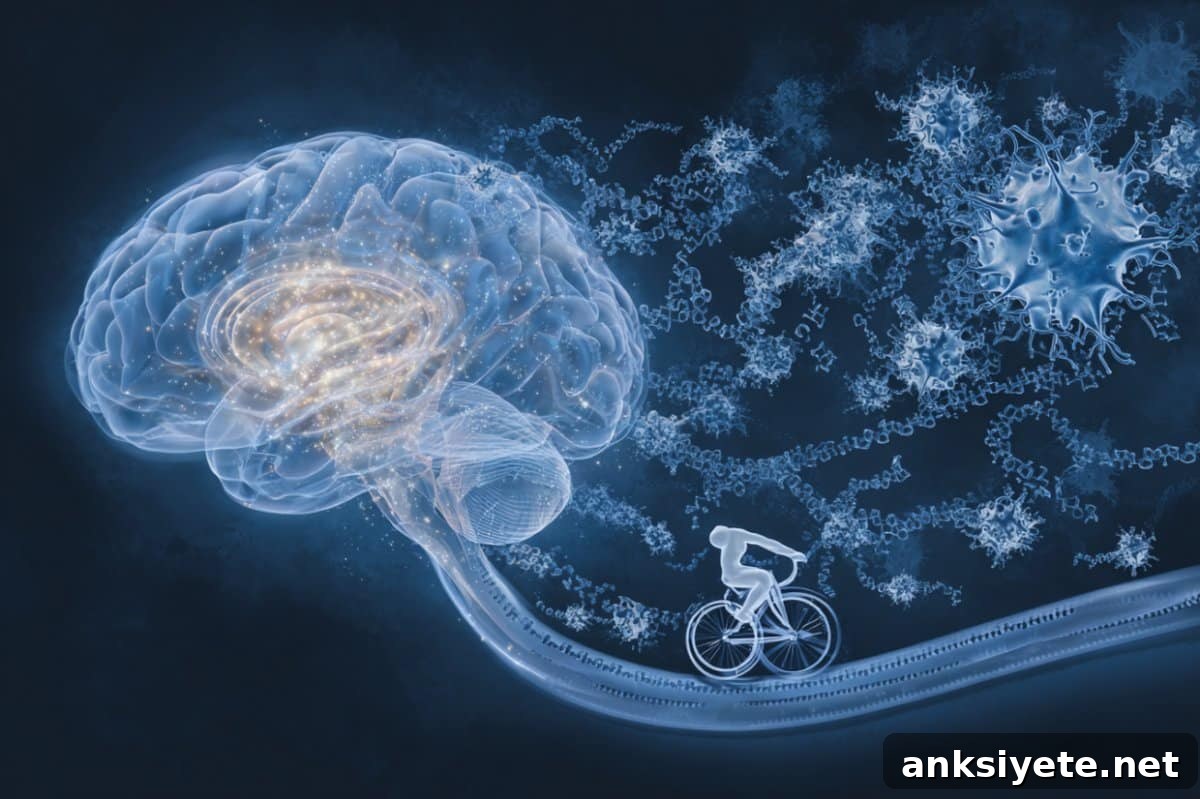
Summary: Physical activity is known to slow cognitive decline in Alzheimer’s disease, but many patients cannot maintain regular exercise because of frailty or advanced symptoms. New research identifies a metabolic gene, ATPPIF1, that exercise reactivates and that supports neuroplasticity in the hippocampus. These findings point to molecular targets that could be used to reproduce the brain-protective effects of exercise with drugs or gene-based therapies.
Using single-nucleus RNA sequencing to profile cells in the hippocampal dentate gyrus, researchers mapped how brain cell types respond to aerobic activity. Their results reveal specific transcriptional pathways that exercise restores in Alzheimer’s model mice and highlight candidate genes and cell populations for future neuroprotective treatments.
Key Facts:
- Exercise pathway identified: The metabolic gene ATPPIF1 is reactivated by aerobic exercise and appears to play a role in slowing Alzheimer’s progression.
- Neuroplasticity boost: ATPPIF1 supports neuron survival, synaptic function, and processes linked to memory-related plasticity.
- Therapeutic potential: Scientists aim to mimic exercise’s cognitive benefits pharmacologically or via gene-targeting approaches for patients who cannot exercise.
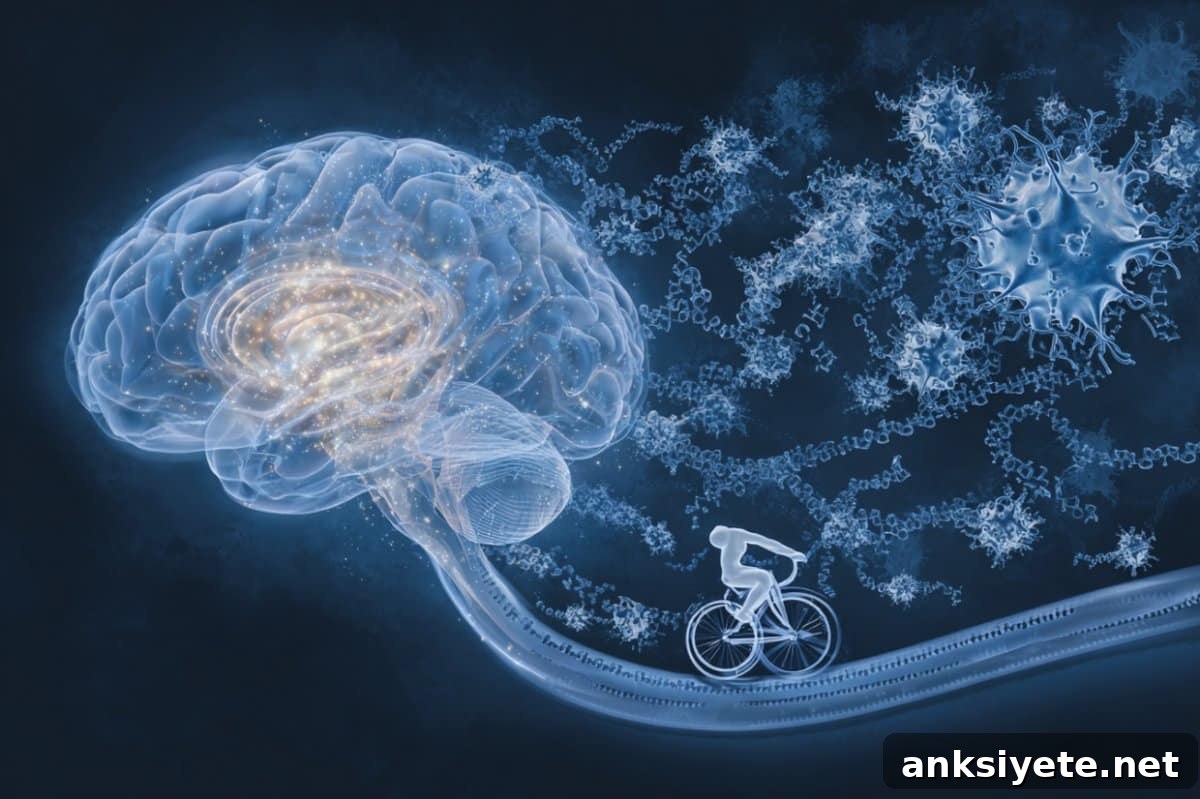
“We know that exercise does many beneficial things for the brain and can counter processes involved in Alzheimer’s disease,” said Christiane Wrann, assistant professor of medicine at the Cardiovascular Research Center at Massachusetts General Hospital and Harvard Medical School, and senior author on the study. Her team is pursuing strategies to activate those same molecular pathways using drugs so patients who cannot exercise might still gain cognitive benefits.
Alzheimer’s disease affects millions: according to the Centers for Disease Control, an estimated 6.7 million adults in the United States currently live with Alzheimer’s, a figure projected to rise substantially by 2060. Multiple studies and meta-analyses have shown that endurance activities such as walking are associated with slower cognitive decline. For example, prior research cited by the authors reported lower Alzheimer’s risk with increased daily steps. Still, age-related frailty and other barriers prevent many people with cognitive impairment from engaging in regular exercise.
Because of these limitations, Wrann and colleagues set out to define how exercise affects brain cells at the molecular level. They used single-nucleus RNA sequencing (snRNA-seq) to examine gene expression profiles from individual cells in the dentate gyrus, the hippocampal subregion essential for learning and memory and vulnerable early in Alzheimer’s disease. The team analyzed tissue from both control mice and an Alzheimer’s disease mouse model (APP/PS1) after a period of voluntary aerobic exercise (running on a wheel). Key findings were cross-validated against a large human Alzheimer’s snRNA-seq dataset.
SnRNA-seq allowed the researchers to capture the full complement of gene expression “ingredients” inside each cell, revealing which cell types shift their transcriptional programs with exercise and which Alzheimer’s-associated changes are restored. The transcriptomic response to running differed between wild-type and Alzheimer’s mice and was especially prominent in immature neurons. Exercise restored the transcriptional profiles of a subset of genes that were dysregulated in Alzheimer’s in a cell type–specific manner.
Among the molecular candidates identified, the metabolic gene ATPPIF1 emerged as an important mediator. In the Alzheimer’s model, ATPPIF1 expression was reduced, but exercise increased its activity. According to Wrann, reactivation of this gene supports neuroplastic processes: it helps neurons resist harmful stimuli, promotes proliferation of new neurons, and supports synaptic formation and function—mechanisms central to learning and memory.
Beyond neurons, the team identified exercise-induced shifts in other cell populations. They reported a neurovascular-associated astrocyte subpopulation whose abundance is reduced in Alzheimer’s but whose expression signature is induced by exercise. Exercise also altered the gene expression profile of disease-associated microglia, while oligodendrocyte progenitor cells showed one of the highest proportions of dysregulated genes recovered by exercise.
Looking ahead, Wrann described efforts to translate these mechanistic insights into therapeutic strategies. Modern biomedical tools offer multiple ways to modulate gene activity, including gene therapy approaches and small-molecule drugs. The research team is now exploring which modalities and candidate compounds could safely and effectively increase activity of protective genes like ATPPIF1 in humans.
Wrann emphasized that while exercise remains a recommended and accessible intervention for many, it is not a cure for Alzheimer’s. Evidence suggests regular physical activity is associated with later disease onset or slower decline for some individuals, but severe dementia limits the ability to participate in exercise regimens. Pharmacological or gene-based therapies that recapitulate exercise benefits could extend neuroprotective effects to patients who are unable to engage in sustained physical activity.
Funding: This work was supported by funds from the National Institutes of Health.
About this genetics and neuropharmacology research news
Author: Anna Lamb
Source: Harvard
Contact: Anna Lamb – Harvard
Image: The image is credited to Neuroscience News
Original Research: Closed access. “Protective exercise responses in the dentate gyrus of Alzheimer’s disease mouse model revealed with single-nucleus RNA-sequencing” by Christiane Wrann et al., published in Nature Neuroscience.
Abstract
Protective exercise responses in the dentate gyrus of Alzheimer’s disease mouse model revealed with single-nucleus RNA-sequencing
Exercise’s protective effects in Alzheimer’s disease (AD) are well recognized, but cell-specific contributions to this phenomenon remain unclear. Using single-nucleus RNA sequencing (snRNA-seq), the study dissected the response to voluntary running in the neurogenic stem-cell niche of the hippocampal dentate gyrus in male APP/PS1 transgenic AD model mice. Transcriptomic responses to exercise differed between wild-type and AD mice and were most pronounced in immature neurons. Exercise restored transcriptional profiles of a subset of AD-dysregulated genes in a cell type–specific manner. A neurovascular-associated astrocyte subpopulation, reduced in AD, showed an induced gene expression signature with exercise. Exercise also enhanced the gene expression profile of disease-associated microglia. Oligodendrocyte progenitor cells displayed the highest proportion of dysregulated genes recovered by exercise. Key findings were validated in a human AD snRNA-seq dataset. Together, these data provide a comprehensive resource for understanding molecular mediators of neuroprotection by exercise in Alzheimer’s disease.