
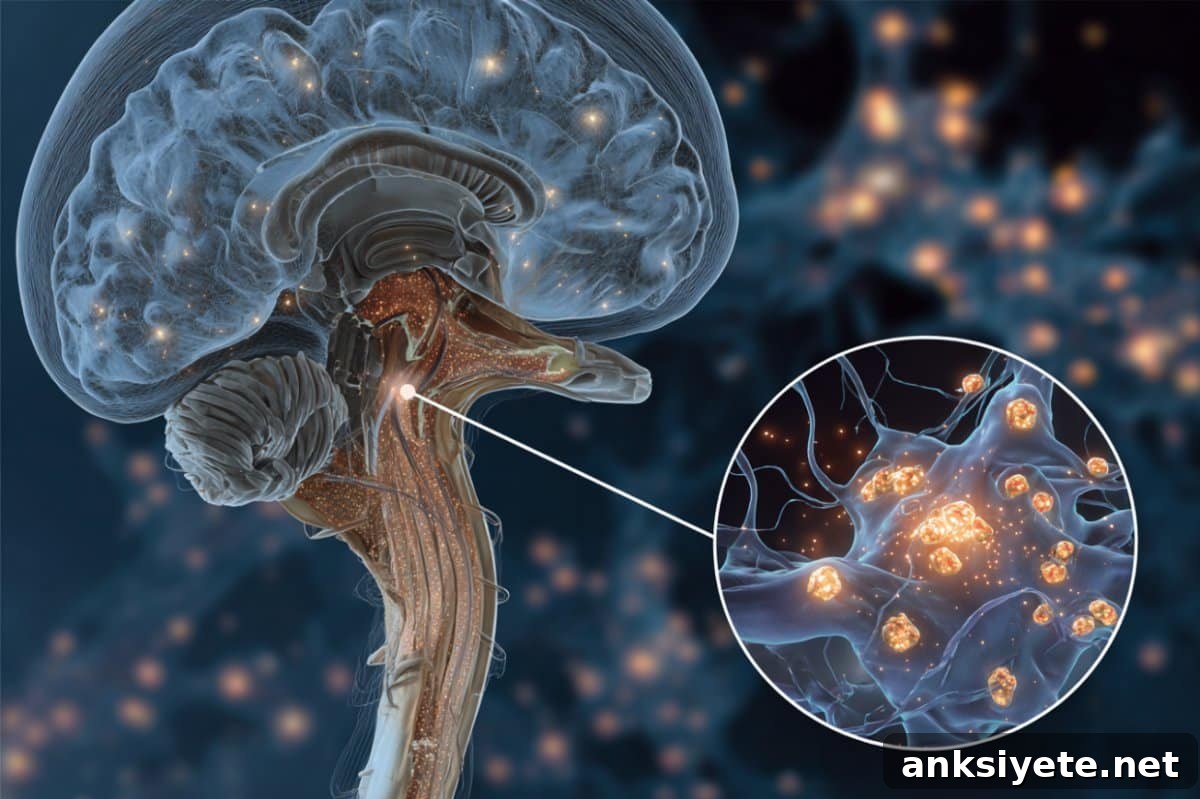
Summary: A new study shows that neurons in a specific brainstem region respond very differently to acute versus chronic pain, offering a potential explanation for why some pain resolves while other pain persists long after an injury. During acute pain, neurons in the medullary dorsal horn reduce their activity through an internal “braking” mechanism driven by A-type potassium currents, which helps limit pain signaling. In chronic pain, that braking mechanism is absent, and those neurons remain overactive, continuing to transmit pain messages. This insight clarifies a biological pathway for pain chronification and points toward therapeutic strategies that could restore this natural regulation.
Researchers found that the neural response in the brainstem differs sharply between short-term inflammatory pain and long-lasting chronic pain. In acute inflammation, the medullary dorsal horn projection neurons dampen their firing, limiting how strongly pain signals travel from the spinal cord to higher brain centers. When the inflammation resolves, these neurons return to baseline activity. By contrast, in chronic conditions the same neurons fail to engage this protective dampening and instead become more excitable, a change that may help sustain persistent pain.
Key Facts:
- Brainstem relay dysfunction: In chronic pain states, medullary dorsal horn projection neurons lose their ability to reduce pain signaling, contributing to ongoing pain.
- A-type potassium current (IA): This potassium current increases during acute pain and functions like a built-in brake on neuronal excitability; it does not increase in chronic pain.
- Therapeutic implication: Restoring or mimicking IA-mediated regulation may offer a novel approach to prevent or treat chronic pain.
Where these findings come from
This work was conducted by a team at The Hebrew University of Jerusalem and published in Science Advances. The research was led by doctoral student Ben Title under the supervision of Professor Alexander M. Binshtok at The Hebrew University–Hadassah School of Medicine and the Center for Brain Sciences (ELSC). Their experiments combined electrophysiological recordings with computational modeling to identify how intrinsic neuronal properties change under different pain conditions.
How the brainstem modulates pain
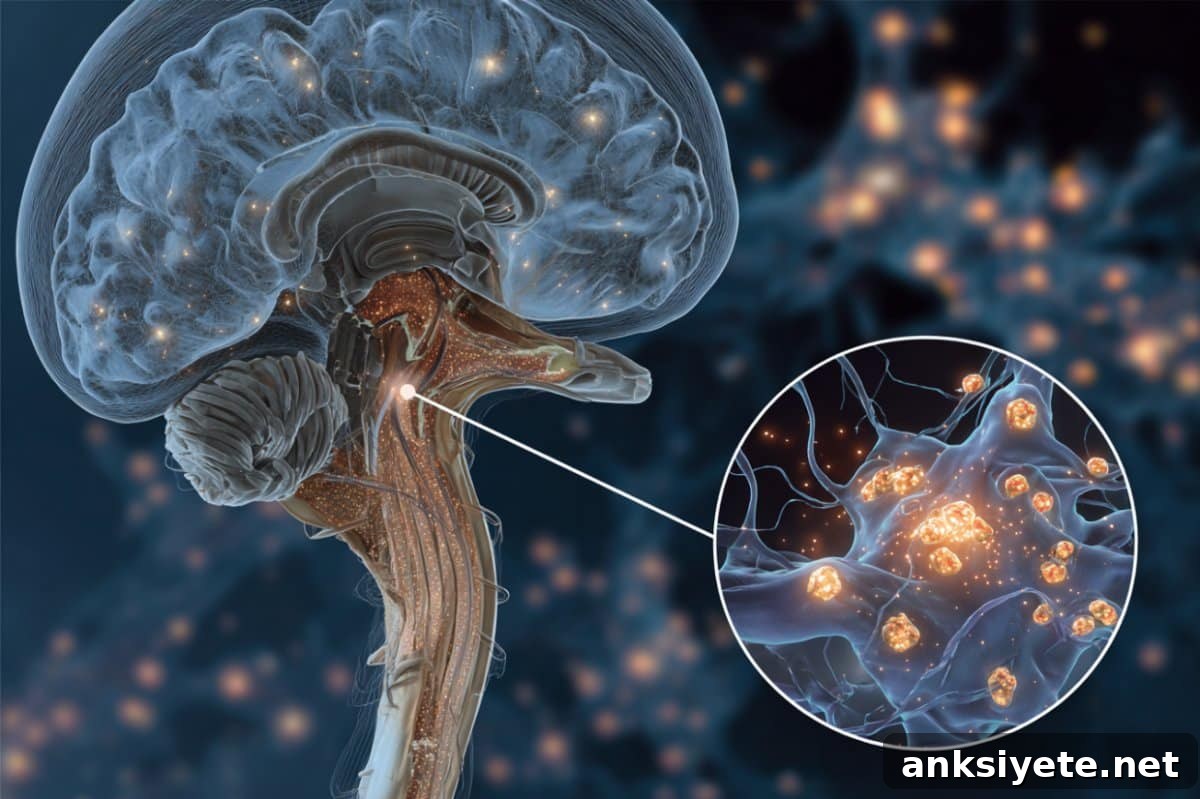
The medullary dorsal horn is a small but critical hub in the brainstem where projection neurons relay nociceptive (pain-related) information toward higher centers such as the parabrachial nucleus. The study shows that in the peak phase of acute inflammatory pain these projection neurons reduce their intrinsic excitability and fire fewer action potentials, effectively limiting the outgoing pain signal. This state is associated with an increase in the A-type potassium current (IA), which curbs neuronal responsiveness like a natural calming influence.
In contrast, in chronic pain models the investigators observed no increase in IA; instead, the medullary dorsal horn projection neurons displayed higher intrinsic excitability and elevated firing rates. The loss of IA-mediated regulation is therefore proposed as a mechanistic switch that can promote the transition from transient to persistent pain.
Implications for future treatments
By pinpointing IA as a key regulator that is present during acute pain but absent in chronic pain, this research highlights a promising therapeutic target. Drugs or interventions that enhance IA or replicate its effect on projection neurons could potentially restore the brainstem’s natural pain-limiting function and reduce the likelihood of pain becoming chronic. Given the large number of people affected by chronic pain and the current limitations of many treatments, interventions focused on restoring intrinsic neuronal brakes represent an attractive direction for future development.
Clinical and research significance
Chronic pain is a major public health problem that often resists conventional treatments. This study contributes a crucial piece to our understanding of pain chronification by showing that regulation at the level of brainstem projection neurons differs fundamentally between acute and chronic states. Clinical strategies that aim to correct or compensate for the missing IA increase in chronic pain may offer more targeted and effective relief for patients whose pain would otherwise persist.
About this pain and neuroscience research news
Author: Danae Marx
Source: Hebrew University of Jerusalem
Contact: Danae Marx – Hebrew University of Jerusalem
Image: The image is credited to Neuroscience News
Original Research: Open access.
“Opposite regulation of medullary pain-related projection neuron excitability in acute and chronic pain” by Alexander M. Binshtok et al., published in Science Advances.
Abstract
Opposite regulation of medullary pain-related projection neuron excitability in acute and chronic pain
Pain hypersensitivity involves increased activity along multiple levels of the pain pathway. This study demonstrates that at the peak of acute inflammatory pain, superficial medullary dorsal horn projection neurons that relay nociceptive information to the parabrachial nucleus reduce their intrinsic excitability and fire fewer action potentials. When the acute pain resolves, neuronal excitability returns to baseline. Electrophysiological and computational analyses indicate that an increase in the A-type potassium current (IA) underlies this reduced excitability during acute pain. In chronic pain models, IA does not change and projection neurons show increased intrinsic excitability and firing. These findings reveal differential modulation of medullary dorsal horn output in acute versus chronic pain and suggest that the absence of IA-mediated regulation could facilitate pain chronification.