
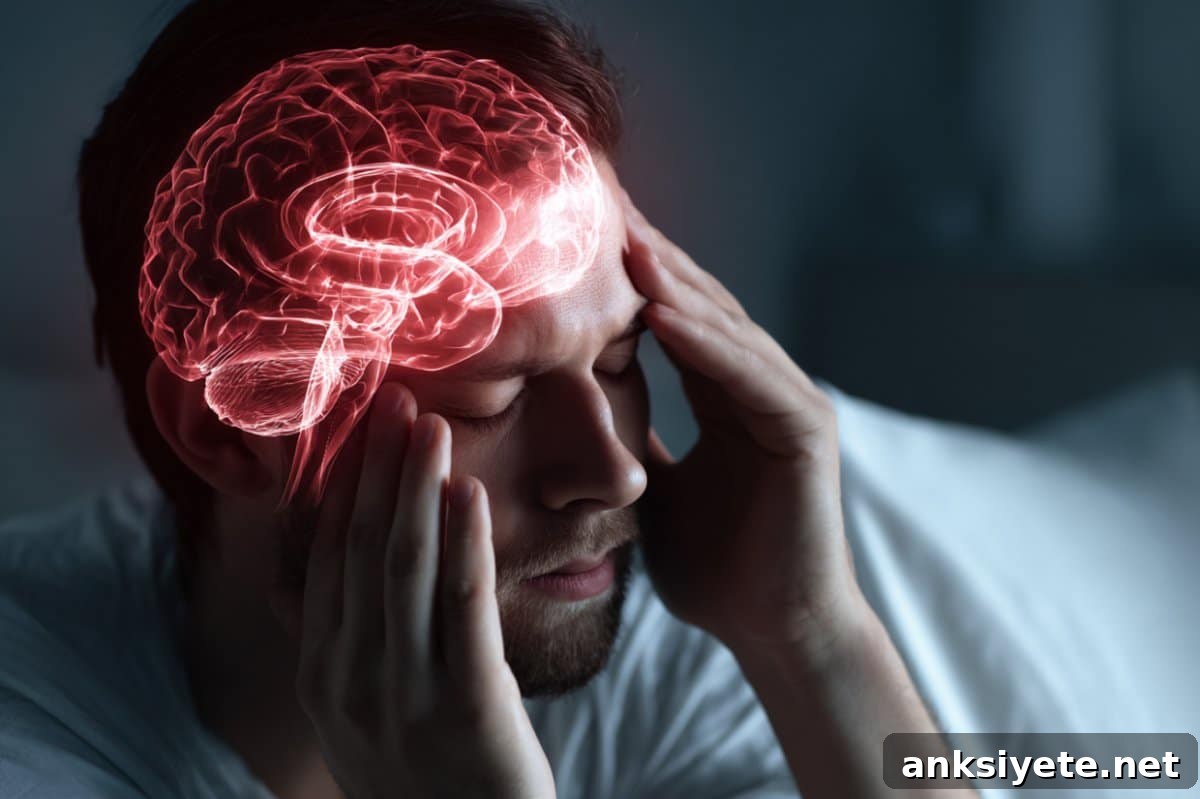
Summary: New research shows that lack of sleep changes how the brain processes pain in people with migraine. Using EEG recordings and controlled pain stimulation, scientists found that migraine sufferers respond differently after sleep loss, with a reduced capacity to suppress pain signals.
These findings add important detail to the connection between disturbed sleep and migraine attacks and may help guide improved treatment strategies. Researchers stress the importance of understanding this common, disabling disorder to protect quality of life during peak years of education and work.
Key facts:
- Sleep–migraine link: Sleep deprivation disrupts pain regulation in the migraine brain.
- Altered brain response: People with migraine show different brain activity in response to pain after reduced sleep.
- Weakened inhibition: Brain mechanisms that normally dampen pain are less effective in those with migraine.
Source: NTNU
Researchers have, for the first time, examined how the brains of people with migraine respond when they haven’t slept enough.
Migraine is a neurological disorder characterized by throbbing headache, sensitivity to light and sound, nausea and vomiting. It affects roughly 15% of Norway’s population, a prevalence similar to the global rate, and is the leading cause of disability for people aged 16 to 50.
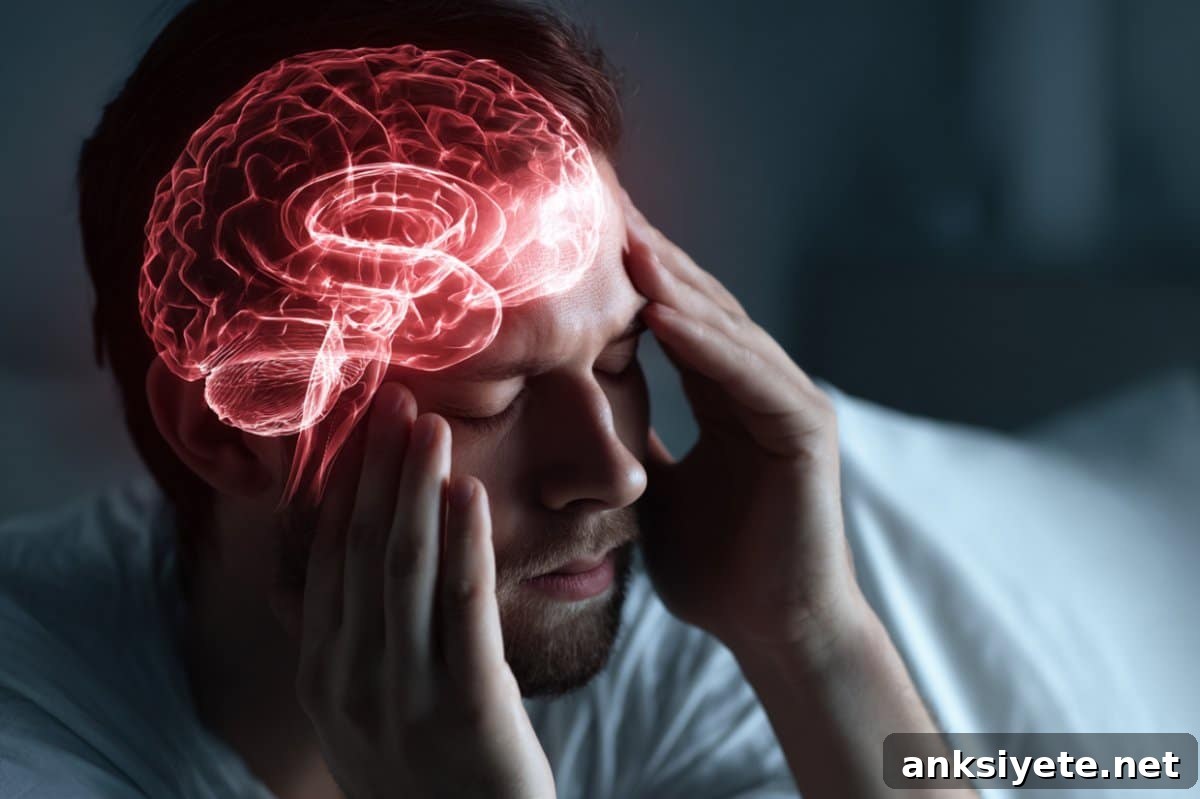
“These are critical years for schooling, higher education and building a career. Migraine can be a heavy burden for both individuals and society; many sufferers miss work frequently,” says Petter Moe Omland, MD and postdoctoral fellow at the Norwegian University of Science and Technology (NTNU).
Migraine still a mystery
Omland and his team have uncovered a new element of the migraine puzzle by investigating how reduced sleep affects pain processing in the brain.
“We already know that sleep can sometimes relieve migraine, that attacks can begin during or after sleep, and that many sufferers report disturbed sleep as a trigger,” Omland explains.
People with migraine commonly experience poorer sleep quality, increased daytime tiredness and a greater prevalence of sleep disturbances than those without headaches. Insomnia is also associated with a higher risk of developing migraines. Between attacks, many sufferers remain sensitive to light, touch and smell, and may find normally innocuous sensory input uncomfortable or painful.
“This study gives us clearer evidence of how sleep and pain are linked in migraine,” Omland said. The research was highlighted in the medical journal Cephalalgia for advancing understanding of headache mechanisms and treatment options.
Sacrificed sleep
Volunteers in two related studies agreed to reduce their sleep so researchers could measure how the nervous system responds. Across the projects, about 140 participants underwent sleep restriction protocols while scientists recorded brain activity.
The procedures used are quick and non-invasive. In the most recent report, subjects were exposed to controlled painful stimuli so the team at NTNU could investigate the interaction between sleep loss and migraine.
Participants were separated into two groups: people with migraine and healthy controls. The study used a blinded design, meaning the investigators who conducted recordings and data processing did not know which participants belonged to each group.
Each person was tested on two separate occasions: once after two nights of normal sleep and once after two nights of restricted sleep. All participants kept sleep diaries and wore an electronic device that logged their sleep patterns.
During testing, participants wore EEG caps to record cortical activity while receiving two types of pain stimulation: nociceptive laser pulses and high-density electrical dermal stimulation. These measures allowed the researchers to see how the brain handled pain signals following reduced sleep.
Personal experience and motivation
“The tests weren’t dangerous but could be uncomfortable. People with migraine are very willing to participate in research because they want more knowledge and better treatments,” Omland says.
The study found that when sleep was restricted, the cerebral cortex of people with migraine reacted differently to pain than the cortex of control participants. In previous related work, the team showed that sleep loss affects brain systems responsible for slowing nerve cell activation in migraine sufferers. Together, these results suggest that the mechanisms that normally reduce or dampen pain perform less effectively in people with migraine.
Omland adds that he began his research without a history of migraine but later experienced attacks himself during a period of severe sleep loss while balancing work, family and research. That personal experience strengthened his commitment to better understand the condition.
About this sleep and migraine pain research news
Author: Nancy Bazilchuk
Source: NTNU
Contact: Nancy Bazilchuk – NTNU
Image: The image is credited to Neuroscience News
Original research: Open access. “Migraine and insufficient sleep: The effect of sleep restriction on nociceptive evoked potentials in migraine” by Petter Moe Omland et al., published in Cephalalgia.
Abstract
Migraine and insufficient sleep: The effect of sleep restriction on nociceptive evoked potentials in migraine
Background
The relationship between insufficient sleep and migraine is not well understood. In this blinded cross-over study, researchers tested whether reduced sleep disrupts processing of nociceptive (pain) signals more in people with migraine than in those without.
Methods
Evoked potentials were recorded in response to nociceptive laser stimuli and high-density electrical dermal stimuli in both migraine and control subjects after two nights of habitual sleep and after two nights of sleep restriction (4 hours per night). The investigators performing measurements and data processing were blinded to participants’ diagnosis and sleep condition. Twenty-one migraine subjects were recorded interictally, and results were compared with 31 controls. Amplitudes, habituation of amplitude and latencies were analyzed.
Results
After sleep restriction, electrically induced N2P2 amplitudes showed greater habituation in the migraine group compared with their habitual sleep condition (p < 0.025). The migraine group also demonstrated less N2P2 habituation after habitual sleep than the control group (p < 0.035). There was no effect of sleep restriction on N2P2 amplitude habituation to laser stimulation, nor on N2P2 amplitudes themselves.
Conclusion
The findings suggest that insufficient sleep may modestly increase cortical inhibitory responses in people with migraine. Overall, the results support the view that migraine is associated with a heightened vulnerability to the effects of poor sleep between attacks.