
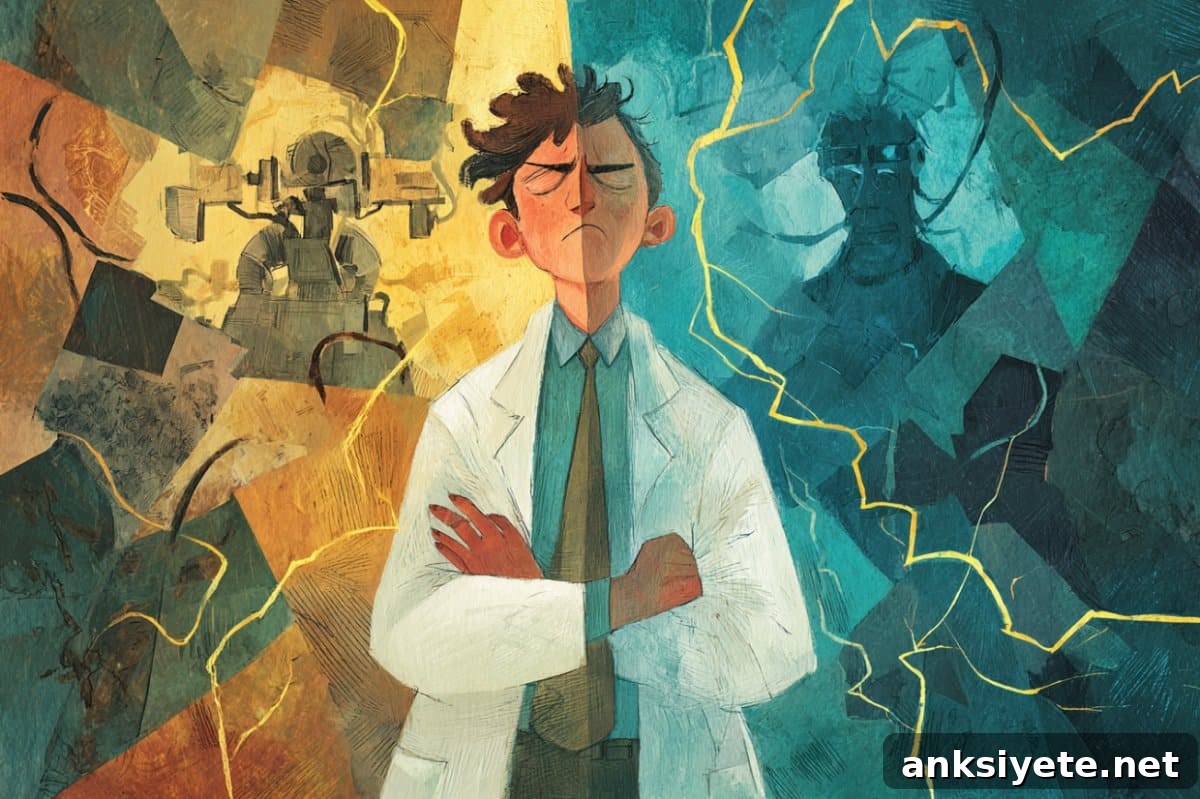
Summary: A new study shows most people believe they would refuse immoral orders from authorities more readily than others would. This overconfidence—known as the “better-than-average effect”—leads people to underestimate how much social pressure can influence their own behavior.
Even after reading about the notorious Milgram experiment, many participants still assumed they would resist complying more effectively than the average person. The researchers warn that this misplaced confidence could leave people unprepared to oppose real coercion.
Key Facts:
- Better-Than-Average Bias: People typically view themselves as more morally resistant than others.
- Limited Effect of Awareness: Learning about Milgram’s results did not substantially change most participants’ beliefs about their own likely behavior.
- Conscientiousness as a Risk Factor: Highly conscientious people—those who strongly value rules and duty—may be more likely to follow orders even when those orders conflict with personal morals.
Source: Ohio State University
Most people, whether naturally rebellious or not, imagine they would stand firm against pressure to violate their principles. New research suggests this confidence is often misplaced.
Researchers asked more than 400 adults to read first-person accounts of the classic Milgram shock study and then predict how they would respond compared with the average person. The Milgram experiment, conducted in the 1960s, examined how far people would go in obeying an authority figure’s instructions—even when asked to administer increasingly severe electric shocks to another person.
In the new study, participants used a dial to indicate at which shock level they thought they would stop the study, with the scale ranging from 1 (quitting after the first shock) to 31 (continuing through all shocks). On average, people estimated they would quit around level 7, while they expected the average person to quit much later, around level 12. This gap illustrates the better-than-average effect: individuals believe they would resist more effectively than most others.
To test whether knowledge of Milgram’s actual results would change judgments, half the participants were told that 65% of subjects in the original study obeyed through to the final voltage; the other half received no such information. Those informed of the historical outcome did predict higher obedience for the average person, but they did not adjust their estimates for their own behavior. In other words, even when given the evidence, people still thought they personally would be less obedient than others.
These predictions closely matched obedience patterns reported in prior research, supporting the idea that people routinely underpredict their own susceptibility to authority when imagining such scenarios. Simply reading about the situation—short of actually experiencing it—does not seem sufficient to make people internalize how powerful social pressure can be.
“Social pressures are more powerful and impactful than we often realize,” said Philip Mazzocco, lead author of the study and an associate professor of psychology at The Ohio State University. “If you fall under the sway of these pressures, you could end up acting in ways that go against your values and morals.”
The researchers compared the gap between predicted and actual obedience to the difference between watching a horror movie safe at home and suddenly encountering the real danger yourself: imagining a scenario rarely captures the visceral force of being in it.
Notably, most participants—65.2%—had not previously heard of the Milgram experiment, and prior familiarity with the study did not significantly change how participants judged their own likely behavior. Beyond awareness, the team administered personality and values assessments to explore individual differences. Conscientiousness emerged as a meaningful predictor: people who score high on responsibility and rule-following were more likely to indicate they would comply with the experimenter’s requests.
Mazzocco emphasized that assuming oneself exempt from social influence can be risky. “If everyone believes they are uniquely resistant to obedience, we become less likely to take steps to protect ourselves from authority figures who might exploit that trust,” he said.
Practical strategies to reduce vulnerability include avoiding situations where intense social pressure is likely, preparing clear plans for how to refuse or leave when necessary, and cultivating curiosity and critical reflection to keep one’s values in view when decisions are pressured by authority.
The study was initiated as a class project and later developed for publication. Other Ohio State co-authors include Katie Reitler, Lauren Little, John Korte, Monicka Ridgill and Xamina Stalnaker.
About this psychology and morality research news
Author: Tatyana Woodall
Source: Ohio State University
Contact: Tatyana Woodall – Ohio State University
Image: The image is credited to Neuroscience News
Original Research: Open access. “Milgram shock-study imaginal replication: how far do you think you would go?” by Philip Mazzocco et al., published in Current Psychology.
Abstract
Milgram shock-study imaginal replication: how far do you think you would go?
In an online sample of 414 adults, participants read a vivid first-person account of the original 1963 Milgram shock study and predicted how they and “the average person” would respond. Half were informed that 65% of Milgram’s participants showed complete obedience; half received no outcome information. Overall, participants predicted considerably less obedience than the original study documented. Consistent with the better-than-average effect, individuals expected to be more likely to disobey than the average person. Prior knowledge of Milgram’s work did not significantly alter self-predictions. These findings suggest that people have difficulty incorporating social scientific evidence about obedience into accurate beliefs about their own likely behavior.