
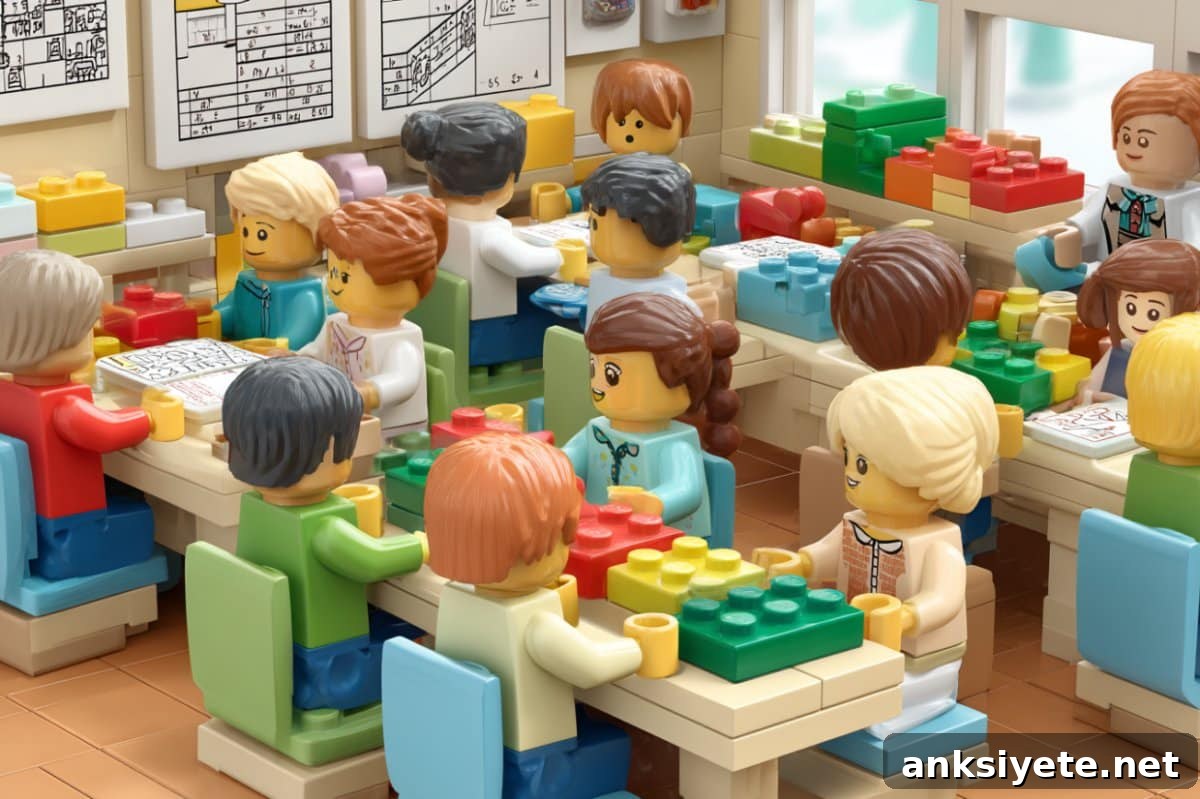
Summary: A classroom programme using LEGO building activities substantially improved young children’s mathematics and spatial reasoning skills, according to a recent study. Teachers delivered a six-week intervention called SPACE that used structured, teacher-led LEGO tasks for children aged six to seven.
The intervention produced measurable gains in mental rotation and math performance, with the largest benefits observed for pupils from disadvantaged backgrounds and children with special educational needs. The findings underline how simple, hands-on activities can boost critical thinking, narrow attainment gaps, and make learning more engaging for early primary pupils.
Key facts:
- LEGO plus learning: A six-week classroom LEGO building programme improved mathematics and spatial reasoning in 6–7 year olds.
- Greatest benefits for some groups: Children from disadvantaged backgrounds and those with SEND gained the most.
- Teacher-delivered model: Activities led by classroom teachers, supported by brief professional development and pictorial guides, were effective.
Source: University of Surrey
Overview
Researchers from the University of Surrey evaluated a practical, classroom-based approach to spatial training called SPACE (Spatial Cognition to Enhance mathematical learning). Rather than relying on lab-based programmes delivered by researchers, SPACE trained classroom teachers to run daily, structured block-building sessions using LEGO. The study involved 409 children in schools across Surrey and Portsmouth, compared with 103 control children who received standard classroom instruction.
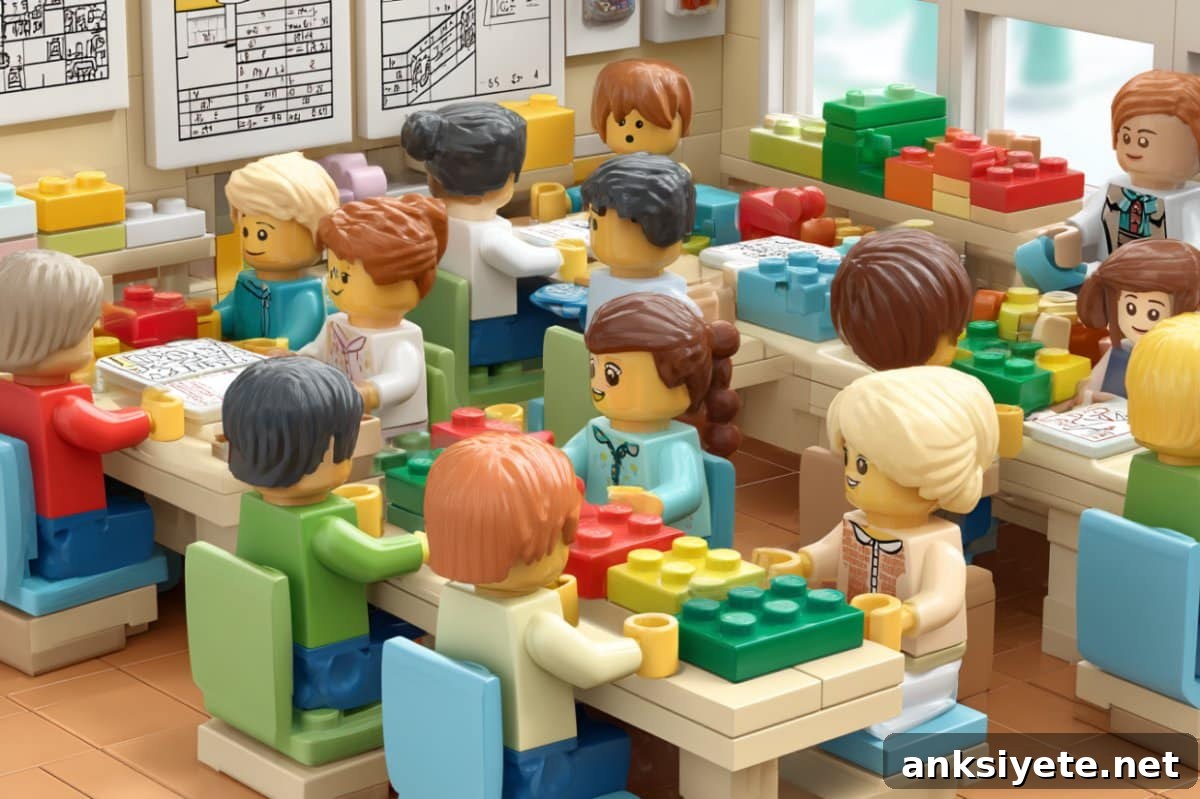
Over the six-week period, teachers used a booklet of visual instructions to guide whole-class block construction exercises. These activities emphasized spatial language and prompts that asked children to imagine, rotate, and combine pieces mentally before or while building. The goal was to make spatial thinking an explicit part of everyday lessons rather than an occasional or laboratory-only exercise.
Results showed clear improvements in spatial ability, specifically mental rotation, and in mathematics achievement for the children who received the SPACE training. Spatial language measures did not show the same level of change, suggesting that the hands-on, visual manipulation practice was the key mechanism driving math gains.
Expert perspectives
Professor Emily Farran, Professor of Cognitive Development at the University of Surrey and lead author, emphasized that spatial reasoning and math are closely linked and that the study demonstrates the feasibility and effectiveness of delivering spatial training at scale in real classrooms: “Most spatial training has been delivered in labs, but our study shows teachers can successfully implement structured spatial activities with positive outcomes for students.”
Professor Camilla Gilmore, Professor of Mathematical Cognition at Loughborough University and co-author, noted the potential for classroom spatial activities to address longstanding challenges in mathematics education: “The study’s results were clear—children who took part in the SPACE programme made significant gains. Simple, hands‑on spatial tasks can improve attainment and enjoyment in mathematics and offer a promising route to reduce disadvantage gaps.”
Professor Farran added that integrating spatial reasoning into everyday teaching helps prepare children for future demands that require problem solving, data use, and critical thinking in an increasingly technological and AI-rich world.
Inclusion and attainment
The SPACE intervention also showed benefits for inclusion. Children from disadvantaged backgrounds and those with special educational needs and disabilities tended to make larger improvements in mathematics than peers, indicating that regular opportunities to practice spatial thinking could help close attainment gaps. The study supports the idea that spatial activities are accessible and beneficial across diverse classroom populations.
About this research
Author: Dalitso Njolinjo, University of Surrey
Source: University of Surrey
Contact: Dalitso Njolinjo – University of Surrey
Image: Image credited to Neuroscience News
Original research (open access): “Teacher delivered block construction training improves children’s mathematics performance” by Emily Farran et al., published in Mind, Brain, and Education. DOI: 10.1111/mbe.70006
Abstract
Teacher delivered block construction training improves children’s mathematics performance
Robust evidence links spatial thinking with mathematics achievement, but most prior research has taken place in laboratory settings with researcher-delivered training. This study reports a teacher-delivered, whole-class six-week spatial training programme for 6–7 year olds that combined short professional development for teachers with pictorial, teacher-led LEGO block construction tasks.
Using a quasi-experimental design, 409 children completed the SPACE training while 103 children formed a business-as-usual control group. Compared with controls, children who received the training improved on measures of spatial ability and mathematics performance, though not on all measures of spatial language.
These results extend evidence for the benefits of spatial training to an ecologically valid, classroom-delivered context. They suggest that routine opportunities to engage in pictorially guided block building are an effective and scalable classroom activity to support mathematics learning. The findings have implications for school curricula, where explicit spatial thinking is often absent; integrating spatial elements into mathematics teaching could raise attainment for a broad range of pupils.