
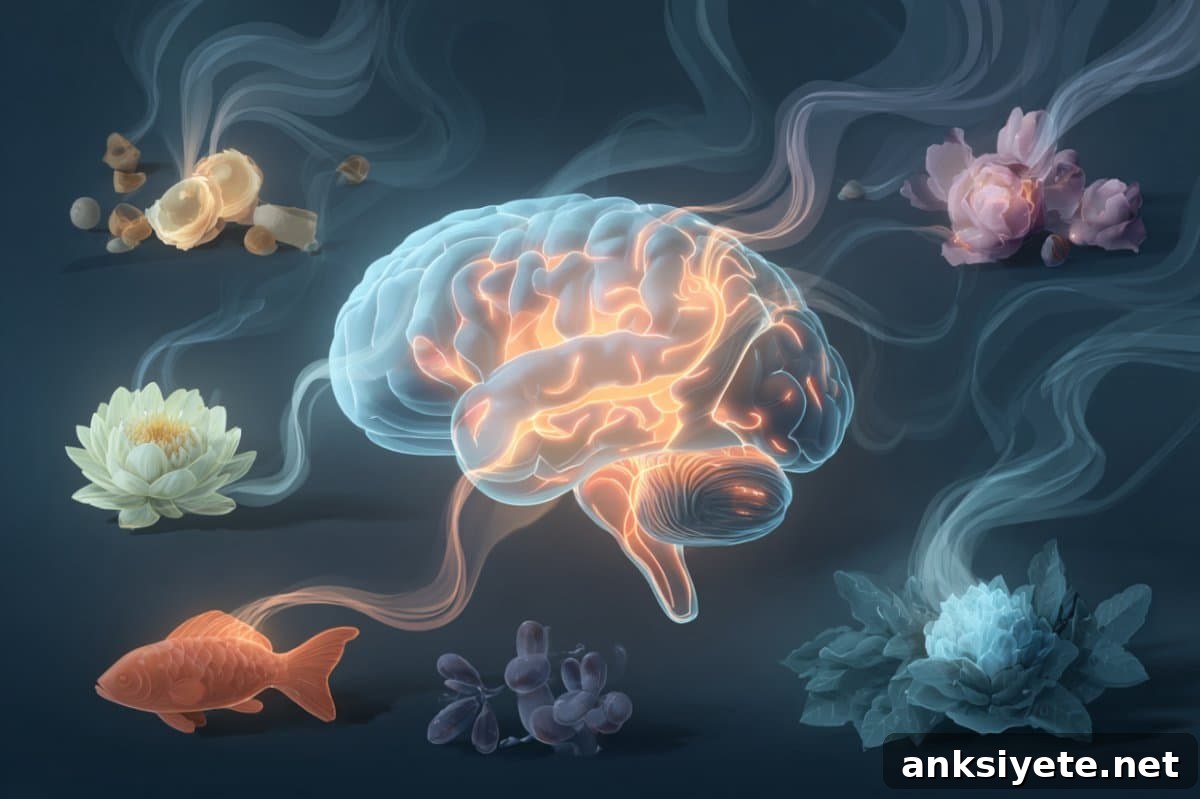
Summary: A new study from the University of Florida uncovers how the brain determines whether an odor feels pleasant or repulsive, explaining why certain smells trigger intense emotions. Focusing on the amygdala—the brain’s emotional hub—researchers identified two genetically distinct cell populations that can tag any scent as positive or negative depending on where they send signals in the brain.
Contrary to the expectation that specific cells are permanently tied to either pleasantness or aversion, the study shows these neurons are flexible. Their emotional impact depends on their projection targets and circuit context. These findings point toward possible clinical approaches for people with heightened sensory responses—such as anxiety, PTSD, or sensory processing disorders—by helping reframe distressing smell-related memories or reactions.
Key facts:
- Direct emotional pathway: The olfactory system connects more directly to the amygdala than other senses, which helps explain why smell powerfully evokes emotional memories.
- Flexible assignment of valence: Two genetically distinct basolateral amygdala (BLA) neuron types can promote either positive or negative emotional responses to odors depending on their projection patterns.
- Clinical implications: Understanding these circuits may guide therapies or interventions for conditions like PTSD or anxiety where smells trigger distressing reactions.
Source: University of Florida
We all know how a lingering odor can shape memory and mood—whether it’s the off-putting scent of spoiled fish or the comforting aroma of a childhood kitchen. But what makes the brain label a smell as unpleasant?
Researchers at UF Health investigated how odors acquire emotional value. As first author Sarah Sniffen, a graduate research fellow, asks: how do smells come to carry emotional charge?
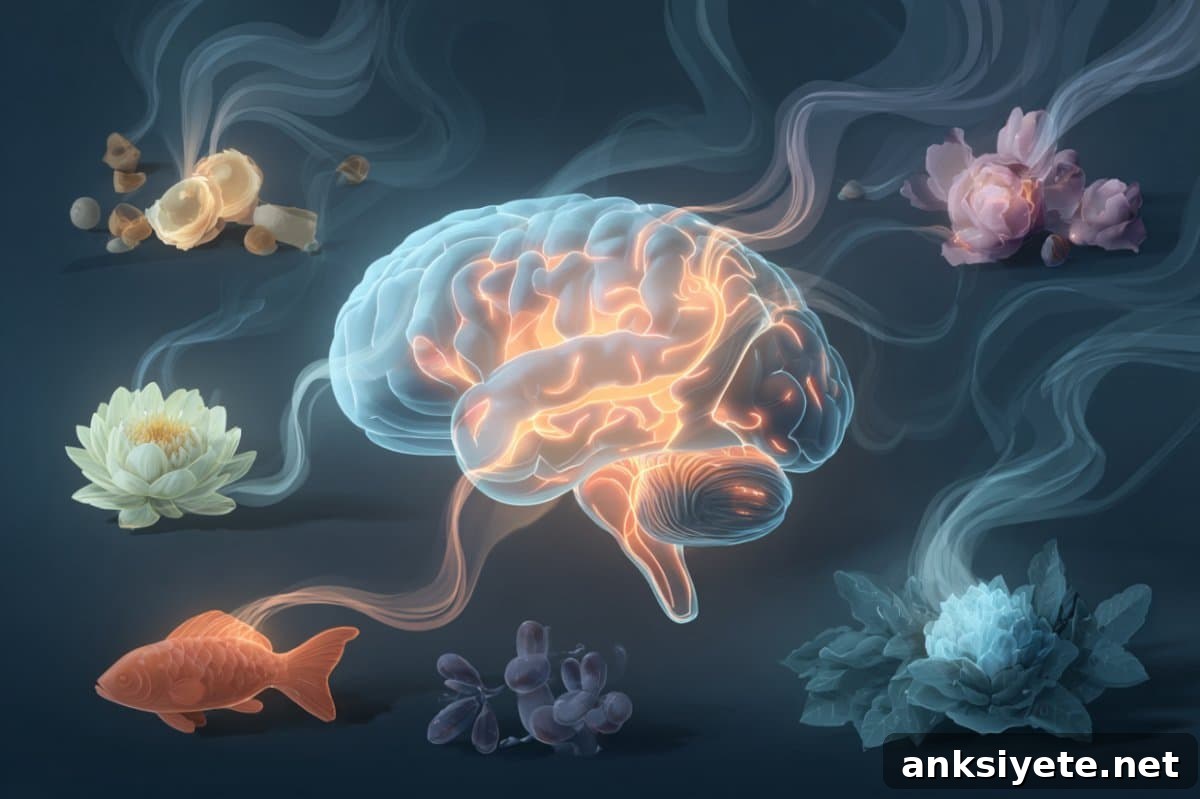
Smells have long been used to influence human behavior—from perfumes and cooking to the layout of stores—because of their unique power to shape feeling. “Odors are powerful at driving emotions,” said senior author Dan Wesson, Ph.D., professor of pharmacology and therapeutics at the UF College of Medicine and interim director of the Florida Chemical Senses Institute. “The smell centers of the brain are closely connected with emotional centers like the amygdala.”
The team concentrated on the amygdala because it curates emotional responses to sensory input. While all senses interact with this region, the olfactory system sends signals more directly, which helps explain why certain scents instantly trigger vivid memories and affective reactions.
Using mice—whose neurochemical pathways are similar enough to humans to provide insight—the researchers combined behavioral tests with neural analysis. They discovered two genetically distinct groups of BLA excitatory neurons that can categorize odors as either rewarding or aversive.
Rather than being hardwired for a single emotional outcome, these cell populations have the capacity to generate either positive or negative responses. The determining factor is where each cell group projects within the ventral striatum and which downstream structures they engage. “A given cell type can make an odor positive or negative to you,” Wesson explained, “depending on where it projects and how it interacts with other brain regions.”
Understanding this circuit-level flexibility matters because smell is a constant environmental input. For most people sensory cues are manageable, but for individuals with heightened sensitivity—those living with PTSD, anxiety disorders, or certain forms of autism—olfactory triggers can severely disrupt daily life.
Sniffen noted that people repeatedly inhale and process smells throughout the day, so problematic associations can have an outsized effect on quality of life. The UF team envisions future interventions that could dampen or modify specific pathways to reduce distress or, conversely, enhance pathways to restore pleasure in contexts where it has been lost—such as appetite reduction during illness.
Based on receptor expression and projection targets, the researchers suggest it may be possible to manipulate these circuits pharmacologically or through other neuromodulatory approaches. Such strategies could help patients form new, less distressing associations to previously aversive smells or recover positive responses where they have diminished.
“Emotions help determine quality of life,” Wesson said. “By learning how emotional responses arise from specific brain pathways, we can better understand how environments shape feelings and, ultimately, how to improve well-being.”
About this olfaction research news
Author: Eric Hamilton
Source: University of Florida
Contact: Eric Hamilton – University of Florida
Image: The image is credited to Neuroscience News
Original Research: Open access. “Directing negative emotional states through parallel genetically-distinct basolateral amygdala pathways to ventral striatum subregions” by Sarah Sniffen et al., published in Molecular Psychiatry. DOI: 10.1038/s41380-025-03075-0
Abstract
Directing negative emotional states through parallel genetically-distinct basolateral amygdala pathways to ventral striatum subregions
Distinct basolateral amygdala (BLA) cell populations influence emotions in ways that are relevant to anxiety and related disorders. The BLA contains multiple excitatory neuron types that project to brain regions capable of altering emotional state and behavior. Two major classes of BLA excitatory neurons include those expressing Ppp1r1b and those related to Drd1 and Drd2 dopamine receptor pathways.
This study identifies Drd1+ and Drd2+ BLA neuron populations that form parallel circuits to the ventral striatum. Arising from the basal nucleus of the BLA, these neurons innervate broad regions of the ventral striatum and are capable of exciting its neurons. Behavioral assays show that activating or suppressing these Drd1+ and Drd2+ pathways produces distinct effects on learned and innate emotional states depending on their synaptic targets in the ventral striatum. The results support a model in which genetically distinct BLA-to-ventral-striatum circuits shape emotional states in a projection-specific manner.