
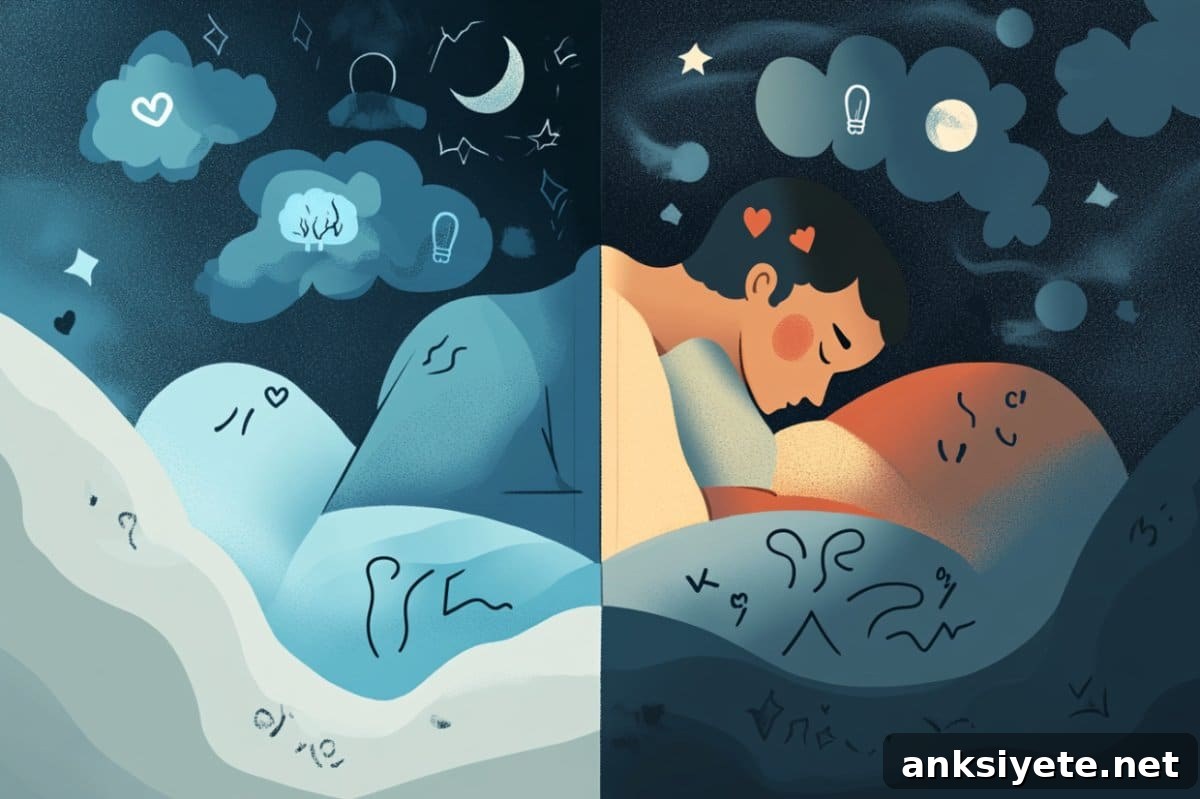
Summary: New research presented at the SLEEP 2025 meeting links poor sleep quality to increased feelings of jealousy in people who report high levels of attachment anxiety. The study finds that anxious attachment — characterized by insecurity, worry about a partner’s availability, and lower self-esteem in relationships — is associated with worse sleep quality, and that poor sleep predicts more daily jealousy only for those with elevated attachment anxiety.
The findings point to an interaction between sleep and relationship style: sleep problems alone do not uniformly produce jealousy for everyone, but they appear to exacerbate jealousy in people with anxious attachment tendencies. This suggests that personal attachment style moderates how sleep influences socioemotional reactions within romantic relationships.
Key facts and implications:
- Attachment and sleep quality: Individuals with anxious attachment reported poorer sleep overall, linking relational insecurity with disrupted rest.
- Sleep and daily jealousy: Nighttime sleep difficulties were associated with increased daily jealousy, but this association was significant only among participants with high attachment anxiety.
- Clinical and practical implications: Recognizing a person’s attachment style could help clinicians and counselors tailor sleep and relationship interventions. For example, addressing sleep hygiene or treating insomnia may reduce jealousy-related conflicts primarily for those with anxious attachment.
Source: AASM
A study to be presented at the SLEEP 2025 annual meeting examined how sleep quality and attachment insecurity interact to influence daily experiences of jealousy. The research team measured self-reported sleep and relationship-related traits and collected two weeks of daily reports from each participant about social emotions and behaviors.
The sample included 68 young adults who completed baseline questionnaires about their sleep patterns and attachment style, followed by daily diaries that tracked feelings such as envy, suspicion, and jealousy over a two-week period. The analysis found that anxious attachment correlated with poorer sleep quality, and that fluctuations in sleep quality were linked to changes in daily jealousy for those who scored high on attachment anxiety.
According to Giovanni Alvarado, lead author and doctoral candidate at Montana State University in Bozeman, Montana, “Poor sleep wasn’t uniformly related to all negative socioemotional outcomes. This suggests that attachment style might shape which emotions are most sensitive to sleep disruption.” In other words, while inadequate sleep can negatively affect mood and cognition broadly, its impact on relationship-specific emotions like jealousy is stronger among people who already feel insecure in their romantic bonds.
The American Academy of Sleep Medicine (AASM) emphasizes that sleep is essential for overall health. The AASM recommends adults aim for seven or more hours of sleep per night on a regular basis to support optimal physical and mental functioning. Beyond duration, healthy sleep requires good quality, consistent timing, and the absence of significant sleep disturbances or disorders.
This study adds nuance to existing knowledge about sleep and emotional regulation by identifying attachment style as a potential moderator. Clinicians, therapists, and sleep specialists may find value in assessing attachment-related concerns when addressing sleep complaints, especially when relationship distress or jealousy is a presenting issue. Interventions that combine sleep-focused treatments (for example, cognitive-behavioral approaches to improve sleep) with relationship-focused strategies (such as attachment-based therapy or communication skills training) could be more effective for individuals showing elevated attachment anxiety.
In practical terms, the research suggests that improving sleep quality may reduce jealous feelings for those who are attachment-anxious, while other socioemotional outcomes may be less sensitive to sleep changes for people with secure attachment styles. Future research with larger, more diverse samples will help clarify how generalizable these findings are and whether similar patterns hold across different age groups and relationship contexts.
About this sleep and jealousy research news
Author: Hannah Miller
Source: AASM
Contact: Hannah Miller – AASM
Image: The image is credited to Neuroscience News
Original Research: The findings will be presented at SLEEP 2025