
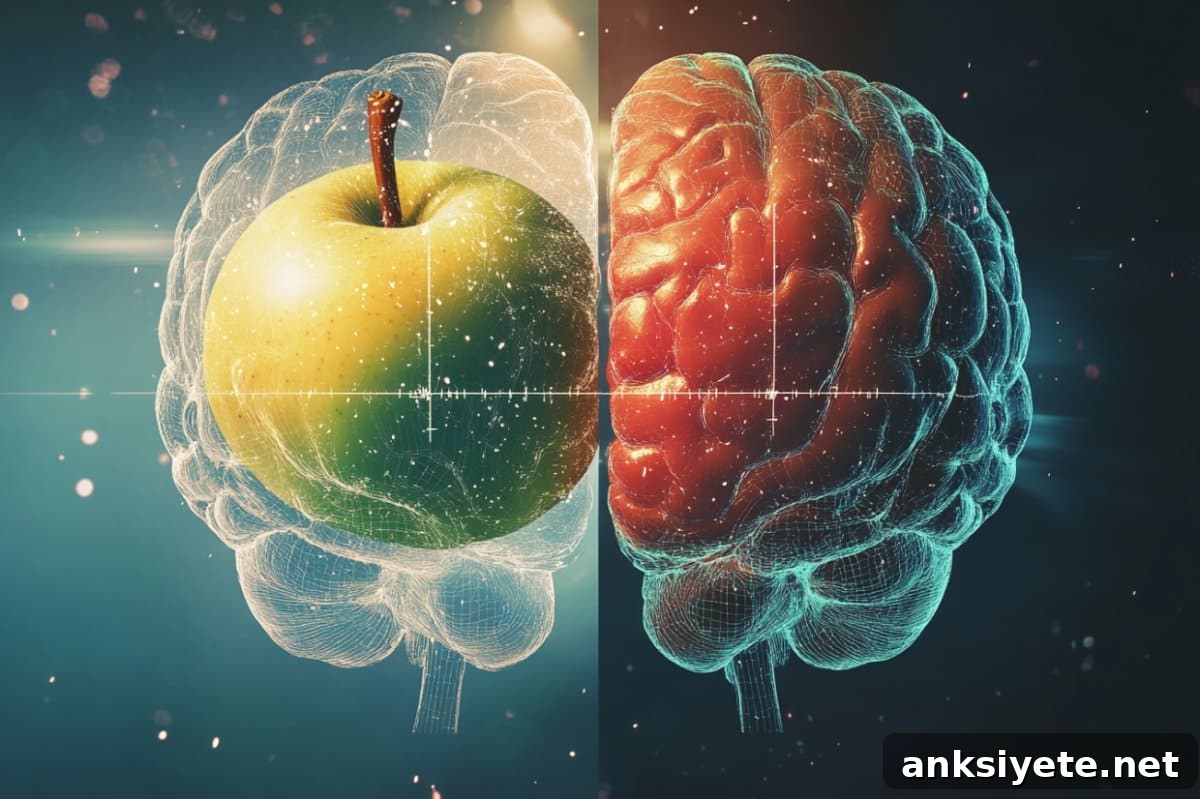
Summary: A new study identifies brain mechanisms that allow us to tell real perceptions apart from vivid imagination. Researchers found that the fusiform gyrus—a mid-level visual area behind the temples—plays a central role in deciding whether a visual experience originates from the outside world or from our own mind. Strong activation in this region can make vivid mental images feel like actual perception.
Using functional MRI, the research team demonstrated that when activity in the fusiform gyrus is particularly strong during imagination, people are more likely to misattribute internally generated images as real. The results clarify how sensory signal strength and interactions with frontal control regions support reality monitoring, and they help explain how this process can fail in conditions such as schizophrenia.
Key findings
- Fusiform gyrus drives reality judgments: The intensity of activity in this visual area predicts whether an experience is judged as real or imagined, regardless of actual external input.
- Vivid imagery can override perception: Very vivid mental images can produce fusiform activation similar to perception, increasing the chance that imagination is mistaken for reality.
- Prefrontal collaboration: The anterior insula and related frontal regions track reality judgments and scale their activity with fusiform responses when participants report experiences as real.
Source: UCL
New evidence pinpoints brain regions that tell imagination and perception apart
Published in Neuron, the study led by researchers at University College London examined how the brain distinguishes externally driven perceptual signals from internally generated imagery. The team focused on the fusiform gyrus, a region on the underside of the temporal lobe involved in detailed visual processing, and on how it interacts with frontal control areas during decisions about reality.
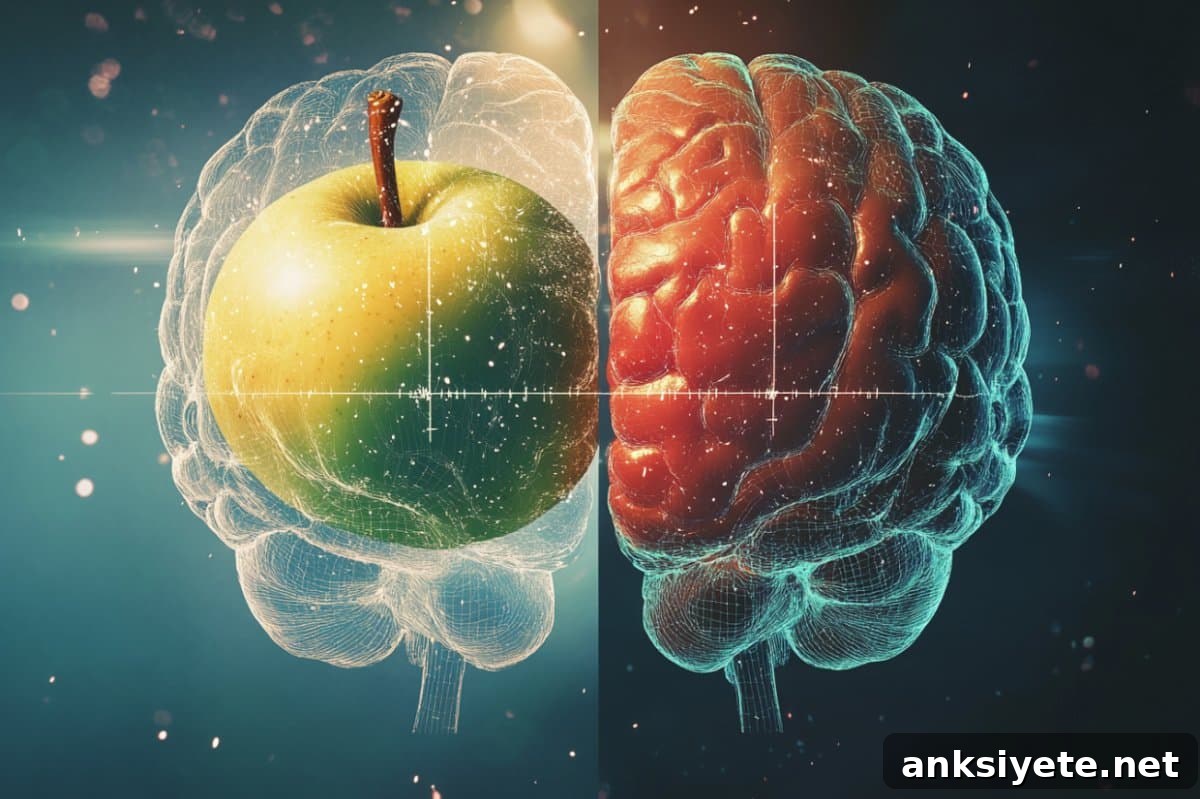
Lead author Dr Nadine Dijkstra (Department of Imaging Neuroscience at UCL) asked participants to imagine a familiar object—“Imagine an apple in your mind’s eye as vividly as you can”—and noted that many of the same brain regions activate during both imagery and perception. The study set out to measure how the brain then determines whether a given visual signal should be classified as perception or as imagination.
Twenty-six participants completed a task in which they searched a noisy visual display for a faint pattern that was present on only half of trials. Simultaneously, they were instructed to imagine a pattern that either matched or differed from the target and to rate how vivid their imagery felt. This setup allowed researchers to observe how concurrent perception and imagery influenced reality judgments.
Behavioral results showed that when the imagined pattern matched the target and participants reported high vividness, they were more likely to say the pattern was present—even on trials without any real stimulus. In other words, vivid imagination increased false reports of perception.
During the task, participants’ brain activity was recorded with fMRI so the team could identify which regions’ activity best predicted reality judgments. The fusiform gyrus emerged as a key predictor: stronger activation in this region increased the probability that participants judged an experience as real, independent of whether a real pattern had been shown.
Typically, fusiform activation is weaker during imagination than during perception, which helps keep internally generated images distinct from external reality. This study shows that when imagery evokes unusually strong fusiform responses, that distinction can blur and imagination can be misperceived as real perception.
Senior author Professor Steve Fleming (UCL Psychology & Language Sciences) notes that the observed fusiform activity matched predictions from computational simulations about how the brain might use sensory signal strength to separate internal from external experience. The team also found that the anterior insula and other frontal regions increased activity in tandem with the fusiform when participants reported an experience as real, implicating metacognitive control networks in reality monitoring.
These results advance our understanding of how the brain monitors sensory activity to decide what counts as reality. They shed light on mechanisms that may break down in psychiatric conditions—such as schizophrenia—where patients can struggle to separate imagination from perception. The findings may additionally inform the design of virtual and augmented reality systems by clarifying when imagined or simulated experiences are likely to feel real.
Funding: The research was conducted in collaboration with Professor Peter Kok (Department of Imaging Neuroscience at UCL) and former UCL Masters student Thomas von Rein. The study received support from the European Research Council and Wellcome.
About this research and reporting
Author: Poppy Tombs
Source: UCL
Contact: Poppy Tombs – UCL
Image: Image credited to Neuroscience News
Original research: Open access. “A neural basis for distinguishing imagination from reality” by Nadine Dijkstra et al., Neuron. DOI: 10.1016/j.neuron.2025.05.015
Abstract
A neural basis for distinguishing imagination from reality
Humans can generate mental images that are decoupled from the current environment by activating perceptual representations internally. While reusing perceptual resources is efficient, it raises the question of how observers decide whether incoming sensory signals reflect external reality or internal simulation. This study shows that reality judgments depend on the combined strength of sensory activity—whether arising from imagery or perception—in the fusiform gyrus. Trial-by-trial fluctuations in this region predict confusions between imagery and perception and interact with a frontal network that encodes binary reality judgments. The results indicate that monitoring activity in mid-level visual cortex is a key mechanism for distinguishing imagination from reality, improving our understanding of failures in reality testing and laying groundwork for characterizing a generalized perceptual reality-monitoring system in the human brain.