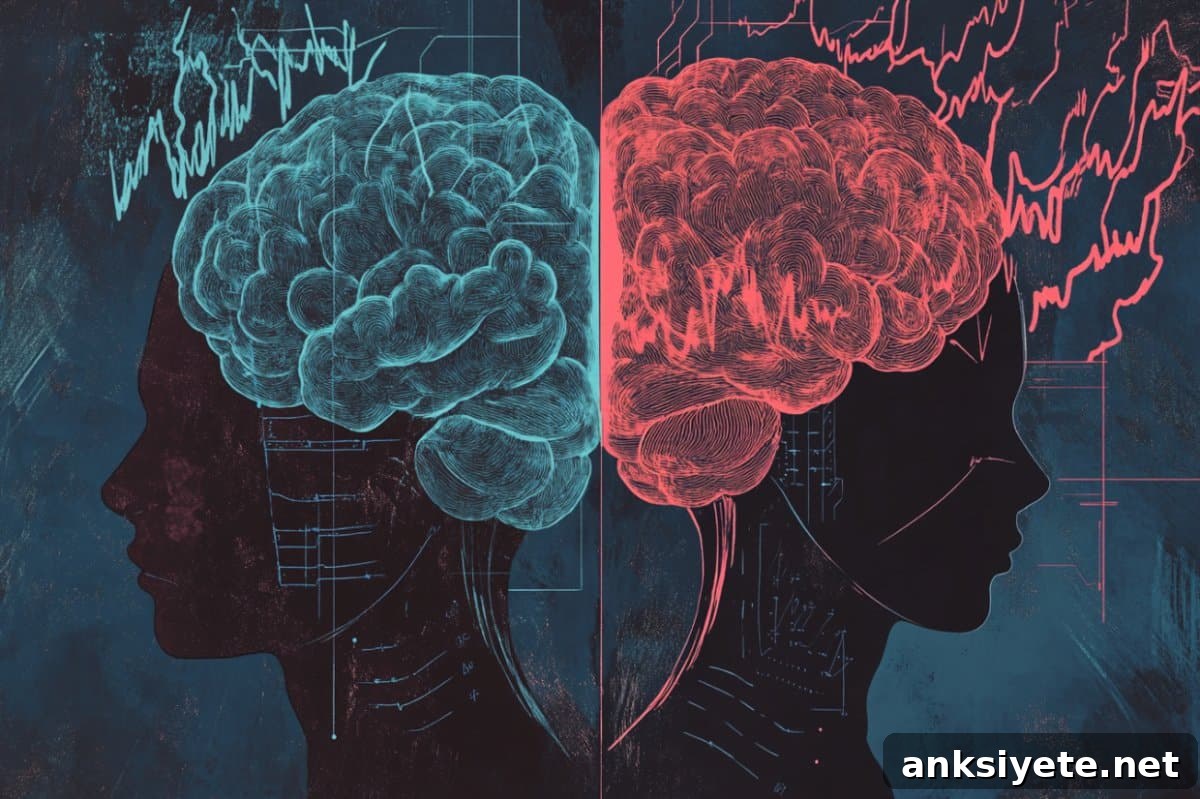
Summary: A new study finds that caffeine alters brain activity during sleep by increasing the complexity and “criticality” of neural signals, with the strongest effects seen in younger adults. Using EEG recordings combined with machine learning, researchers compared sleep after caffeine versus placebo and observed less predictable brain patterns and a shift toward wake-like rhythms that may interfere with overnight recovery.
Caffeine shifted the balance of sleep-related brain waves: it reduced slower theta and alpha oscillations associated with deep, restorative sleep and enhanced beta activity typically linked to alertness. These changes were most evident in participants in their twenties, which the authors attribute to age-related differences in adenosine receptor density, making younger brains more sensitive to caffeine’s nighttime effects.
Key Facts:
- Sleep disruption: Caffeine reduced slow-wave oscillations and increased beta activity, leaving the brain in a more activated state overnight.
- Higher complexity and criticality: Caffeine raised measures of neural complexity and pushed brain dynamics closer to a critical regime — a balance between order and chaos — even during sleep.
- Age sensitivity: The effects were stronger in younger adults (20–27) than in middle-aged participants (41–58), consistent with differences in adenosine receptor levels.
Source: University of Montreal
Caffeine is widely consumed—not only in coffee, but also in tea, chocolate, energy drinks and many soft drinks—making it one of the world’s most common psychoactive substances.
In a study published in April in Communications Biology, researchers at Université de Montréal examined how caffeine changes sleep-related brain activity and what that might mean for overnight cognitive and physiological recovery.
The work was led by Philipp Thölke from the Cognitive and Computational Neuroscience Laboratory (CoCo Lab) at Université de Montréal, with Karim Jerbi (director of CoCo Lab and researcher at Mila – Quebec AI Institute) as co-leader. The team collaborated with Julie Carrier and colleagues at the Centre for Advanced Research in Sleep Medicine to combine EEG measurements with advanced statistical and machine-learning analyses.
Their core finding is that caffeine increases the complexity of brain signals during sleep and enhances brain criticality — a state described as an optimal balance between order and disorder. As Jerbi explains, criticality is like an orchestra that must stay coordinated yet flexible; when the brain occupies this state it processes information efficiently and adapts quickly. Caffeine, the researchers argue, can push the sleeping brain toward that more activated regime.
“Criticality is the sweet spot where neural activity is both organized and adaptable,” Jerbi said. “Caffeine appears to nudge the brain in that direction, increasing alertness even during sleep.” Carrier added that while such activation can improve daytime concentration, it may hinder the brain’s ability to relax and recover at night: “If the brain remains more reactive and less restorative, processes like memory consolidation could be affected.”
Study details — 40 adults, two nights
The study recorded overnight EEG from 40 healthy adults on two separate nights. On one night participants received caffeine capsules (200 mg) twice: three hours and one hour before bedtime. On the other night they received a visually identical placebo at the same timings. This within-subject design let the researchers compare each person’s sleep with and without caffeine.
Using inferential statistics and machine-learning tools, the team identified subtle but consistent changes in neural dynamics. Thölke, the study’s lead author, reported that caffeine increased measures of complexity and produced a widespread flattening of the EEG power spectrum’s 1/f-like slope, along with reduced long-range temporal correlations. These alterations were particularly evident during non-rapid eye movement (NREM) sleep — the stage most closely tied to memory consolidation and cognitive recovery.
Electrophysiologically, caffeine dampened lower-frequency theta and alpha oscillations and boosted higher-frequency beta activity. Because beta waves are more typical of wakeful, engaged states, their increase during sleep suggests that caffeine leaves the brain in a comparatively activated condition that may be less effective for restorative functions.
Younger adults showed larger changes
Age moderated the effects: participants aged 20–27 displayed stronger caffeine-induced changes than those aged 41–58, especially during REM sleep. The authors link this difference to adenosine receptor density, which declines with age; younger brains, with more adenosine receptors available for caffeine to block, appear more sensitive to the stimulant’s impact on sleep dynamics.
Given the widespread daily use of caffeine to combat fatigue, the researchers emphasize the importance of understanding its nuanced effects across age groups and health states. They call for further studies to determine how these neural changes translate into long-term consequences for cognitive function, daytime performance, and individualized guidelines for caffeine consumption.
About this caffeine, sleep, and neuroscience research news
Author: Julie Gazaille
Source: University of Montreal
Contact: Julie Gazaille – University of Montreal
Image: The image is credited to Neuroscience News
Original Research: Open access. “Caffeine induces age-dependent increases in brain complexity and criticality during sleep” by Philipp Thölke et al., Communications Biology.
Abstract
Caffeine induces age-dependent increases in brain complexity and criticality during sleep
Caffeine is the most widely consumed psychoactive stimulant worldwide, but its effects on brain dynamics during sleep remain incompletely understood. We analyzed overnight EEG in 40 subjects, comparing a condition with 200 mg of caffeine to a placebo night, and applied both inferential statistics and machine-learning approaches.
Caffeine ingestion increased measures of brain complexity, produced a broad flattening of the power spectrum’s 1/f-like slope, and reduced long-range temporal correlations. These changes were most prominent during NREM sleep, indicating a shift toward a critical regime and more diverse neural dynamics. The age effect was notable during REM sleep: younger adults (20–27 years) showed stronger caffeine-related alterations than middle-aged participants (41–58 years), while age differences were not significant during NREM. These findings are consistent with a caffeine-driven shift toward increased neural excitation and closer proximity to criticality, particularly in NREM sleep.