
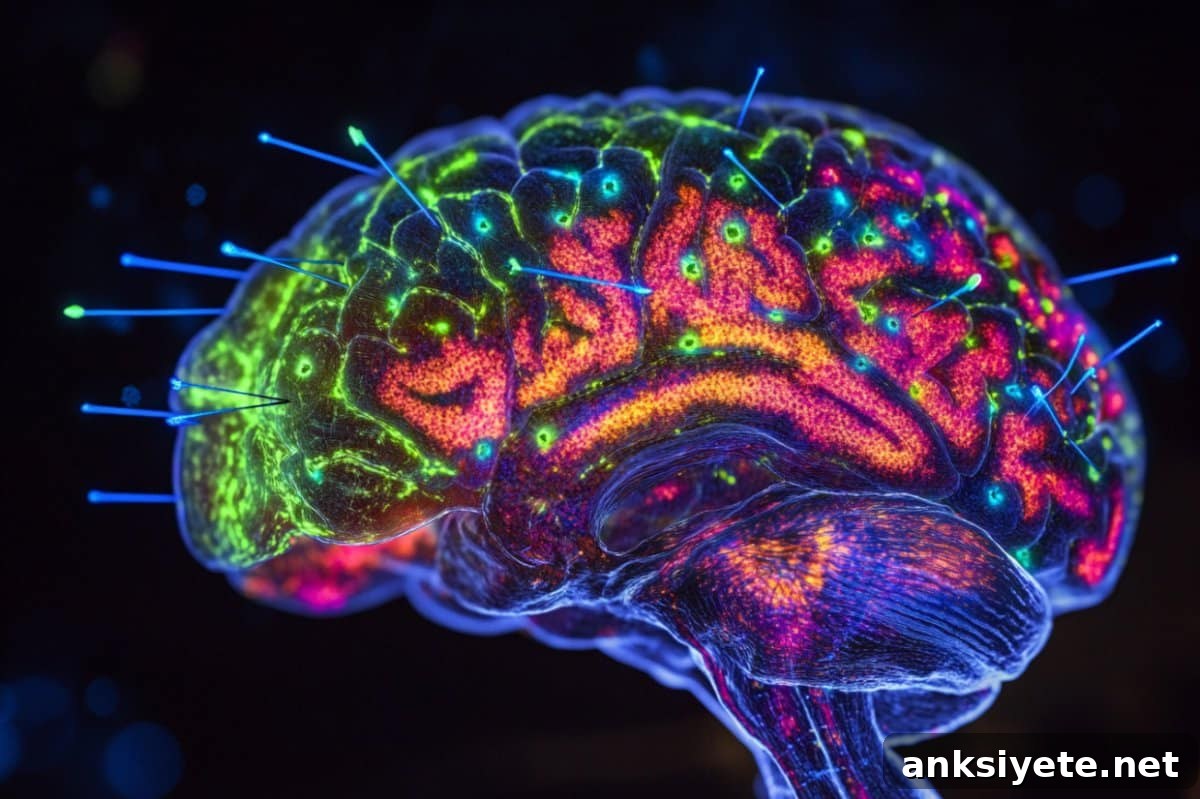
Summary: A new scientific review maps the cellular and molecular mechanisms that underlie how the brain forms, consolidates, generalizes, and updates memories. The analysis clarifies where memories are stored, how they change over time, and how their emotional content can be modified—insights that have important implications for disorders such as post-traumatic stress disorder (PTSD).
Recent breakthroughs let researchers visualize and selectively activate the specific neurons that store memories, offering a clearer view of how learning happens and why fear memories sometimes become overgeneralized in anxiety disorders.
The review describes how neurons are chosen for encoding, how memory dependence shifts from the hippocampus to cortical areas, and how reactivated memories can be reshaped. These findings point toward targeted strategies that could reduce the emotional impact of traumatic memories without erasing the underlying experience.
Key Facts:
- Memory engrams: Memories are represented by sparsely distributed neuronal ensembles that undergo lasting molecular and structural changes during learning.
- Risk of generalization: As memories lose detail over time, they can become overgeneralized—an effect that contributes to PTSD and other anxiety disorders.
- Modifiable traces: When memories are reactivated they become labile and can be updated, offering potential routes for therapeutic modification of emotional associations.
Source: Genomic Press
Overview of the review
A comprehensive review published by thought leaders at Genomic Press synthesizes current understanding of the dynamic cellular processes that enable memory encoding, consolidation, generalization, and updating. The authors integrate recent experimental advances to paint a cohesive picture of how engram cells form, stabilize, change, and interact across brain regions.
The hunt for memory traces
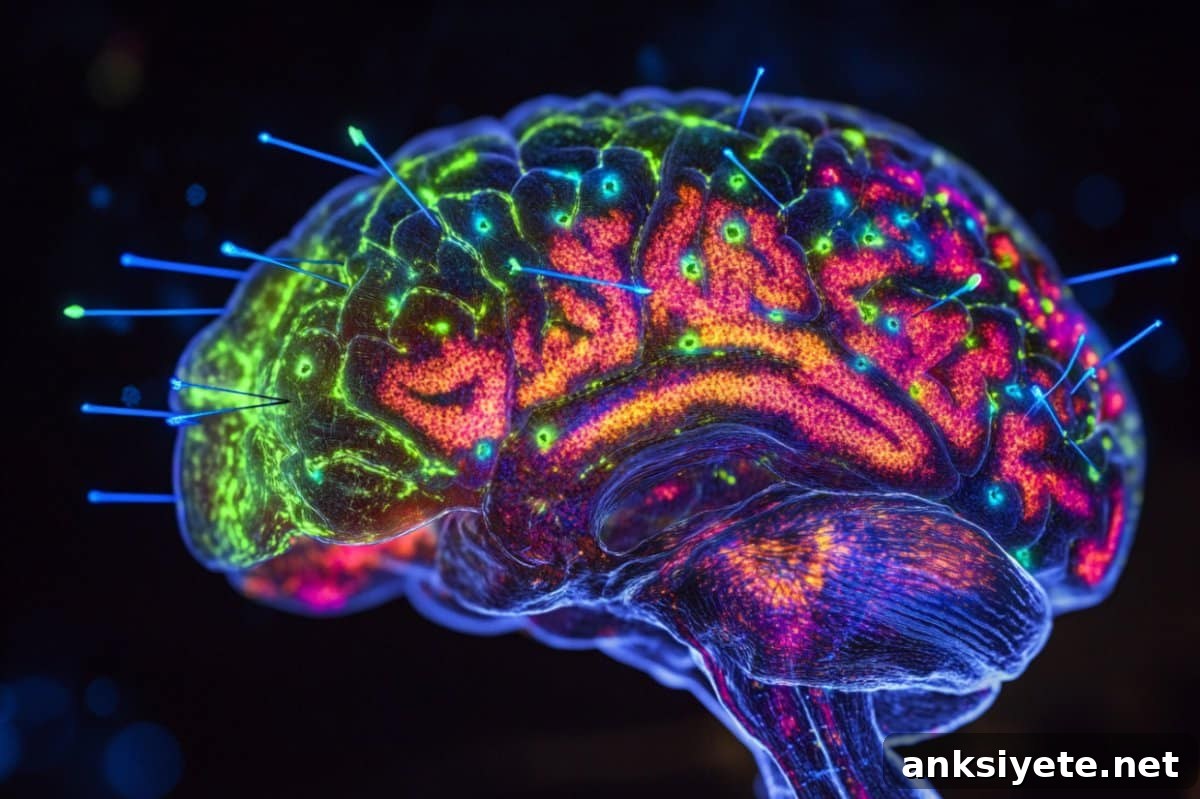
One of neuroscience’s enduring questions is how the brain stores, updates, and generalizes past experience. Current evidence supports the idea that memories are encoded by engrams—sparse ensembles of neurons distributed across regions such as the hippocampus, amygdala, and cortex. These neurons exhibit persistent biophysical or molecular changes after learning, creating a durable trace of specific experiences.
“What Richard Semon once called the ‘engram’ has become an experimentally tractable biological entity,” explains Professor Zhe-Yu Chen. Advances in molecular tagging and activity manipulation have moved engrams from theoretical constructs to measurable neural substrates.
Technological advances: visualizing and controlling memory ensembles
Modern methods allow scientists to label neurons activated during learning, track their activity over time, and manipulate them to test causal roles in memory. Combining immediate early gene–based tagging with optogenetic or chemogenetic tools enables selective identification and control of memory-encoding ensembles.
Researchers can now observe which cells activate during formation and retrieval, and in some cases artificially trigger memory recall by stimulating those same cells. These capabilities reveal memory processes at cellular resolution and open the door to precise experimental interventions.
Memory allocation and how memories form
Engram recruitment is not random. During learning, neurons with higher intrinsic excitability are more likely to be incorporated into a memory trace. This competitive selection depends in part on the transcription factor CREB, which increases excitability and dendritic spine density; neurons with elevated CREB activity are preferentially allocated to new engrams.
This allocation mechanism helps explain why some neurons participate in multiple memories and how overlap between engrams can facilitate linking of related experiences.
How memories evolve: systems consolidation and generalization
Newly formed memories typically rely on the hippocampus for detailed, context-specific information. Over days to years, a process known as systems consolidation shifts memory storage toward cortical structures such as the medial prefrontal cortex, which represent more abstract, generalized schemas.
This transition preserves core content while allowing episodic details to fade, a trade-off that supports flexible behavior but also increases the risk of overgeneralization—especially for fear memories. When hippocampal specificity is undermined by stress or circuit dysfunction, fear responses can extend inappropriately to safe contexts, a hallmark of anxiety-related disorders.
Generalization, anxiety, and PTSD
Memory generalization is adaptive when it helps apply past learning to new situations, but maladaptive when it produces persistent, inappropriate fear. The hippocampus and amygdala play central roles in maintaining specificity; disruptions to these circuits, or to signaling pathways that support discrimination, can promote overgeneralized fear responses found in PTSD and other anxiety disorders.
The review highlights mechanisms—such as stress-induced circuit remodeling and altered synaptic dynamics—that drive generalization and identifies them as potential targets for intervention.
Updating memories: opportunities for therapeutic change
When a memory is reactivated it enters a transiently labile state, allowing incorporation of new information or changes to its emotional valence. Experimental work shows that the valence linked to a hippocampal engram can be bidirectionally modified, suggesting that targeted reactivation combined with new learning or modulation might reduce the emotional weight of traumatic memories without erasing the factual content.
These findings motivate continued exploration of therapies that selectively alter engram connectivity or synaptic strength to treat emotional disorders.
Open questions and future directions
Important questions remain. How do nuclear and transcriptional changes during encoding connect to specific synaptic strengthening? What determines a neuron’s entry into or exit from an engram over time? How does the brain balance memory stability with the flexibility required for updating and generalization? Addressing these issues will deepen our understanding of memory dynamics and their clinical relevance.
About this memory and PTSD research news
Author: Ma-Li Wong
Source: Genomic Press
Contact: Ma-Li Wong – Genomic Press
Image: The image is credited to Neuroscience News
Original Research: Open access. “Dynamic memory engrams: Unveiling the cellular mechanisms of memory encoding, consolidation, generalization, and updating in the brain” by Zhe-Yu Chen et al. Brain Medicine. DOI: 10.61373/bm025i.0044
Abstract
Dynamic memory engrams: Unveiling the cellular mechanisms of memory encoding, consolidation, generalization, and updating in the brain
How the brain stores, generalizes, and updates memories is a core question in neuroscience. Memories are encoded by neuronal ensembles called engrams, which undergo biophysical and molecular changes and are distributed across multiple brain regions. The dynamic cellular changes that occur during encoding, consolidation, generalization, and updating are not yet fully understood, but recent advances in labeling and manipulating neural activity enable direct investigation of engram dynamics. A better understanding of these processes could guide interventions for PTSD and other memory-related disorders. This review summarizes recent progress in characterizing engram formation and maturation across memory stages, highlighting mechanisms that may be targeted to modify maladaptive emotional memories.