
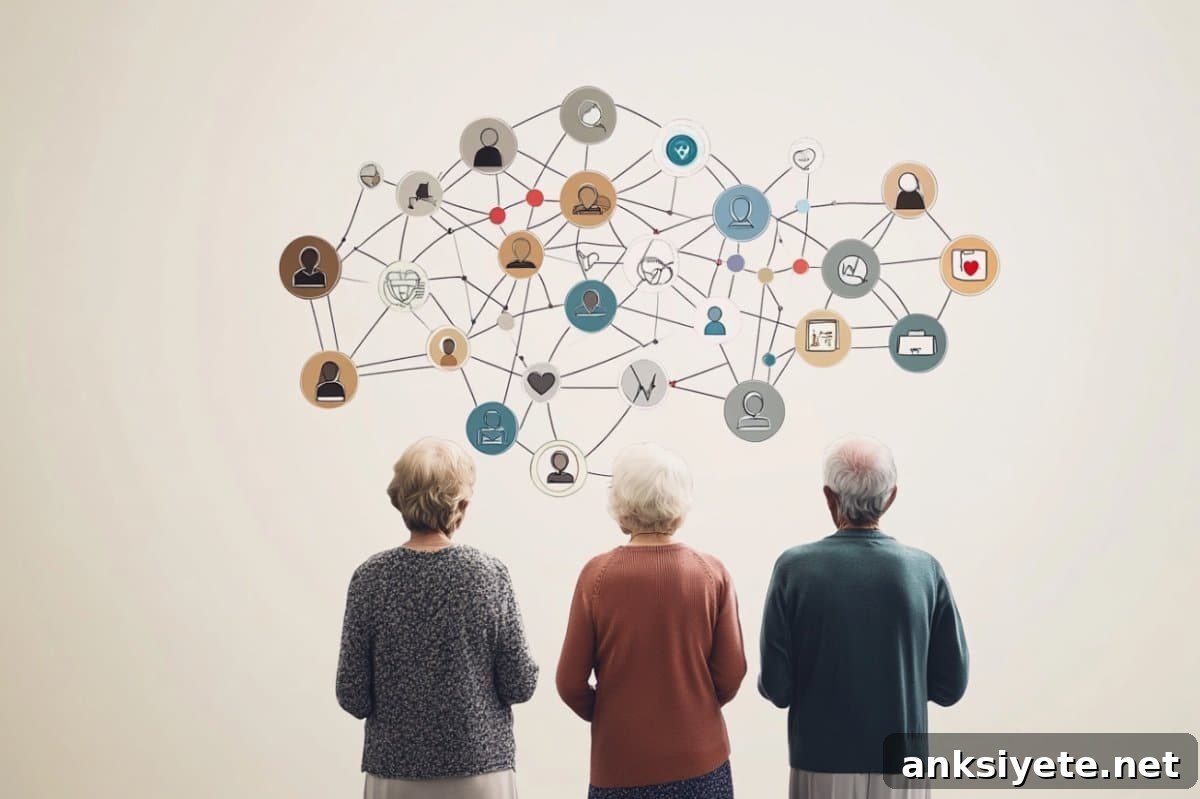
Summary: A decade-long study following more than 1,500 older adults finds a clear link between the kinds of social networks people maintain and their health as they age. Older adults with broad, active, and diverse social ties reported better self-rated health, while those whose networks were small and family-centered reported worse health and were unlikely to move out of that isolated state. The research also shows that some people, especially those in moderately connected networks, can expand their relationships over time, offering a pathway to improved well-being.
Networks characterized by emotional closeness but limited scope provided some protection against loneliness, yet they did not offer the same health advantages as richer, more diverse social ties. Importantly, mobility between network types occurred for many people, indicating that social connections are changeable and can be strengthened with targeted supports.
Key Facts:
- Health disparities: Older adults in restricted networks experienced the poorest health outcomes.
- Social mobility: More than 40% of people in focused networks expanded into enriched networks during the study.
- Structural risk factors: Women, older age groups, and people of color were more likely to experience declines in social networks and end up in restricted networks.
Source: University of Illinois
New research highlights how social life shapes health in later years and points to opportunities to reduce inequities among older adults.
Published in the journal Innovation in Aging, this study followed participants across three waves of the National Social Life, Health and Aging Project, tracking over 1,500 older adults across roughly ten years to examine how social network types change and how those changes relate to self-rated health.
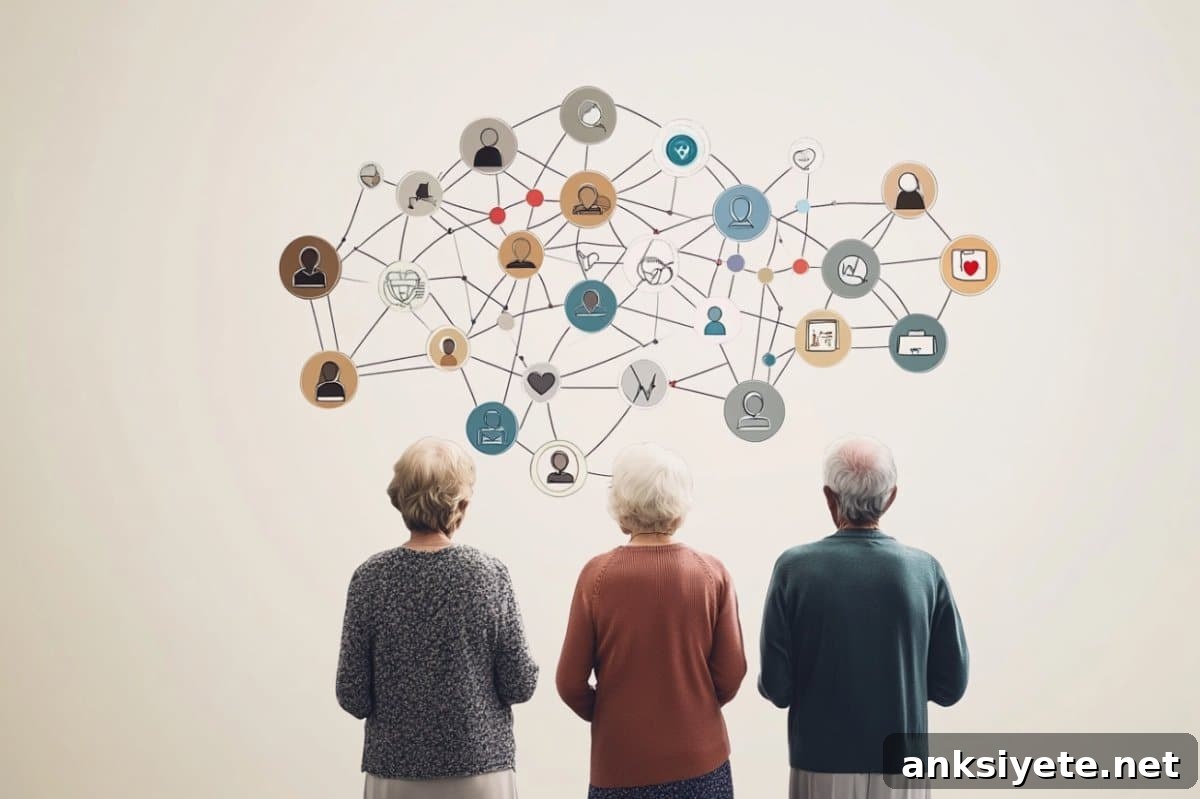
Led by Lissette Piedra, a professor of social work at the University of Illinois Urbana-Champaign, and James Iveniuk, a senior research scientist at the University of Chicago’s National Opinion Research Center, the team identified three distinct social network types among older adults: enriched, focused, and restricted.
Enriched networks, defined by wide-ranging social ties, frequent social activity, and often higher marriage rates, were consistently associated with the best self-rated health. Restricted networks—smaller, family-centered, and more isolated—were linked to the worst health and highest loneliness. Focused networks fell between these extremes: they were smaller but included frequent, meaningful interactions that helped reduce loneliness even when the network size was limited.
At the beginning of the study, individuals in restricted networks reported substantially poorer health. Over time, both restricted and focused network members tended to have worse health outcomes than those in enriched networks, though some of the gaps narrowed. The study underscores the lasting health consequences of social isolation as well as the potential benefits of richer social engagement.
“Social isolation and loneliness can have corrosive effects on mental and physical health,” said Piedra, who is also a professor of Latina/Latino Studies. She emphasized that social circles often shrink for older adults because of illness, bereavement, financial hardship, discrimination, language barriers, or living in unsafe or rural communities with limited opportunities to connect.
Racial and ethnic minorities reported higher levels of loneliness overall. Still, the study delivered a hopeful message: many people in focused networks expanded their connections over time. More than 43% of those in focused networks moved into enriched networks during the study period, while 22% moved into more restricted networks, showing both opportunity and risk within this middle group.
By contrast, the restricted group showed striking stability: more than 85% of people who began in that group remained there, highlighting how persistent isolation can be for some older adults.
Piedra noted that certain groups were particularly vulnerable to network decline. Women, Black participants, and the oldest respondents were more likely to shift from enriched to focused networks, often because of widowhood, health declines, or other structural barriers like limited transportation and unsafe neighborhoods. Loss of a spouse or a close friend can quickly contract someone’s social world, especially when their social life centered on a single relationship.
Despite these challenges, the researchers emphasize that social networks are not fixed. With appropriate interventions—community programs, improved transportation, inclusive activities, and policies that address structural barriers—older adults can build stronger, more diverse networks, improving both social and physical well-being.
“That was the silver lining,” Piedra said. “We saw movement into more robust networks across all groups. That gives us reason to be hopeful. These social ties are crucial for cognitive and physical health as people age. Tailored public health interventions can help ensure more older adults enjoy enriched social lives and better health in their later years.”
Funding: The study received support from the National Institute on Aging and the University of Chicago’s Center for Healthy Aging Behaviors and Longitudinal Investigations.
About this health and social neuroscience research news
Author: Sharita Forrest
Source: University of Illinois
Contact: Sharita Forrest – University of Illinois
Image: The image is credited to Neuroscience News
Original Research: Closed access.
Title: Social network types and self-rated health among diverse older adults: Stability, transitions and implications for health equity by Lissette Piedra et al., published in Innovation in Aging.
Abstract
Social network types and self-rated health among diverse older adults: Stability, transitions and implications for health equity
Background and objectives
This research examines how social networks among older adults change across time and how those changes relate to self-rated health (SRH), with attention to differences across racial, ethnic, and linguistic groups. While the link between social ties and well-being is well established, the dynamics of network change and the health consequences across diverse populations remain less examined.
Research design and methods
The analysis used three rounds of data from the National Social Life, Health, and Aging Project. The initial cohort numbered 3,005 individuals; the analytic sample included 1,592 participants with complete data across all waves, producing 6,858 observations. The team used random-intercept latent transition analysis to identify network types and model transitions over time, together with multinomial logistic regression to predict membership, transitions, and associations with SRH.
Results
Three distinct social network types emerged: Enriched networks with broad social engagement and low loneliness; Focused networks that are smaller but feature frequent, close contacts and relatively low loneliness; and Restricted networks that are family-centered, have low marriage rates, and the highest loneliness. Over time, restricted networks grew more common, while focused networks showed the greatest movement between types. Membership in enriched networks was consistently associated with better self-rated health, and membership patterns varied by race, ethnicity, and gender.
Discussion and implications
The increasing presence of restricted networks is concerning because limited social environments can undermine health. Yet the mobility observed—particularly the movement from focused to enriched networks—suggests that older adults can strengthen their social ties. Identifying what enables that expansion can inform interventions designed to help vulnerable groups access richer social networks, thereby improving health equity and overall well-being in later life.