
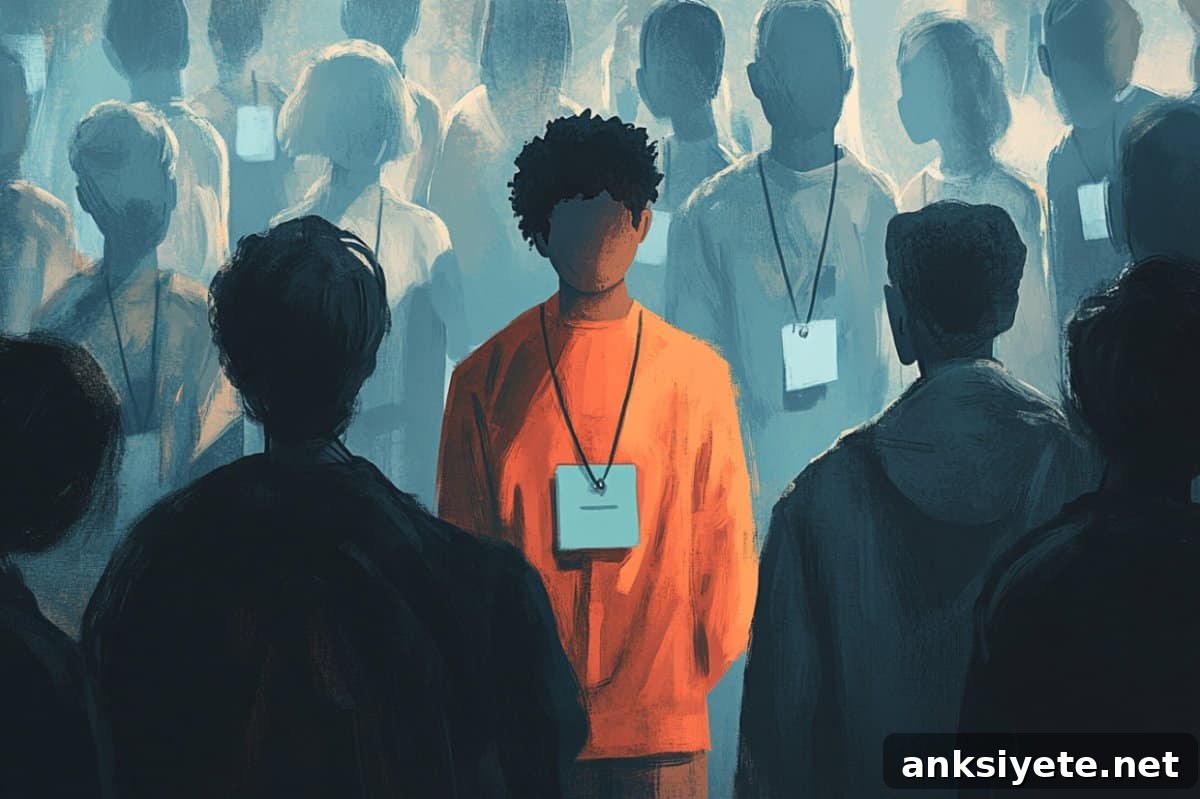
Summary: A new study highlights how developmental prosopagnosia — commonly called face blindness — affects daily life for many people who otherwise have normal vision, memory, and intelligence. Those with the condition often fail to recognise familiar people, even close family and long-term partners, and rely on exhausting or unreliable strategies such as notes, clothing cues, or voice recognition. The condition frequently causes social anxiety, isolation, and fear of being judged as rude or unintelligent.
The researchers call for greater public awareness, workplace and educational accommodations, and recognition of face blindness as a form of neurodivergence so that affected individuals receive appropriate understanding and support.
Key Facts:
- Relatively common but under-recognised: Approximately one in 50 people have developmental prosopagnosia.
- Real-world impact: Even those classified as “mild” can experience severe social difficulties and relationship strain.
- Neurodivergence framework: Experts urge recognising face blindness alongside other neurodivergent conditions to improve inclusion.
Have you ever been ignored by someone you knew on the street or at an event?
It can be tempting to assume rudeness, but for some people the reason is face blindness — they genuinely do not recognise the person approaching. In a new study of 29 adults with confirmed developmental prosopagnosia, participants described frequent, sometimes distressing, failures to identify even close friends and family in unexpected or out-of-context encounters.
Participants reported striking examples: one person failed to recognise her husband of 30 years when he unexpectedly came to pick her up at an airport; others described confusion after being away from work for a short period and returning to a team whose faces no longer registered.
Although public awareness of developmental prosopagnosia is low, its prevalence means you likely already know someone affected. The condition is lifelong and impairs face recognition despite normal eyesight, IQ, and general memory. Research traditionally labels inability to recognise immediate family as a severe form of prosopagnosia, but this study shows that people classified as “mild” can still suffer major day-to-day problems. That finding suggests diagnosis should consider real-world experiences in addition to lab measures.
Most study participants had developed coping strategies, but these were mentally demanding and often unreliable. Common tactics included keeping detailed notes or spreadsheets describing people they meet, mentally linking names to distinctive features, or relying on context, voice, gait, clothing, or even smell. Several described checking social media or messages before events to remind themselves who would be there. Many found these approaches exhausting, especially under work pressure or when colleagues wore similar uniforms.
Two-thirds of participants reported being able to recognise fewer than ten familiar faces, with the most common response being none. By contrast, typical adults can recognise thousands of faces across their lifetime, so this difference is substantial and has profound consequences for social functioning.
Worry about being misjudged as rude, uncaring, or unintelligent was common and contributed to social anxiety. To reduce embarrassment, many people avoided social events or deliberately kept their social circles small — strategies that often led to isolation and, for some, underdeveloped social skills due to fewer social learning opportunities during childhood and adolescence.
Participants said their top priorities for future research were raising awareness of the condition and developing interventions to improve face recognition or to create better supports. They highlighted the need for employers, schools, and healthcare professionals to recognise the condition and to make simple adjustments that significantly ease daily life.
Practical, low-cost accommodations identified as especially helpful include large, visible name badges at events, starting meetings with brief introductions, having the meeting chair address people by name, and providing seating plans. In workplaces and classrooms, avoiding hot-desking and keeping consistent seating can help people learn regular positions and associate colleagues with locations rather than relying solely on faces. Small gestures, such as sending a quick message to a face-blind friend about what you are wearing and where you will sit, can also prevent awkward encounters.
A form of neurodivergence
The study authors argue that developmental prosopagnosia fits within the broader concept of neurodivergence — that is, a different but valid way of processing the world akin to autism, ADHD, dyslexia, or dyspraxia. Framing face blindness as neurodivergent highlights the need for dignity, inclusion, and practical support rather than stigma.
About this prosopagnosia research news
Author: Judith Lowes
Source: The Conversation
Contact: Judith Lowes – The Conversation
Image credit: Neuroscience News
Original Research: Open access. “This condition impacts every aspect of my life: A survey to understand the experience of living with developmental prosopagnosia” by Judith Lowes et al., PLOS One.
Abstract
This condition impacts every aspect of my life: A survey to understand the experience of living with developmental prosopagnosia
This mixed-methods study explored the lived experience of developmental prosopagnosia, a lifelong neurodevelopmental condition that severely limits the ability to recognise faces while leaving vision, general memory, and IQ intact. Twenty-nine UK-based adults with confirmed face recognition difficulties completed an online survey describing and quantifying how poor face recognition affects their daily lives.
Although a majority (62%) reported they could generally recognise immediate family members, 35% said they could not reliably identify close family members when encounters were unexpected or out of context. Only 45% reported always recognising their three closest friends in surprise meetings, showing that even emotionally close and frequently seen faces can be difficult to identify.
Objective measures of face memory did not always align with participants’ real-world experiences, suggesting current lab tests may miss everyday challenges. More than two thirds (65.5%) could recognise fewer than ten familiar faces. Thematic analysis revealed low awareness among the public, professionals, and employers, which creates barriers in diagnosis, workplace inclusion, and social relationships. Most participants used effortful, error-prone strategies to cope — strategies that can mask difficulties on standard tests but fail in real life.
Participants’ priorities for future work included raising awareness, improving diagnostic pathways, developing realistic assessments that reflect daily life, and researching interventions to improve face recognition and reduce the condition’s social impact.