
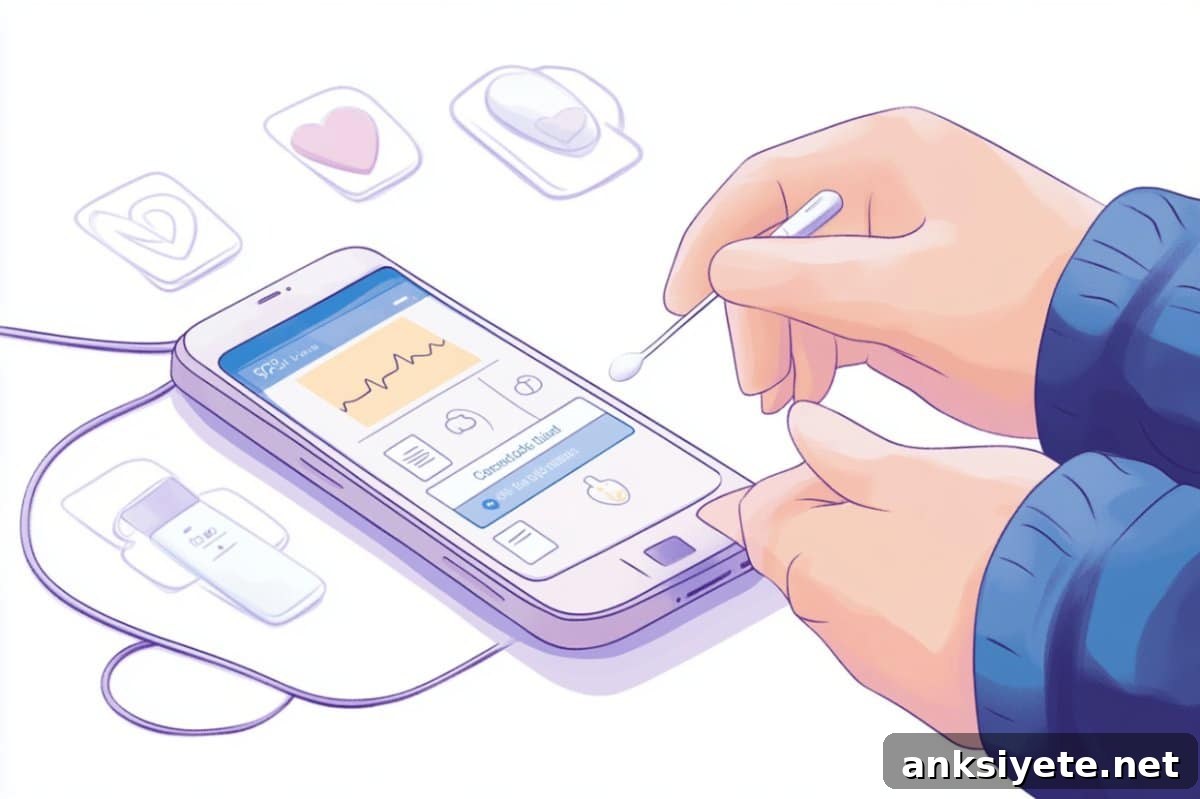
Summary: Engineers have developed a portable lab-on-a-chip device that measures cortisol in saliva, providing a rapid, objective method to assess stress and help identify people at risk for depression, anxiety and other mental health disorders. The system uses a disposable saliva collector and a handheld reader that transmits results to a smartphone within minutes.
Unlike conventional mental health questionnaires that depend on self-reporting, this test supplies clinicians with biochemical evidence to support faster, data-driven decisions. The same platform can be adapted to detect other biomarkers, such as cardiac troponin from blood, which is useful for diagnosing heart damage.
Key Facts:
- Rapid mental health screening: The device measures cortisol and, in related work, DHEA from saliva, delivering objective stress indicators in minutes.
- Portable and user-friendly: The disposable saliva swab is simple to use at home; a handheld reader analyzes the sample and sends results to a smartphone app for sharing with clinicians.
- Extensible platform: The underlying microfluidic approach can be adapted to measure other clinically relevant biomarkers, including blood troponin for cardiac events.
Source: University of Cincinnati
University of Cincinnati engineers have built a new tool to support diagnosis of depression and anxiety.
Chong Ahn, Distinguished Research Professor at the UC College of Engineering and Applied Science, and his students designed a polymer lab-on-a-chip that detects the stress hormone cortisol in a patient’s saliva. Measuring unbound cortisol noninvasively offers clinically relevant biochemical information that can reveal physiological stress even when patients do not report symptoms on a standard questionnaire.
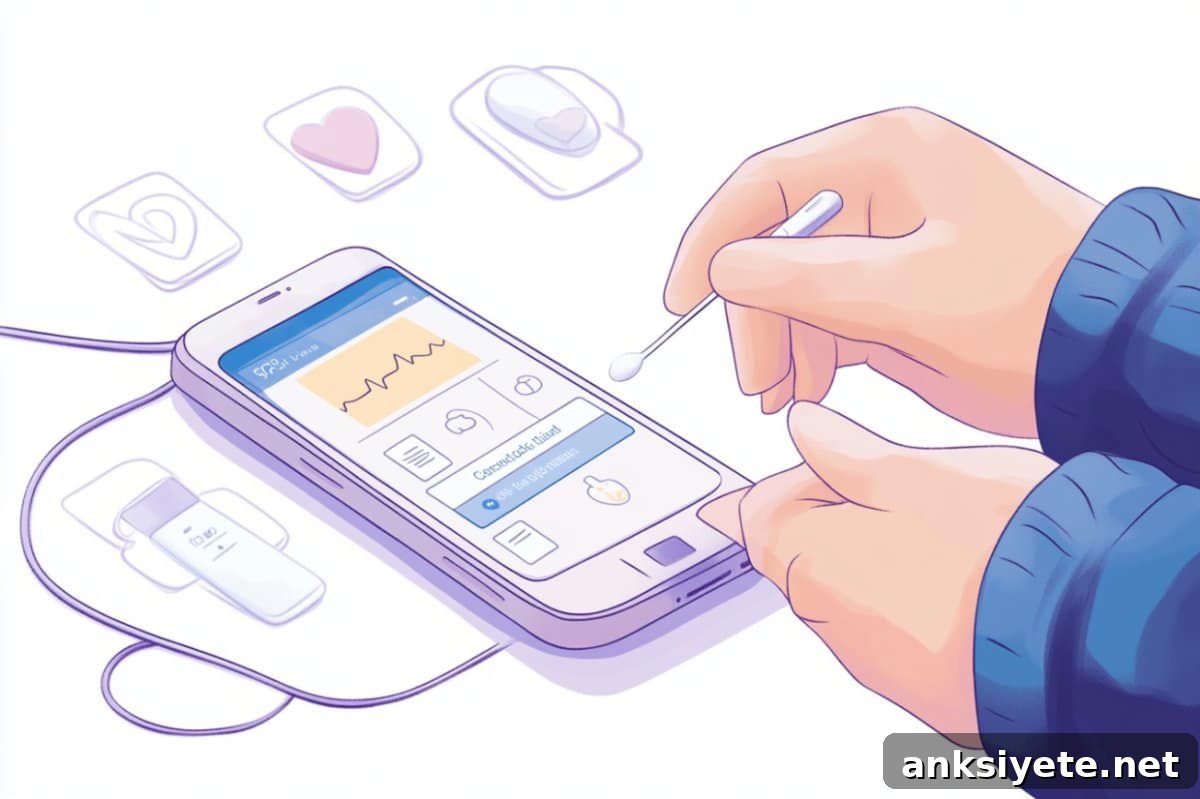
Mental health conditions affect hundreds of millions worldwide, and stress-related disorders like anxiety and depression are leading contributors to disability. Long-term elevation of cortisol is associated with multiple psychiatric conditions, so timely measurement of salivary cortisol offers a practical biomarker for clinical evaluation and monitoring.
The UC team’s lab-on-a-chip system includes a disposable collection device that the user places in the mouth, then inserts into a compact reader. The reader performs the assay and transmits results within minutes to a portable analyzer and a smartphone application, enabling rapid point-of-care or at-home screening.
The cortisol study is reported in the journal Biomedical Microdevices.
“Mental health care can be an urgent situation. These tests will help clinicians make timely interventions,” Ahn said. The system supports self-testing and secure sharing of results with healthcare providers through a web app, he added.
Doctoral student Supreeth Setty, a co-author on the work, is also studying dehydroepiandrosterone (DHEA), a hormone that counterbalances cortisol’s effects. Research shows that the ratio of cortisol to DHEA can indicate chronic stress, which is linked to depression and anxiety. Setty emphasized that biochemical tests for cortisol and DHEA give objective signals that can complement subjective questionnaires and prompt further clinical evaluation when levels are concerning.
“Point-of-care testing is a practical way to make results available quickly for everyone,” Setty said. The next step, he noted, is to collaborate with psychiatrists and conduct clinical trials to validate the platform’s diagnostic utility in clinical settings.
The study’s lead author was UC doctoral graduate Vinitha Thiyagarajan Upaassana, with co-authors Setty and UC doctoral student Heeyong Jang. Funding support included UC’s Technology Accelerator Project.
The UC researchers also demonstrated how the same microfluidic approach can be applied to other medical needs. In related work published in Analytical Chemistry, Jang, Setty and Ahn described a rapid point-of-care test that measures cardiac troponin from a single drop of blood. Troponin levels rise when heart muscle is damaged; measuring troponin quickly can help diagnose a heart attack and guide immediate care.
“After surviving a heart attack, the risk of another event is higher,” Jang said. “Monitoring troponin levels regularly and getting fast results can provide valuable information when a patient needs urgent treatment.”
About this depression and neurotech research news
Author: Michael Miller
Source: University of Cincinnati
Contact: Michael Miller – University of Cincinnati
Image: The image is credited to Neuroscience News
Original Research: Open access.
“On-site analysis of cortisol in saliva based on microchannel lateral flow assay on polymer lab-on-a-chip” by Chong Ahn et al. Biomedical Microdevices
Abstract
On-site analysis of cortisol in saliva based on microchannel lateral flow assay on polymer lab-on-a-chip
Unbound cortisol in saliva, obtained through noninvasive sampling, is an established biomarker for assessing common mental disorders such as chronic stress, depression, anxiety and post-traumatic stress disorder (PTSD). This work reports a novel polymer lab-on-a-chip (LOC) implementing a microfluidic lateral flow assay (mLFA) with on-chip dried reagents for detecting unbound salivary cortisol using a competitive immunoassay format.
The mLFA-LOC devices were produced by injection molding and comprise sequential microchannels for sample loading, detection antibody immobilization, flow-delay regions, sensing spirals for test and control, and a capillary pump at the outlet. After a filtered saliva sample is loaded, the competitive immunoassay runs autonomously through the microchannels, and fluorescence signals from the sensing spirals are read and quantified by a custom portable fluorescence analyzer developed for this platform.
For evaluation, artificial saliva spiked with known concentrations of unbound cortisol was analyzed using the mLFA-LOC and the portable analyzer. The assay demonstrated a limit of detection (LoD) of 1.8 ng/mL and an inter-chip coefficient of variation (CV) of 4.0%, covering the clinical range required for on-site salivary cortisol analysis.
The newly developed mLFA-LOC platform successfully enables rapid on-site sampling and analysis of salivary biomarkers, offering a practical tool for point-of-care screening and monitoring in mental health and other medical contexts.