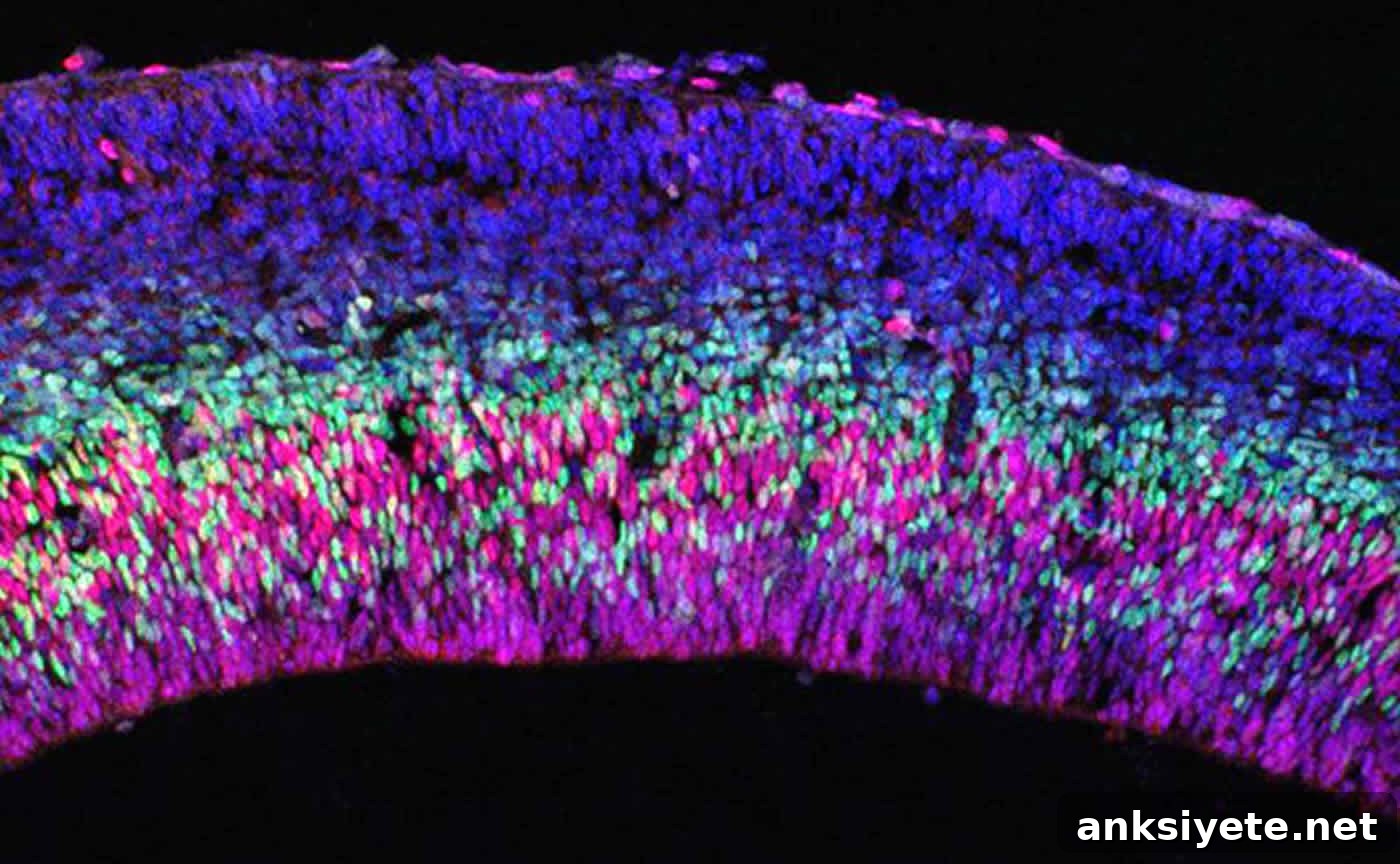
Summary: LMU researchers identify an early epigenetic mechanism that, when disrupted during the first stages of neurogenesis, activates retroviral elements and ultimately causes delayed neural cell death.
Source: LMU.
Early epigenetic regulation by Uhrf1 is essential for long-term neuronal survival; its loss activates retroviral sequences and leads to progressive neurodegeneration.
The formation of neurons from neural stem and progenitor cells—neurogenesis—is a highly coordinated process that depends on precisely timed genetic and epigenetic controls. Researchers led by Professor Magdalena Götz at Ludwig-Maximilians-Universität München (LMU), in collaboration with Professor Gunnar Schotta at the Biomedical Center LMU, investigated how epigenetic events that occur at early stages of neurogenesis influence the fate and survival of neurons later in development. Their findings, published in the journal Genes & Development, demonstrate that transient epigenetic regulators active in early development can have long-lasting consequences for neuronal health.
The team focused on the gene Uhrf1 (ubiquitin-like PHD and RING finger-containing protein 1, also known as Np95), a regulator that coordinates multiple epigenetic functions including maintenance of DNA methylation. Uhrf1 is highly expressed in neural stem cells of the developing brain and is normally down-regulated as cells differentiate. To test the role of early Uhrf1 activity, the investigators used a conditional knockout strategy to delete Uhrf1 specifically in a forebrain region during mouse embryogenesis.
Surprisingly, immediate proliferation and initial neuron production appeared relatively normal after Uhrf1 deletion. However, the absence of Uhrf1 caused widespread loss of DNA methylation in developing neural cells and led to a strong, selective activation of a class of endogenous retroviral elements known as intracisternal A particles (IAPs). Normally silenced by methylation, these retroviral elements became transcriptionally active in the Uhrf1-deficient neural lineage.
Further analysis revealed that the family of Tet enzymes, which can catalyze DNA demethylation via conversion of 5-methylcytosine to 5-hydroxymethylcytosine, played a central role in this process. In the absence of Uhrf1, Tet proteins appeared to mediate demethylation at IAP loci, allowing their persistent activation. Importantly, IAP up-regulation did not remain confined to embryonic stages: these retroviral elements stayed active into postnatal life, indicating that loss of early Uhrf1 produced a stable and non-reversible change in the epigenetic state of affected cells.
The sustained expression of retroviral transcripts and proteins imposed a substantial cellular burden. Accumulation of retroviral proteins and the consequent dysregulation of gene networks and key pathways progressively disrupted cellular homeostasis. Over time this led to extensive neuronal dysfunction and a pronounced wave of cell death after birth, accounting for severe postnatal neurodegeneration observed in the Uhrf1 conditional knockout animals.
These findings demonstrate that transient expression of a single epigenetic regulator in neural stem cells can set the stage for neuronal survival or demise many days or weeks later. “Our results reveal that factors such as Uhrf1, active only in early neurogenesis, can determine cell fate long after their expression ceases,” says Professor Götz. The study underscores the importance of early epigenetic programming for later neuronal differentiation and highlights mechanisms that could be relevant to understanding certain neurodegenerative conditions.
Source: LMU
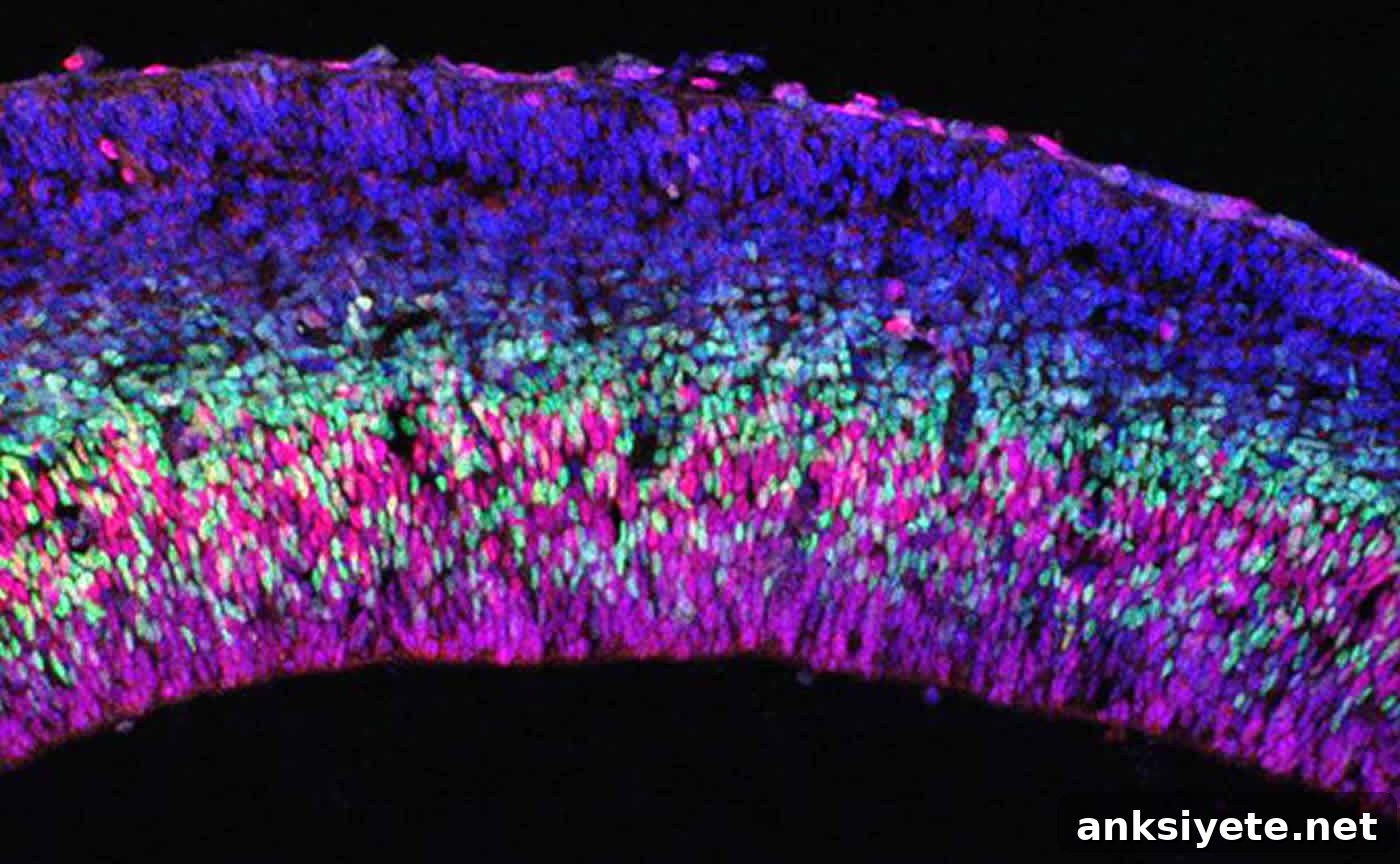
Image credit: Vidya Ramesh
Original research: The study titled “Loss of Uhrf1 in neural stem cells leads to activation of retroviral elements and delayed neurodegeneration” was published in Genes & Development (published online October 1, 2016). The authors include Vidya Ramesh, Efil Bayam, Filippo M. Cernilogar, Ian M. Bonapace, Markus Schulze, Markus J. Riemenschneider, Gunnar Schotta, and Magdalena Götz. DOI: 10.1101/gad.284992.116
Conditional deletion of Uhrf1 in the developing mouse cerebral cortex produces global DNA hypomethylation with pronounced activation of intracisternal A particle (IAP) endogenous retroviral elements and increased 5-hydroxymethylcytosine. Down-regulation of Tet enzymes rescued IAP activation in Uhrf1-deficient cells, indicating an antagonistic interaction between Uhrf1 and Tet proteins in regulating these retroelements. Because IAP up-regulation persists into postnatal stages when differentiating neurons normally do not express Uhrf1, affected neurons lack a mechanism to re-establish repression. The persistent burden of viral proteins and associated transcriptional deregulation culminates in progressive postnatal neurodegeneration. These results show that epigenetic regulators expressed transiently in neural stem cells can have long-term consequences for neuronal differentiation and survival, and they highlight specific vulnerabilities of retroviral element classes to changes in DNA methylation.
LMU. “Epigenetics and Neural Cell Death.” NeuroscienceNews, 26 October 2016. Retrieved October 26, 2016.
Keywords: Uhrf1, epigenetics, neurogenesis, DNA methylation, Tet enzymes, endogenous retroviruses, IAP, neurodegeneration, neural stem cells, mouse embryogenesis.