
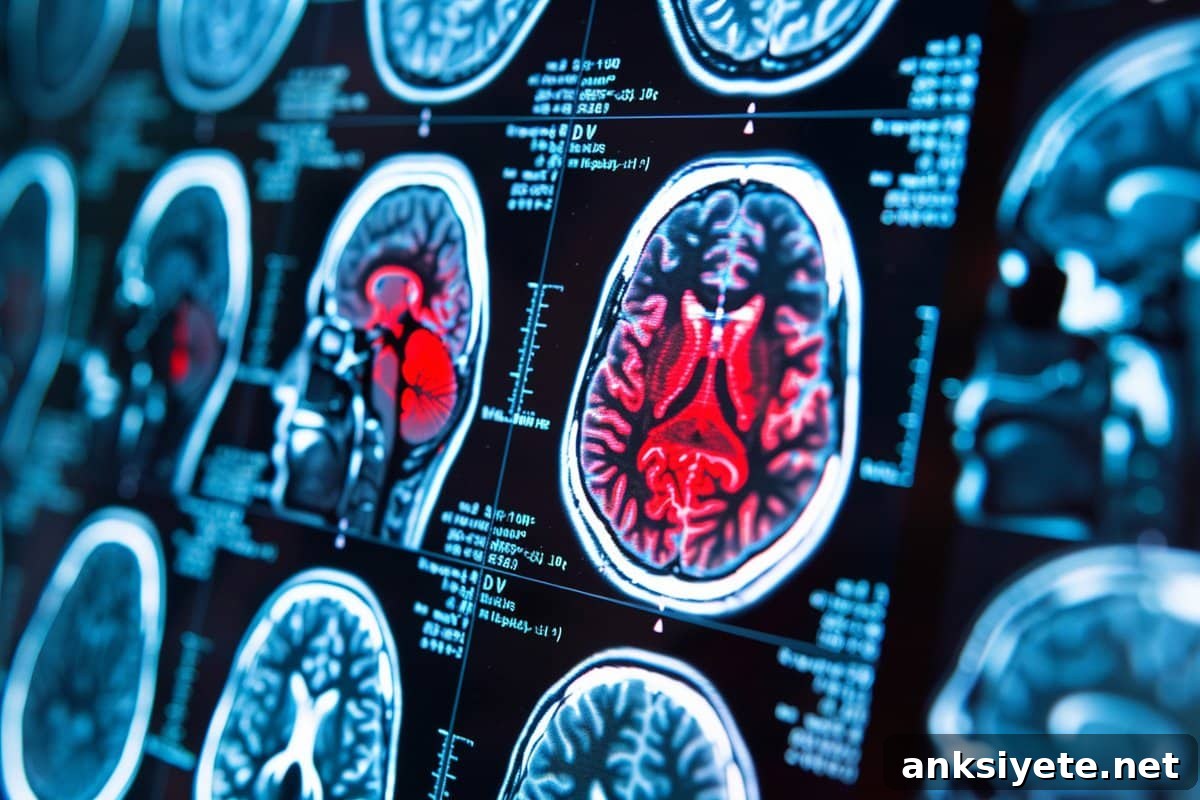
Summary: A preliminary study suggests that people who develop headaches after a concussion show greater iron accumulation in specific brain regions, a marker that may indicate injury to brain cells. Researchers compared 60 individuals with post-traumatic headache following mild traumatic brain injury (mTBI) to 60 matched controls without concussion, and found a relationship between iron measures, concussion history, and headache frequency.
The study, presented at the American Academy of Neurology’s 76th Annual Meeting, found higher indirect measures of iron burden in several brain areas of people with concussion-related headaches. These findings, supported by the U.S. Department of Defense and the National Institutes of Health, point to iron accumulation as a potential biomarker for concussion and post-traumatic headache, while researchers caution that the imaging method is indirect and could reflect other tissue changes.
Key Facts:
- Higher iron measures in concussion patients: Participants with concussions and subsequent headaches showed increased iron-related signals in regions such as the left occipital area, right cerebellum, and right temporal lobe compared with controls.
- Relationship with concussion history and headache frequency: Greater iron accumulation correlated with a higher number of lifetime concussions and with more frequent headaches, suggesting a dose-response pattern.
- Indirect imaging measure: The study used an indirect MRI-based measure of iron burden; researchers note that changes in the signal may also reflect hemorrhage or shifts in tissue water content, not only iron.
Study details and results
This investigation enrolled 60 adults who reported post-traumatic headache following mTBI (concussion) and matched them to 60 individuals without a history of concussion or post-traumatic headache. Mechanisms of injury among the mTBI group included falls (45%), motor vehicle collisions (30%), assault or fight-related injuries (12%), and other causes such as impact with an object or sports-related incidents. Regarding cumulative exposure, 46% of participants had experienced one mTBI in their lifetime, 17% had two, 16% had three, 5% had four, and 16% had five or more prior mTBIs.
All participants underwent brain imaging designed to estimate iron burden across multiple brain regions. For those in the mTBI group, imaging occurred on average 25 days after the most recent injury. Compared with the control group, the mTBI group showed elevated iron-related signals in several regions, notably the left occipital cortex, the right cerebellum, and the right temporal lobe. In the left occipital area, for example, people with concussion and ongoing headaches displayed clearly higher iron-related values than those without concussion or headaches.
Analyses further showed that both the number of prior concussions and the frequency of headaches were associated with increased iron-related measures in specific brain regions. Additionally, longer time elapsed since the index concussion was linked with higher iron-related signals in some areas, suggesting dynamic changes in tissue after injury.
“These results suggest that iron accumulation in the brain can be used as a biomarker for concussion and post-traumatic headache, which could potentially help us understand the underlying processes that occur with these conditions,” said study author Simona Nikolova, PhD, of the Mayo Clinic in Phoenix, Arizona, a member of the American Academy of Neurology. Nikolova emphasized that prior research indicates iron accumulation may alter functional interactions among brain regions, and that tracking iron-related changes could inform understanding of recovery after concussion.
The investigators note an important limitation: the study used an indirect MRI-based measure of iron burden. As a result, alterations in the imaging signal may reflect factors other than iron accumulation, such as residual microhemorrhage or changes in tissue water content. Further research using complementary methods will be needed to clarify the biological basis of these imaging findings and to determine whether iron-related signals can reliably serve as a diagnostic or prognostic biomarker for concussion and post-traumatic headache.
Funding: This research was supported by the U.S. Department of Defense and the National Institutes of Health.
About this concussion and neurology research news
Author: Renee Tessman
Source: AAN (American Academy of Neurology)
Contact: Renee Tessman – AAN
Image: The image is credited to Neuroscience News
Original Research: The findings were presented at the 2024 American Academy of Neurology’s 76th Annual Meeting.