
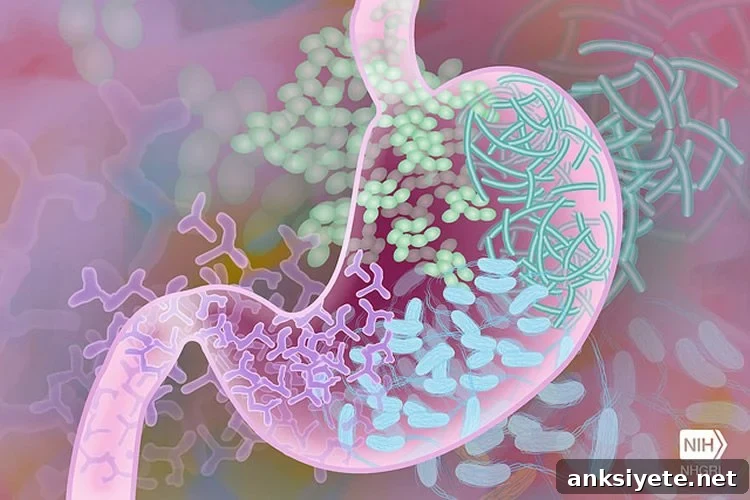
Summary: Researchers transplanted gut bacteria from older mice into young mice and observed low-grade, age-related chronic inflammation afterwards. This phenomenon, called inflammaging, is associated with age-linked conditions such as stroke, dementia and cardiovascular disease.
Source: Frontiers.
New research demonstrates that transferring gut bacteria from aged mice into young, germ-free mice induces chronic, low-grade inflammation characteristic of ageing. Known as “inflammaging,” this persistent inflammatory state is linked to many serious age-related conditions. Published in the open-access journal Frontiers in Immunology, the study suggests that changing gut microbiota composition could be a practical approach to support healthier ageing, since diet and other lifestyle factors influence the mix of gut bacteria.
“Because inflammaging contributes to many diseases of ageing, and our findings show the gut microbiota can drive this process, interventions that modify gut bacteria in older adults may reduce inflammaging and promote healthy ageing,” says Dr. Floris Fransen of University Medical Center Groningen, who led the study. “Dietary changes, probiotics and prebiotics are examples of interventions that can reshape the gut microbiome.”
Previous studies have reported consistent differences in gut microbial communities between older and younger individuals. Ageing is also associated with a decline in immune function and a rise in systemic inflammation. Fransen and colleagues designed experiments to test whether an aged gut microbiota could directly trigger inflammaging in a young host.
The team transferred gut microbiota from both old and young conventional mice into young, germ-free mice. They examined immune cell populations in the spleen, Peyer’s patches and mesenteric lymph nodes by flow cytometry, and assessed whole-genome gene expression in the ileum using microarray analysis. They also profiled the bacterial communities by 16S rDNA sequencing. Mice that received microbiota from aged donors developed immune changes and intestinal inflammation not seen in recipients of young donor microbiota.
The results support the idea that an altered balance of gut bacteria — known as dysbiosis — can drive inflammaging. Dysbiosis often means that potentially harmful bacterial groups become more abundant relative to beneficial species. Such shifts can increase gut permeability, allowing microbial components and toxins to cross into the bloodstream and trigger systemic inflammation. Dysbiosis has already been associated with multiple conditions, including inflammatory bowel disease, obesity, diabetes and certain cancers, and is implicated in mental health and neurodevelopmental disorders.
“The human gut hosts a vast and diverse bacterial community,” Fransen notes. “Species composition varies greatly between individuals, and that variation can influence immune and metabolic health.”
Why gut microbiota shift with age is not fully established. Factors likely include changes in diet, reduced physical activity, medication use (such as antibiotics), and intrinsic physiological changes that accompany ageing. The authors emphasize that multiple interacting causes probably account for the altered microbial landscape seen in older populations.
Although this study was conducted in mice, the findings underscore the potential importance of maintaining a balanced gut microbiota for healthy ageing. The researchers observed that aged microbiota promoted inflammation in the small intestine, increased leakage of bacterial components into the circulation, and led to greater T cell activation systemically. Specific changes in bacterial groups were associated with these effects, including reduced levels of Akkermansia and increased representation of Proteobacteria and TM7-related bacteria following transfer.
“Both in humans and in mice there are correlations between altered gut microbiota and inflammaging,” Fransen adds, “but proving a causal link in humans will require further research.”
Source: Frontiers
Publisher: NeuroscienceNews.com
Image Source: NeuroscienceNews.com image is in the public domain.
Original Research: Aged Gut Microbiota Contributes to Systemical Inflammaging after Transfer to Germ-Free Mice. Frontiers in Immunology, published online November 2, 2017. DOI: 10.3389/fimmu.2017.01385
Fransen F., van Beek A. A., Borghuis T., El Aidy S., Hugenholtz F., van der Gaast – de Jongh C., Savelkoul H. F. J., De Jonge M. I., Boekschoten M. V., Smidt H., Faas M. M., & de Vos P. (2017). Aged Gut Microbiota Contributes to Systemical Inflammaging after Transfer to Germ-Free Mice. Frontiers in Immunology. DOI: 10.3389/fimmu.2017.01385.
Abstract
Aged Gut Microbiota Contributes to Systemical Inflammaging after Transfer to Germ-Free Mice
Ageing is associated with chronic, low-grade inflammation termed inflammaging, and elderly individuals often exhibit an altered gut microbiota. To determine whether an aged microbiota can induce inflammaging, this study transferred gut communities from young or old conventional mice into young germ-free mice. Four weeks after transfer, immune cell populations in spleen, Peyer’s patches and mesenteric lymph nodes were analyzed, and ileal whole-genome expression profiles were assessed. Microbial composition of donors and recipients was measured by 16S rDNA sequencing. Transfer of aged microbiota promoted intestinal inflammation, increased systemic leakage of inflammatory bacterial components, and enhanced T cell activation compared with transfer of young microbiota. These effects correlated with reduced Akkermansia and increased TM7 and Proteobacteria in recipients of aged microbiota. The findings indicate that gut bacteria from old mice can contribute to systemic inflammaging when transferred to young germ-free mice.