
Summary: Low-level visual details of experiences—such as color saturation and brightness—tend to dim in memory over time, even as negative emotion can boost the subjective sense of vividness.
Source: Boston College
Memories lose visual richness with time, much like old photographs lose their color. Researchers at Boston College discovered that as recollections age they not only become less accurate in some respects, but people also report a decline in the visual vibrancy of those memories.
“When people recall past events, the clarity of their recollection varies,” explained Maureen Ritchey, Assistant Professor of Psychology at Boston College and co-author of the study published in Psychological Science. “Some memories feel as if you are reliving the moment, full of detail; others feel blurred and faded.”
Previous work has shown that emotionally charged events—such as witnessing an accident—are often remembered more vividly than routine experiences. Ritchey, together with Professor Elizabeth Kensinger and postdoctoral researcher Rose Cooper, wanted to know whether that sense of vividness reflects differences not just in what people remember, but in the visual qualities of those memories.
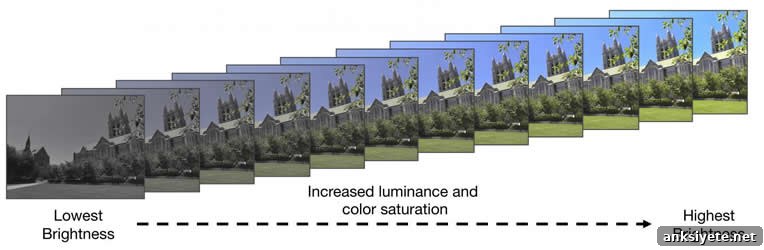
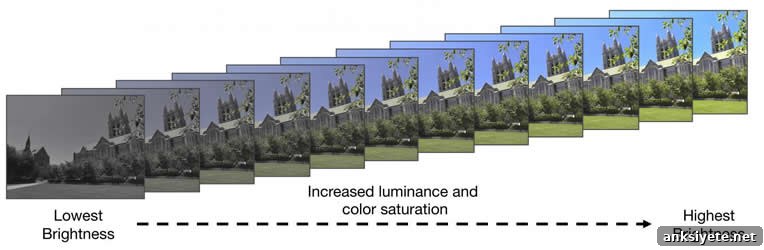
The researchers asked how the visual characteristics of events change as those events are stored or forgotten. “A useful analogy is how filters alter a photo when you post it on social media,” Ritchey said. “You can change brightness or color saturation with a filter. We wondered whether forgetting works like applying a filter to a past experience, and whether emotion changes which ‘filter’ gets applied.”
Across three experiments, participants studied images that were either emotionally negative or neutral and that varied in their visual qualities, specifically luminance and color saturation. Later, participants attempted to reconstruct the visual appearance of each image, indicating how they remembered its brightness and color intensity.
The results showed a consistent pattern: memories were reconstructed as less visually vibrant than the original images, revealing a clear memory-fading effect in low-level visual features. In other words, remembered scenes tended to lose color saturation and brightness relative to how they were first observed.
Negative emotion made participants more likely to correctly remember an image and improved the precision with which visual details were encoded. However, emotional content did not prevent the fading of visual salience over time. Subjective ratings of memory vividness were higher when recollections were more accurate and when the remembered visual qualities were less faded.
These findings suggest a dissociation between two aspects of memory: the retention of an event’s gist (for example, attending a concert and seeing a favorite band) and the fading of sensory intensity (such as the brightness of stage lights or the fullness of bass). Low-level visual details—colors, luminance, and fine visual salience—appear to deteriorate even when people still remember the core event.
“We found that memories seem to literally fade: people consistently remembered visual scenes as being less vibrant than they were originally experienced,” said Rose Cooper.
Cooper added that while the researchers anticipated declines in accuracy after a delay, they were surprised to observe a qualitative shift in the perceived visual quality of memories. The fading effect was less pronounced for memories that individuals rated as subjectively stronger, indicating that the perceived vividness of a memory influences how much its visual qualities degrade.
The team plans to investigate the mechanisms behind this fading effect. Key questions include whether fading stems primarily from passive decay across time or from interference by new information, and how individual differences affect the preservation of different kinds of event details.
Source:
Boston College
Media Contacts:
Ed Hayward – Boston College
Image Source:
Image credit: Psychological Science.
Original Research: Closed access
“Memories Fade: The Relationship Between Memory Vividness and Remembered Visual Salience” by Rose A. Cooper, Elizabeth A. Kensinger, and Maureen Ritchey. First published March 21, 2019 in Psychological Science. DOI: 10.1177/0956797619836093
Abstract
Memories Fade: The Relationship Between Memory Vividness and Remembered Visual Salience
People often recall past events vividly, particularly when those events are emotionally significant. However, it remains unclear how qualitative visual information—such as low-level salience like brightness and color saturation—is reconstructed, and how the precision and bias of that reconstruction relate to subjective vividness. Across three experiments, participants studied emotionally negative and neutral images that varied in luminance and color saturation and later reconstructed the visual salience of those images. The results revealed that memories were recollected as less visually salient than they had been encoded, demonstrating a novel memory-fading effect. Negative emotion increased subjective memory vividness and improved the precision with which visual features were encoded, but did not eliminate the fading of low-level visual details. Memory vividness tracked both the precision and the remembered visual salience (bias) of information. These findings indicate that low-level visual details fade in memory and that this fading contributes to how vividly an event is experienced when recalled.