
Summary: Researchers at the University of Rhode Island are converting everyday clothing into smart textiles to monitor Parkinson’s disease and other neurological conditions, improving remote care and patient outcomes.
Source: URI.
URI Professor Kunal Mankodiya at the forefront of smart textiles and wearable health technology
Developing the right medication and treatment plan for patients with Parkinson’s disease is a complex clinical challenge. At the University of Rhode Island, biomedical engineering professor Kunal Mankodiya and his research team are advancing wearable technologies that help clinicians track symptoms continuously and adjust care more precisely.
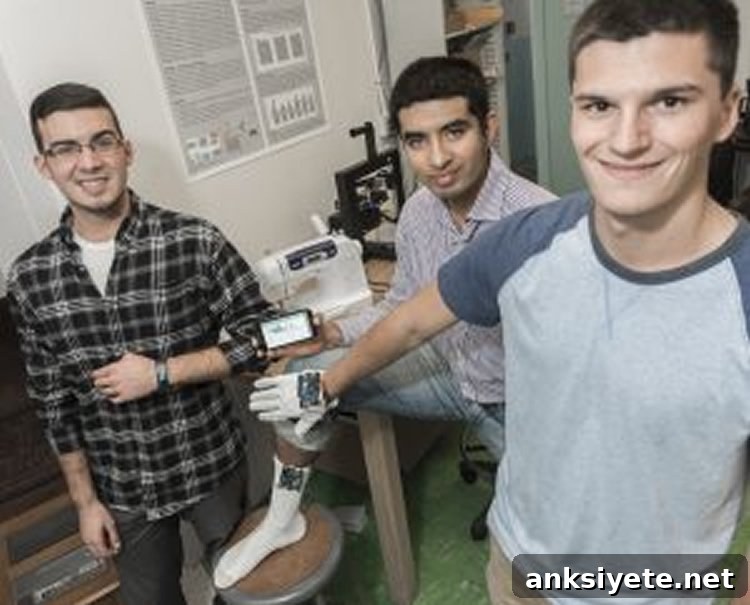
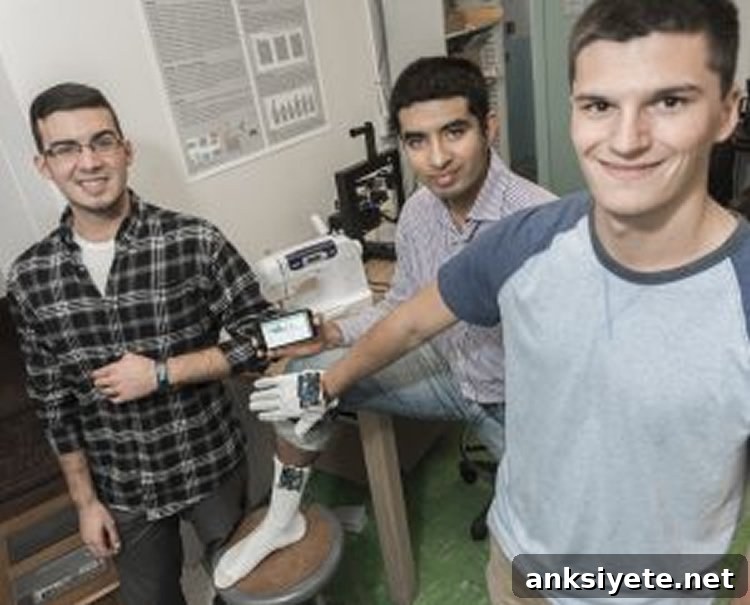
Mankodiya, director of URI’s Wearable Biosensing Laboratory, leads work to transform common garments—gloves, socks, clothing and shoes—into smart textiles. These wearable devices are embedded with sensors, electronics and software that collect physiological and movement data from patients in their daily environments and transmit that information to clinicians for remote monitoring and decision-making.
“We are in an era of transformative technology for health care,” says Mankodiya. “URI’s College of Engineering is developing medical devices that redefine how people receive care. These tools can make clinical monitoring less burdensome for patients while giving clinicians richer, objective data.”
The lab’s research builds on Internet of Things (IoT) concepts: connecting sensing devices to mobile phones and cloud systems so health data can be processed and shared securely. One early project was a wristband that tracks tremors in Parkinson’s patients and sends the measurements to physicians through an Internet connection.
Current efforts are focused on smart gloves designed specifically for people with Parkinson’s. The gloves include sensors on the fingers and thumb that detect tremors and rigidity—two hallmark motor symptoms of the disease. Data are processed by a paired smartphone and relayed to neurologists, enabling day-to-day management of medication timing and dosing without requiring frequent clinic visits.
By allowing patients to remain at home while clinicians monitor symptom fluctuations, the gloves aim to reduce the stress and mobility challenges associated with in-person appointments. “Patients with Parkinson’s often face mobility limitations,” Mankodiya explains. “A wearable glove gives them the option of receiving continuous care at home and can help reduce risks such as falls.”
Complementary projects include high-tech socks for stroke survivors and patients undergoing gait rehabilitation. These socks contain embedded sensors that measure stride, joint movements at the knee and ankle, and subtle gait irregularities. Physical therapists and physicians can use this objective gait data to tailor rehabilitation plans and track progress over time.
Beyond wearable garments, the lab is developing imaging and sensing tools to measure and record brain activity for Parkinson’s and other neurological disorders such as epilepsy. This multidisciplinary work has been supported by grants from the National Science Foundation and includes collaboration with URI biomedical engineering professor Walter Besio.
Mankodiya is also collaborating with clinical partners, including Lifespan Hospitals, to create smartwatch applications for patients with psychiatric conditions and autism. These early-stage projects aim to capture daily behavior and activity patterns to support caregivers and clinicians in understanding and responding to patient needs.
Students play a central role in the lab’s innovation. Senior computer science major Nick Peltier is developing a smartwatch app designed to help people with autism and their caregivers by identifying repeating patterns in daily behavior so caregivers can investigate triggers and make adjustments. “I hope the watch will help patients learn about themselves and help parents and caregivers understand what’s happening,” Peltier says.
Junior computer engineering student Matt Constant contributes to both the glove and smartwatch projects. “It’s very fulfilling to apply classroom learning to real problems that help people,” he says. “Working on these projects at URI gives me hands-on experience I wouldn’t get otherwise.”
Mankodiya earned his bachelor’s degree in biomedical engineering from Saurashtra University and a doctorate in computer science from the University of Luebeck in Germany. After postdoctoral research at Carnegie Mellon University, he joined URI in 2014. In addition to leading his lab, he teaches a popular course titled “Wearable Internet of Things,” where students develop practical prototypes such as a smart dog collar designed to deter coyotes by emitting light and sound—an example of translating wearable concepts to real-world problems.
Outside campus, Mankodiya represents URI’s College of Engineering in Advanced Functional Fabrics of America, a federally supported collaboration based at the Massachusetts Institute of Technology that connects industry and academia to convert traditional fibers and fabrics into advanced functional devices. He also partners with URI’s Business Engagement Center to encourage textile manufacturers to work with the university on next-generation products.
“URI supports creative, hands-on research that prepares engineers to be both highly skilled and compassionate,” Mankodiya says. “Our goal is to build wearable technologies that improve daily life and clinical care for people living with neurological conditions.”
Source: Elizabeth Rau – URI
Image source: NeuroscienceNews.com image credited to Michael Salerno.