
Researchers at Columbia University Medical Center (CUMC) have identified key molecular pathways that drive late-onset Alzheimer’s disease, the most common form of the condition. Combining systems biology and cell biology approaches, the team mapped links between common genetic risk factors and cellular processes that lead to Alzheimer’s. Their findings, which point to several potential therapeutic targets, were published in the journal Nature.
Most laboratory research into Alzheimer’s has focused on rare familial, early-onset forms of the disease. While those studies have produced important insights, their relevance to the far more prevalent late-onset form has been uncertain. “Many therapies that appeared effective in mouse models of familial Alzheimer’s did not succeed in clinical trials for late-onset patients,” said study leader Asa Abeliovich, MD, PhD, associate professor of pathology, cell biology and neurology at CUMC’s Taub Institute. This gap motivated the team to study mechanisms specifically tied to the common, late-onset disease.
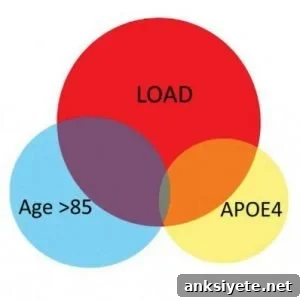
Non-familial Alzheimer’s arises from a complex interplay of genetic and environmental risk factors, each typically exerting a modest effect. Genome-wide association studies (GWAS) have identified several common variants that increase Alzheimer’s risk, but it remains challenging to determine how those variants alter cellular biology to promote disease. The CUMC study set out to trace the molecular pathways that connect common genetic risk factors to the biological events that produce Alzheimer’s pathology.
The researchers began by focusing on APOE4, the single most significant common genetic risk factor for late-onset Alzheimer’s. APOE4 is present in roughly one-third of people; carrying one copy increases risk about threefold, while two copies increase risk roughly tenfold. The team examined post-mortem brain tissue from individuals who carried APOE4 but did not have clinical Alzheimer’s disease, asking whether there were consistent molecular changes that might represent early, preclinical steps toward disease.
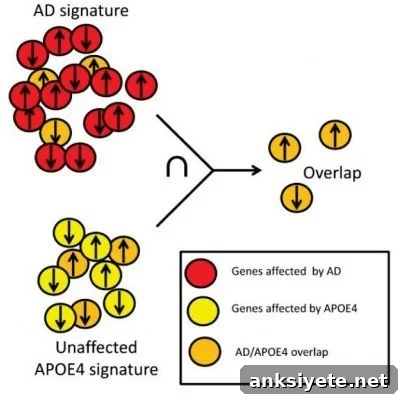
Using transcriptomic analyses — broad surveys of gene expression across thousands of brain-expressed genes — the investigators found that even clinically unaffected APOE4 carriers showed gene expression changes that resembled those observed in full-blown late-onset Alzheimer’s. These overlapping patterns suggested a predisposing molecular signature that could help explain how APOE4 increases risk.
Next, the team applied network analysis and systems-biology tools to the transcriptomic data to identify candidate “master regulator” genes that could explain how APOE4 drives downstream disease processes. From this analysis they nominated roughly a dozen master regulators that appear to connect APOE4 to molecular pathways implicated in Alzheimer’s. Follow-up cell biology experiments showed that several of these regulators influence the processing and trafficking of amyloid precursor protein (APP) within neurons. APP is cleaved to produce amyloid beta, the peptide that accumulates in the brains of Alzheimer’s patients.
Two of the identified master regulators received additional experimental attention: SV2A and RFN219. SV2A is notable because it is the known target of the antiepileptic drug levetiracetam. That pharmacological connection suggested a potential therapeutic strategy worth investigating further, although the researchers emphasize that more preclinical and clinical work would be required before levetiracetam could be proposed as a treatment for late-onset Alzheimer’s.
To evaluate SV2A’s role, the team used human neurons derived from skin fibroblasts of individuals carrying APOE4. These induced neurons were treated with levetiracetam to suppress SV2A activity. Treatment reduced production of amyloid beta in APOE4-bearing neurons, supporting the idea that SV2A influences APP processing in a way that could modulate Alzheimer’s-related pathology. The study also implicated RFN219 in APP processing within APOE4 cells.
Notes about this Alzheimer’s disease research
The published paper is titled “Integrative genomics identifies APOE ɛ4 effectors in Alzheimer’s disease.” Co-authors include members of CUMC’s Taub Institute for Research on Alzheimer’s Disease and the Aging Brain: Herve Rhinn, Ryousuke Fujita, Liang Qiang, Rong Chen, Joseph H. Lee, and Asa Abeliovich. Joseph H. Lee is also affiliated with CUMC’s Gertrude H. Sergievsky Center.
The authors report no financial or other conflicts of interest related to the study. After the paper was accepted, Dr. Abeliovich received a separate, unrelated grant from UCB, Inc., which the authors note does not bear on the published work.
The research was supported by grants from the National Institutes of Health (R01AG042317 and R01NS064433).
Contact: Press Office – Columbia University Medical Center
Source: Columbia University Medical Center press release
Image Source: All images credited to Dr. Asa Abeliovich, CUMC, adapted from the press release.
Original Research: Abstract for “Integrative genomics identifies APOE ε4 effectors in Alzheimer’s disease” by Herve Rhinn, Ryousuke Fujita, Liang Qiang, Rong Cheng, Joseph H. Lee and Asa Abeliovich in Nature. Published online July 24, 2013. doi:10.1038/nature12415