
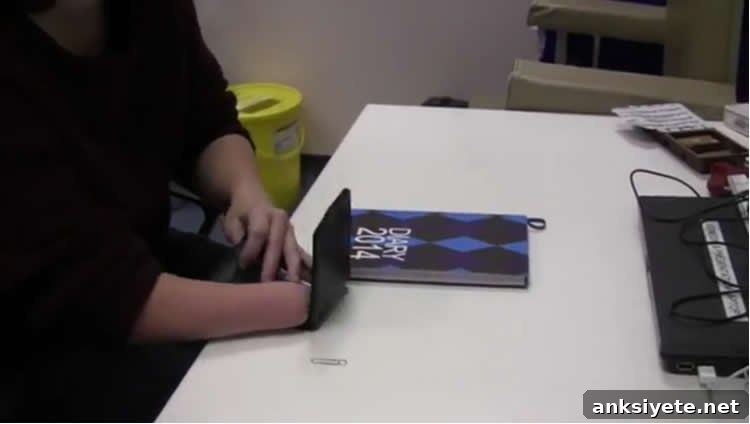
Summary: A new study of people born with a single hand challenges conventional views of how the brain maps body parts and functions.
Source: Cell Press
A study published in Current Biology on April 20 reports that in people born without one hand, the brain region typically associated with that hand instead responds to other body parts—such as the residual arm, foot, and mouth—that take over the missing hand’s functions. The findings could prompt a major rethinking of how cortical areas are organized.
“One way to frame our results is to ask whether the so-called ‘hand area’ is actually a zone devoted to the functions normally carried out by a hand, rather than to the hand itself,” says Tamar Makin of University College London. “In people with intact bodies, those functions are mostly performed by the non-dominant hand. But the striking representation we observe in congenital one-handers suggests this brain territory may flexibly represent the parts used to achieve those functions.”
Makin cautions that this functional interpretation remains a working hypothesis, but notes its potentially far-reaching implications for understanding cortical organization and plasticity.
Neuroscience has long established that different cortical regions are associated with control of distinct body parts. To examine how these maps develop when a body part never exists, Makin and colleagues—including Avital Hahamy of the Weizmann Institute of Science—studied people born without one hand (congenital one-handers) alongside matched two-handed controls.
The research included 17 congenital one-handers and 24 two-handed control participants. Each person was video recorded while performing five everyday tasks—such as wrapping a present or handling money—to document compensatory strategies. In addition, participants moved various body parts while undergoing functional MRI (fMRI) to measure cortical activation patterns.
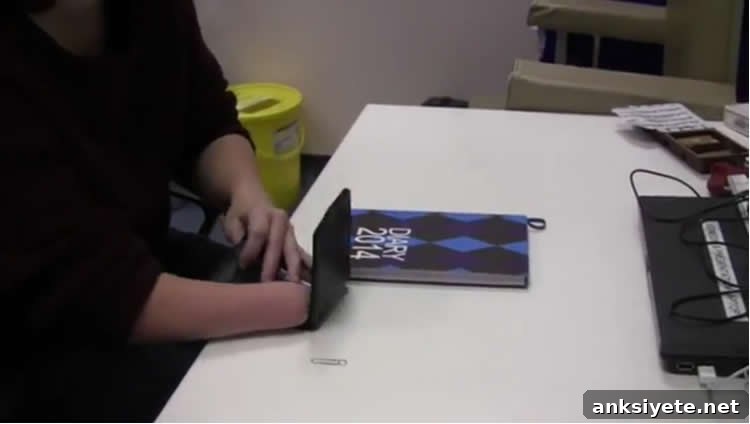
The researchers found that the cortical territory traditionally labeled the “hand area”—a substantial region of sensorimotor cortex—was repurposed in congenital one-handers to represent a variety of body parts. Crucially, the body parts that expanded into the freed-up cortical territory were those used by the individuals to substitute for missing-hand functions in everyday life, for example using the mouth, residual arm, or feet to manipulate objects.
Task-based and resting-state fMRI both showed that representations of the compensating body parts mapped onto the missing-hand territory. The missing-hand area also exhibited lower GABA levels, interpreted as reduced connectional selectivity that may permit diverse inputs to take hold in that cortical region.
These results demonstrate notable brain plasticity and suggest that cortical topography may reflect functional roles rather than strict, fixed body-part labels. If the hand territory can host representations of other body parts that perform hand-like functions, it implies a more flexible, function-centered organization of the sensorimotor cortex.
Makin emphasizes the potential clinical relevance: understanding how the brain spontaneously accommodates substituted body parts in congenital one-handers might inform strategies to encourage representation and control of prosthetic limbs. “If neuroscientists can harness this process, it could become a powerful tool for improving outcomes with artificial limbs,” she says. However, Makin notes that the same spontaneous plasticity is currently limited in adults, and further research is needed to determine how to safely and effectively promote such reorganization.
Funding: The study received support from the Cogito Foundation; the Wellcome Trust and the Royal Society; an Israeli Presidential Bursary for outstanding PhD students in brain research; a Boehringer Ingelheim Fonds travel grant; the Natural Sciences and Engineering Research Council of Canada; and the Swiss National Science Foundation.
Source: Joseph Caputo — Cell Press
Image Source: NeuroscienceNews.com image credited to Hahamy et al.
Original Research: “Representation of Multiple Body Parts in the Missing-Hand Territory of Congenital One-Handers” by Avital Hahamy, Scott N. Macdonald, Fiona van den Heiligenberg, Paullina Kieliba, Uzay Emir, Rafael Malach, Heidi Johansen-Berg, Peter Brugger, Jody C. Culham, and Tamar R. Makin. Current Biology. Published online April 20, 2017. doi:10.1016/j.cub.2017.03.053
Representation of Multiple Body Parts in the Missing-Hand Territory of Congenital One-Handers
Highlights
• Compensatory behavior in congenital one-handers involves multiple body parts
• Multiple body parts show increased representation within the missing-hand cortical area
• The missing-hand territory exhibits reduced connectional selectivity, evidenced by lower GABA levels
Summary
Individuals born without one hand provide a natural model to study how focal reorganization in sensorimotor cortex relates to everyday behavior. Prior work showed that the missing hand’s cortical territory can be taken over by its cortical neighbor (residual arm representation), depending on daily use of the residual arm. Because compensatory strategies often involve body parts that do not neighbor the hand territory cortically, reorganization may be more extensive. In this study, spontaneous compensatory behaviors were observed in ecological settings and combined with task-based and resting-state fMRI and neurochemical measures. Compensatory strategies involved the residual arm, lips, and feet. Representations of the body parts used to substitute hand function were found within the missing-hand territory, independent of cortical proximity. The missing-hand area also had reduced GABA levels, suggesting diminished connectional selectivity that enables diverse cortical inputs. Given that the body parts used for compensation are those showing increased representation in the missing-hand territory, the authors propose that the typical hand territory may represent the functions commonly performed by a hand rather than the hand itself.
“Representation of Multiple Body Parts in the Missing-Hand Territory of Congenital One-Handers” by Avital Hahamy et al., Current Biology. Published online April 20, 2017. doi:10.1016/j.cub.2017.03.053