
Summary: Researchers have mapped how existing memory structures in the hippocampus are reorganized as new experiences are encoded, revealing how the brain integrates new memories without erasing older ones.
Source: Imperial College London
Researchers from the University of Oxford and Imperial College London have charted how the structure of stored memories is reshaped as new experiences are committed to memory in mice.
Their findings show that the brain’s network architecture is capable of incorporating new information while allowing new and existing memories to interact, rather than simply overwriting older experiences to make room for the new. This supports a model of memory storage in which integration and interaction occur continuously within a structured neuronal network.
In a study published in Nature Neuroscience, the team used concepts from graph theory—mathematical tools that model relationships within complex systems—to analyse how memories are integrated in the hippocampus. The researchers designed a behavioural task in which mice learned that a specific compartment in a new environment contained sugar as a reward. The mice also explored a familiar environment before and after forming this new spatial-reward association, enabling comparison of neuronal patterns associated with old and newly formed memories.
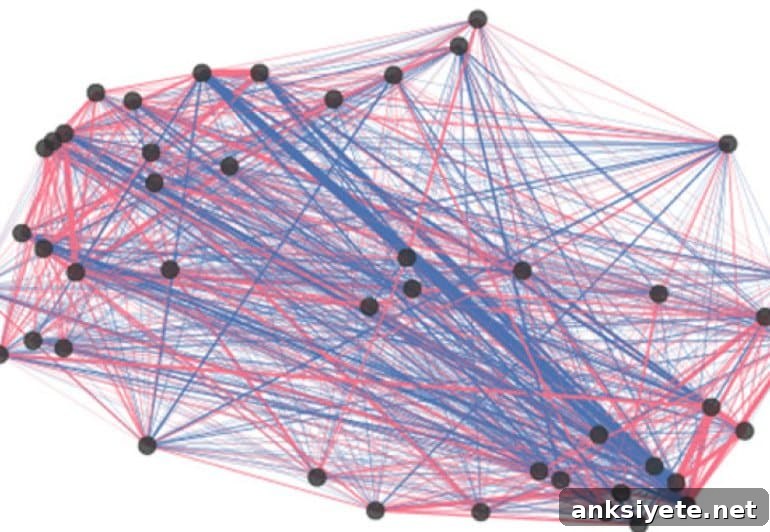
By recording neuronal activity in the hippocampus during these sessions, the scientists observed how the formation of a new memory altered patterns of coordinated firing among neurons. They found that the network structure describing patterns of co-activity changed as new memories were embedded, indicating that recall-related activity patterns are reorganized by learning experiences.
Analysis showed that co-activity patterns evolved along specific directions within the high-dimensional neuronal activity space. Key factors shaping these directions were novelty, spatial location and the experience of reward. In other words, when mice encountered something new or obtained a reward, the network dynamics shifted along axes corresponding to those features, guiding how new memories were woven into the existing network.
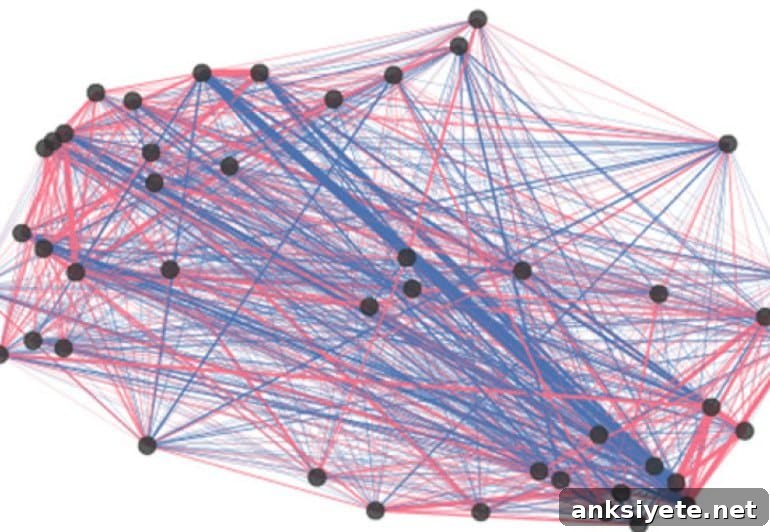
A notable insight from the study is the division of labour among hippocampal cells. Highly active principal neurons form the stable core of each memory, segregating contexts such as distinct environments and novelty. In contrast, lower-activity neurons participate flexibly: they join co-activity motifs across behavioural episodes and support crosstalk between memory representations when needed. This arrangement allows the hippocampal network to maintain distinct memory cores while enabling flexible interaction between memories through low-activity cells.
Lead researcher Professor David Dupret of the University of Oxford commented that the results shed new light on the network mechanisms that support continuous storage and retrieval of multiple memories. He highlighted the growing use of techniques such as in vivo imaging to track large-scale neuronal populations over extended periods, which will further clarify how memories evolve with ongoing experience.
Study co-author Professor Simon Schultz from Imperial College London’s Department of Bioengineering emphasised the benefit of an interdisciplinary approach. Viewing memory through an engineering and mathematical lens allowed the team to extract network-level principles that are difficult to reveal with traditional reductionist methods.
The research opens new directions for exploring how neuronal networks reorganize during learning and how aging might alter the mechanisms of memory integration. Investigating these network dynamics over days and weeks could illuminate age-related changes and suggest strategies to support memory resilience.
Funding: This research was supported by the Medical Research Council and the Engineering and Physical Sciences Research Council.
About this memory research news
Source: Imperial College London
Contact: Caroline Brogan – Imperial College London
Image: The image is credited to Giuseppe P. Gava et al.
Original Research: Closed access. “Integrating new memories into the hippocampal network activity space” by Giuseppe P. Gava et al., Nature Neuroscience.
Abstract
Integrating new memories into the hippocampal network activity space
By examining the topology of neuronal co-activity, the researchers found that mnemonic information occupies multiple operational axes within the mouse hippocampal network. High-activity principal cells establish the core of each memory along a primary axis, separating spatial contexts and novelty. Low-activity cells dynamically join co-activity motifs across behavioural events and enable their interaction along additional axes. This organizational principle supports continuous integration and interaction among hippocampal memories.