
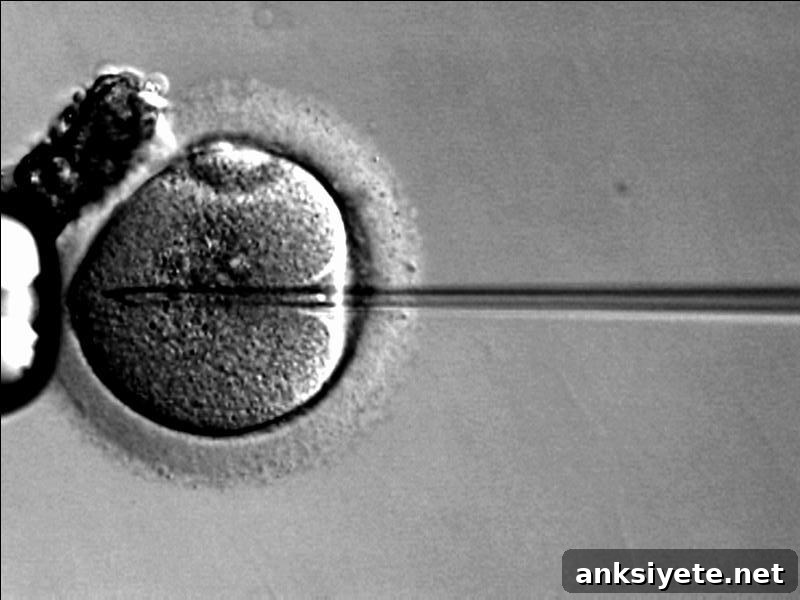
In the first study to compare all available IVF treatments and the risk of neurodevelopmental disorders in children, researchers found that certain IVF procedures used for severe male infertility are associated with a higher risk of intellectual disability and autism in offspring.
Autism and intellectual disability after IVF remain rare outcomes. Although part of the increased risk is linked to multiple births, this large-scale study offers valuable, comparative evidence for parents and clinicians about the relative risks associated with modern IVF techniques.
Published in JAMA, this is the largest study of its kind and was led by researchers at King’s College London (UK), Karolinska Institutet (Sweden) and Mount Sinai School of Medicine (USA).
The team used anonymized data from Swedish national registers to analyse more than 2.5 million births from 1982 to 2007, with follow-up for clinical diagnoses of autism or intellectual disability (defined in the study as an IQ below 70) through 2009. Of these births, 1.2% (30,959) followed IVF. Among the 6,959 children diagnosed with autism, 103 were conceived after IVF; among the 15,830 children with intellectual disability, 180 were conceived after IVF. Because multiple pregnancies are a known risk factor for preterm birth and some neurodevelopmental outcomes, the researchers compared singletons and multiple births to separate those effects.
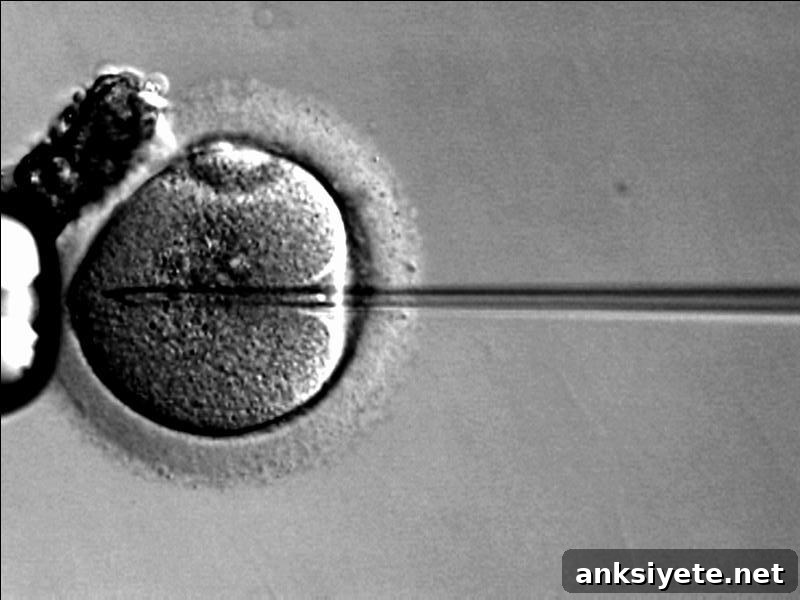
Sven Sandin, co-author and researcher at King’s College London’s Institute of Psychiatry, explained: “IVF treatments vary substantially in complexity. When we combined all IVF treatments, there was no overall increased risk of autism, but a small increased risk of intellectual disability. Separating the specific procedures showed that standard IVF appears safe, while procedures involving intracytoplasmic sperm injection (ICSI), which are typically used to treat male infertility, were associated with higher risks of both intellectual disability and autism in children.”
Compared with spontaneous conception, offspring conceived after any IVF treatment did not show an increased risk of autism overall, but they did show a modest increase in intellectual disability (an 18% increase — from 39.8 to 46.3 per 100,000 person-years). Importantly, that increase was no longer evident after accounting for multiple births.
The researchers examined six IVF procedure categories used in Sweden, distinguishing fresh versus frozen embryos, whether ICSI was used, and whether the sperm used for ICSI was ejaculated or surgically extracted. ICSI, developed in 1992 and now used in about half of IVF cycles, involves injecting a single sperm directly into an egg and is commonly recommended for male-factor infertility.
Key findings include that children conceived via IVF with ICSI (using either fresh or frozen embryos) had a higher risk of intellectual disability (a 51% increase — from 62 to 93 per 100,000). The association was stronger if the child was also born preterm (a 73% increase — from 96 to 167 per 100,000). Even when restricting the analysis to singleton, term births, ICSI with fresh embryos remained associated with greater risk (a 66% increase — from 48 to 76 per 100,000).
When ICSI used surgically retrieved sperm with fresh embryos, the analysis showed an increased risk of autism (a 360% increase — from 29 to 136 per 100,000). However, that association did not persist after adjusting for multiple births.
Dr Avi Reichenberg, who led the study from King’s College London and Mount Sinai, commented: “Our results indicate that treatments developed to address male infertility are linked with elevated risks for developmental disorders in offspring. The exact mechanisms are unclear. Potential contributors include the choice of IVF procedure, multiple embryo transfer, and preterm birth. Although intellectual disability and autism remain uncommon after IVF, recognizing the specific procedures associated with greater risk means clinicians can identify and monitor children at higher risk, enabling earlier detection and access to appropriate support.”
Dr Karl-Gösta Nygren of Karolinska Institutet added: “Most children born after IVF are healthy. This study supplies important comparative risk information for families and clinicians, helping inform decisions about treatment. It also reinforces the importance of reducing multiple embryo transfers. Still, further research is needed to understand the underlying causes of these associations.”
The authors note that the study could not determine the precise causal mechanism linking ICSI to increased risk of intellectual disability or autism. They investigated several possible explanations—including parental age, temporal trends, hormonal stimulation regimens and duration of infertility—but none fully accounted for the observed associations.
Notes about this IVF and neurodevelopmental disorder research
The research was conducted using Swedish registry data, but the findings are relevant to countries where IVF and ICSI are widely used, though practice patterns and procedure choices may vary.
The study received funding from Autism Speaks and the Swedish Research Council.
Contact: Seil Collins – King’s College London
Source: King’s College London press release
Image source and credit: The ICSI sperm injection into an oocyte image is credited to RWJMS IVF Laboratory and Ekem; the image is in the public domain.
Original research: Abstract for “Autism and Mental Retardation Among Offspring Born After In Vitro Fertilisation” by Sven Sandin, Karl-Gösta Nygren, Anastasia Iliadou, Christina M. Hultman and Abraham Reichenberg, published online July 3, 2013 in JAMA (doi:10.1001/jama.2013.7222).