
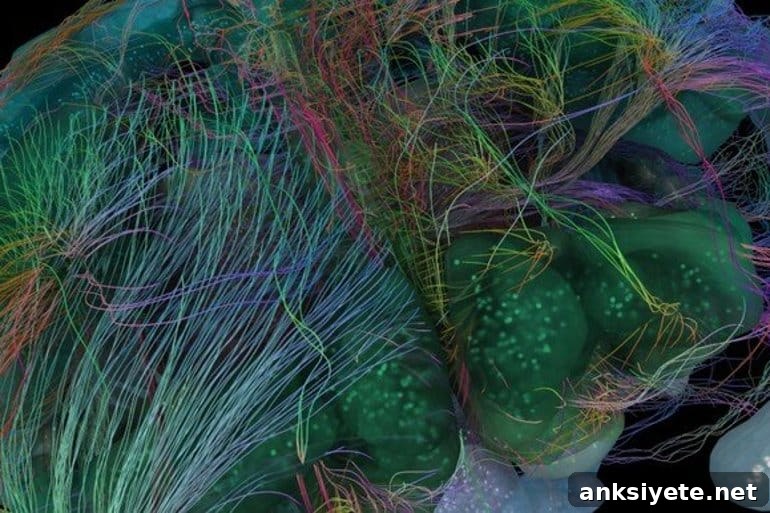
Summary: The Blue Brain Project has released an enriched 3D digital cell atlas that identifies a greater variety of neuron types than the previous version.
Source: EPFL
After four years of work, EPFL’s Blue Brain Project has released an expanded version of its 3D digital cell atlas for the mouse brain. This new atlas includes a richer catalog of neuron types and introduces methods that can be extended to other cell classes, providing an essential resource for constructing tissue-level models of the mouse brain.
A precise understanding of the brain’s cell-type composition is crucial for interpreting how individual cell classes contribute to networks, for designing large-scale neural circuit simulations, and for the Blue Brain Project’s long-term goal of building an accurate digital model of the entire mouse brain.
Mapping the cellular makeup of the brain is a complex challenge because published data vary widely and the brain contains many regions and diverse cell types. To address these challenges, the Blue Brain Project previously released the first comprehensive 3D digital cell atlas in 2018 (BBCAv1), which offered estimates of major cell-type counts and spatial distributions across more than 700 mouse brain regions.
That initial atlas documented densities of neurons, supporting glial cells and their subtypes for each brain region in a navigable, dynamic format that allowed researchers to contribute data. As Blue Brain’s founder and director Professor Henry Markram noted, the atlas filled a significant gap in our knowledge of most brain regions.
Since then, new datasets and analytic tools have emerged that provide cell-type composition based on molecular markers—proteins expressed by cells. While molecular marker datasets are fast to generate and valuable, they do not always provide direct information about neuronal morphology (shape) or electrophysiological properties, which are essential for realistic neuron models.
Conversely, detailed characterization of morpho-electrical properties is time-consuming and unsuitable for whole-brain surveys. For that reason, the new atlas integrates diverse data types—molecular, morphological and electrophysiological—into a coherent framework to maximize the level of useful detail available for simulations and analysis.
Revealing inhibitory neuron density
A key focus of this update was inhibitory neurons, a class for which data were previously sparse and for which the BBCAv1 methodology needed refinement. Inhibitory neurons reduce the activity of other neurons and play a central role in shaping information flow across neural circuits—acting like punctuation that structures neural signals.
To improve estimates, the team gathered inhibitory neuron counts from the literature and built a consistent framework to integrate these findings into the cell atlas. Where literature data were lacking, the researchers estimated inhibitory neuron densities using images of brain slices. Overall, their results indicate that inhibitory neurons make up approximately 20% of all neurons in the mouse brain.
“This sets the stage for subdividing inhibitory neurons into more fine-grained classes,” says lead author Dimitri Rodarie of Blue Brain, “and enables the neuroscience community to identify regions where additional experimental constraints can improve our knowledge.”
Cross-species help for neuron models
The atlas benefits from datasets provided by the Allen Institute for Brain Science, which include molecular, morphological and electrophysiological data for mouse neurons. To create biophysically detailed neuron models needed for regional and whole-brain simulations, Blue Brain adapted previously developed morpho-electrical models that originated from juvenile rat somatosensory cortex data.
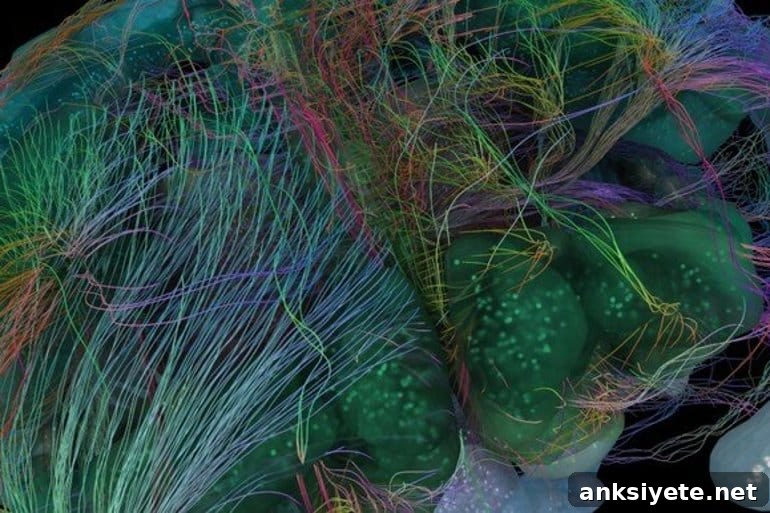
Because these model datasets come from a different species and developmental stage, the authors applied normalization steps to map rat-derived morpho-electrical models onto mouse cell data. This mapping allowed them to assign molecular identities to neuron models and to populate the mouse cortex with detailed, biophysical neuron models suited for simulation.
“Our algorithm helps draw parallels across species and extends our understanding of less-studied brain areas,” explains lead author Yann Roussel of Blue Brain. “This model will help experimentalists characterize regional composition and enable computational neuroscientists to place defined cell types into their simulations.”
The methods used to refine the atlas and produce BBCAv2, described in companion papers published in PLOS Computational Biology, were further developed to map recognized neuron types to inhibitory neuron subclasses. This advancement makes future in silico reconstructions of brain tissue more accurate and biologically constrained.
All data, algorithms, software and pipeline results used to upgrade the Blue Brain Cell Atlas are publicly available, supporting transparency and reuse by the scientific community.
Daniel Keller, leader of Blue Brain’s Molecular Systems team, emphasizes that this version integrates four years of study and additional biological constraints to improve suitability for simulation. He adds that using the atlas in simulations helps identify where further refinement is needed, enabling iterative improvements across successive versions.
The project is designed to involve the broader scientific community through open access to data, software and analytic tools. The authors anticipate that BBCAv2 will serve a wide range of research needs in neuroscience.
About this brain mapping research news
Author: Press Office
Source: EPFL
Contact: Press Office – EPFL
Image: Image credit: Blue Brain Project / EPFL
Original Research: Open access. “Mapping of morpho-electric features to molecular identity of cortical inhibitory neurons” by Yann Roussel et al., PLOS Computational Biology.
Abstract
Mapping of morpho-electrical features to molecular identity of cortical inhibitory neurons
Understanding cell-type specific composition is essential to reveal how each cell type contributes to network function. In this study, the authors estimated the composition of the entire cortex in terms of well-characterized morphological and electrophysiological inhibitory neuron types (me-types).
They derived probabilistic me-type densities from an existing atlas of molecularly defined cell-type densities in the mouse cortex and used a well-established me-type classification from rat somatosensory cortex to populate the cortex. These rat-derived me-types were well characterized morphologically and electrophysiologically but did not have molecular marker labels.
To infer the missing molecular identities, the team used an additional dataset from the Allen Institute that includes molecular identity alongside morphological and electrophysiological features for mouse cortical neurons. The researchers constructed a latent feature space based on comparable morpho-electrical attributes common to both datasets and identified 19 morpho-electrical clusters that combined neurons from both sources while remaining molecularly homogeneous.
These clusters best recapitulated molecular identity using only available morpho-electrical features. Finally, molecular identities were assigned stochastically to me-type neurons based on their cluster assignments. The resulting mapping enabled the derivation of inhibitory me-type density estimates across the cortex.