
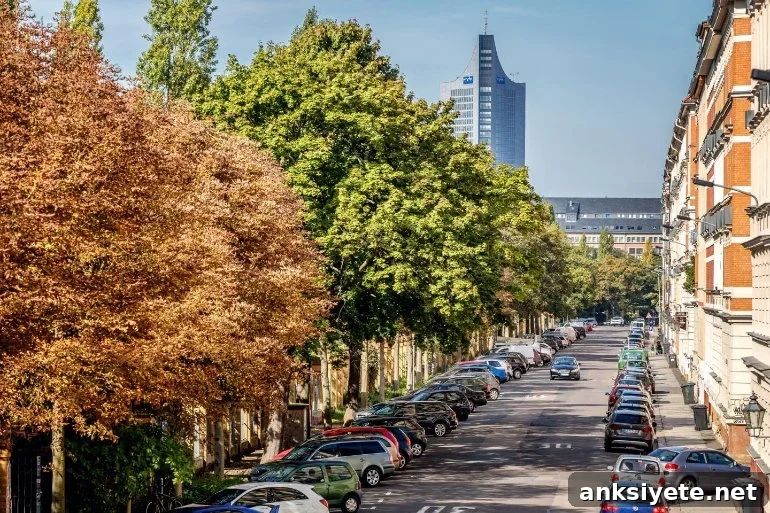
Summary: A new study finds that living on streets lined with trees may benefit mental health. Researchers report that people residing within 100 meters of street trees were less likely to be prescribed antidepressant medication.
Source: IDIV
Depression in cities is increasing, and the environments where people live play a significant role in mental health. Previous research has linked urban greenspace to improved mental well-being, but many of those studies relied on self-reported measures. That reliance on subjective reports can make it difficult to compare findings across studies or to draw broad conclusions about how everyday greenspaces affect mental health.
To address this gap, an interdisciplinary team from UFZ, iDiv and Leipzig University used an objective health indicator: prescriptions for antidepressant medication. The researchers focused on a common, everyday form of urban nature—street trees—and examined whether the number and proximity of trees along neighborhood streets were associated with reduced antidepressant prescribing. Their analysis asked: does the density or species richness of street trees near a person’s home correlate with the likelihood of being prescribed antidepressants?
The study analysed data from 9,751 residents of Leipzig, Germany, who participated in the LIFE-Adult health study at the University of Leipzig Medical Faculty. By combining these health records with detailed information on street tree counts and species across the city, researchers measured associations between antidepressant prescriptions and street trees at multiple distances from each participant’s home. The analysis controlled for known risk factors for depression, including employment status, gender, age and body mass index.
Results indicate that a higher density of street trees within 100 meters of a person’s home was associated with a lower risk of being prescribed antidepressant medication. This relationship was particularly pronounced for people in socio-economically deprived groups—those at greater risk of depression and antidepressant use. The findings suggest that street trees can act as an inexpensive, nature-based intervention to improve mental health and to reduce health inequalities across social groups. The study did not find a clear association between specific tree species (biodiversity at the species level) and antidepressant prescriptions.
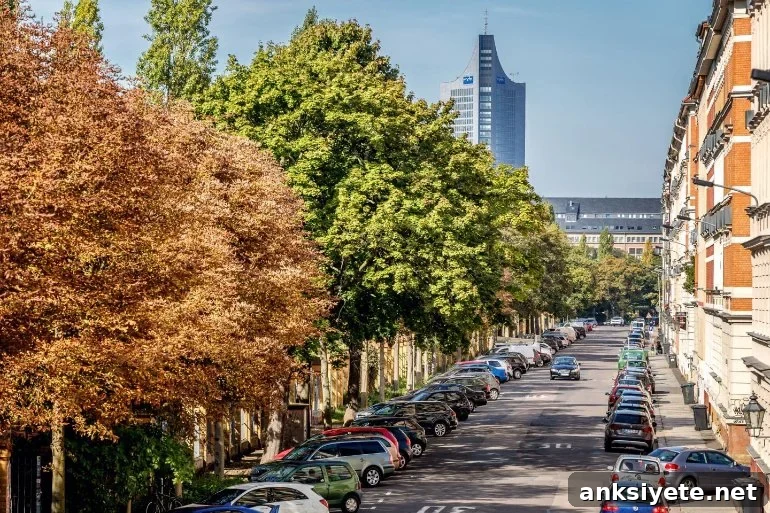
“Our results suggest that street trees—a small-scale, publicly accessible form of urban greenspace—can help close the gap in health inequalities between economically different social groups,” says lead author Dr Melissa Marselle. Street trees are relatively simple to plant and maintain compared with large parks, so increasing their presence along residential streets could be an efficient public health measure.
Dr Marselle, an environmental psychologist who conducted the research at UFZ and iDiv and is now based at De Montfort University, emphasizes that city planners could prioritize planting trees in residential areas to extend the mental health benefits to those who need them most. Ensuring that trees are distributed equitably across neighbourhoods would help socially disadvantaged residents gain equal access to these benefits.
“Most planning guidance for urban greenspace focuses on recreational visits to parks,” adds Dr Diana Bowler, a data analyst on the study team. “Our study highlights the importance of everyday contact with nature—the trees you see from your window or encounter while walking or commuting—in supporting mental health.” This everyday contact gained special relevance during COVID-19 lockdowns, when opportunities for purposeful visits to greenspace were often limited.
The benefits of street trees extend beyond mental health. “Adding street trees in residential urban areas is a nature-based solution that can promote mental health while also contributing to climate mitigation and biodiversity conservation,” says senior author Prof Aletta Bonn, who leads the department of ecosystem services at UFZ, iDiv and Friedrich-Schiller-University Jena. These co-benefits mean that planting trees along streets can be a cost-effective strategy to improve both human well-being and urban environmental quality.
Prof Toralf Kirsten of Leipzig University stresses the practical value of the findings: “This research can inform city planning decisions to preserve and increase street tree cover, particularly in densely populated urban centres. Even with high land costs, investing in trees along streets can help maintain and improve quality of life for urban residents.”
About this environment and depression research news
Source: IDIV
Contact: Melissa Marselle – IDIV
Image credit: Philipp Kirschner
Original Research: Open access. Title: “Urban street tree biodiversity and antidepressant prescriptions” by Melissa R. Marselle, Diana E. Bowler, Jan Watzema, David Eichenberg, Toralf Kirsten & Aletta Bonn. Published in Scientific Reports.
Abstract
Urban street tree biodiversity and antidepressant prescriptions
As urbanisation increases, both mental health and biodiversity face growing pressures. Street trees are a key component of urban greenspace, yet their mental health effects are not well understood. The authors analysed associations between street tree density and species richness and antidepressant prescribing for 9,751 inhabitants of Leipzig, Germany. Spatial effects were examined using Euclidean buffers of 100, 300, 500 and 1,000 meters around each participant’s home. Using generalized additive models, the study found a lower rate of antidepressant prescriptions for people living within 100 meters of a higher density of street trees—though this relationship became marginally significant when multiple confounding factors were included. Tree density at larger distances and species richness at any distance were not associated with antidepressant prescribing overall. However, for individuals with low socio-economic status, a high density of street trees within 100 meters of the home significantly reduced the probability of being prescribed antidepressants. The findings suggest that incidental, everyday contact with nature through local street trees may help reduce depression risk, particularly among deprived social groups, with important implications for urban planning and nature-based health interventions.