
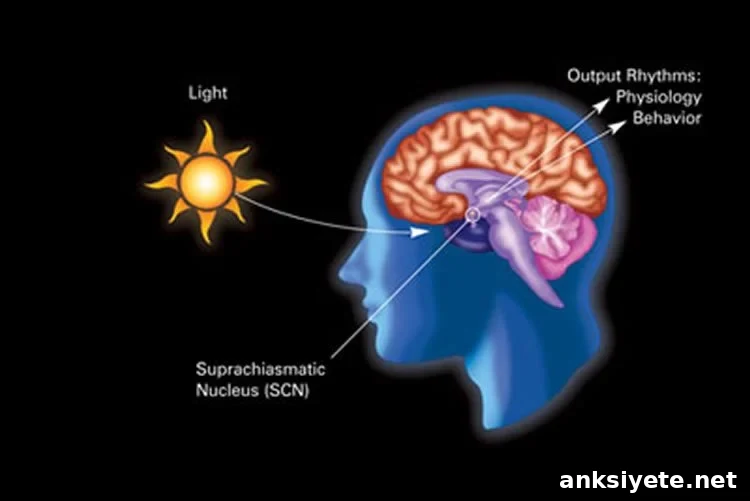
Summary: New findings clarify how the circadian clock influences a basic physiological drive.
Source: McGill University Health Center.
Discovery may point to ways to reduce the effects of jet lag and shift work.
Researchers at the Research Institute of the McGill University Health Centre (RI‑MUHC) report that the brain’s circadian clock actively promotes drinking in the hours before sleep. Published in Nature, the study reveals both the behavioral pattern and the molecular mechanism that underlie this nightly surge in thirst.
The team, led by Charles Bourque, a professor in McGill’s Department of Neurology and scientist at the Brain Repair and Integrative Neuroscience Program at the RI‑MUHC, found that mice frequently increase water intake during the two hours that precede the sleep period. Crucially, this anticipatory drinking is not triggered by immediate physiological need such as dehydration, but instead is driven by the central clock.
Lead author Claire Gizowski and colleagues showed that when mice were denied access to water during this anticipatory window, they became significantly dehydrated by the end of the sleep period. This demonstrates that the pre‑sleep drinking bout functions as a preventive behavior that maintains overnight hydromineral balance and protects the animal’s health.
To identify how the clock triggers this response, the researchers investigated communication between the suprachiasmatic nucleus (SCN)—the brain’s master circadian pacemaker—and the brain’s hydration-sensing circuitry. The SCN is known to produce several signaling molecules, and the team focused on vasopressin, a neuropeptide with established roles in fluid balance.
Using sensitive sensor cells that fluoresce when vasopressin is present, the researchers applied these “sniffer cells” to rodent brain slices and electrically stimulated the SCN. Stimulation produced a clear increase in the sniffer cell signal, indicating that vasopressin is released from the clock region during the anticipatory period.
They then turned to optogenetics to test causality. In genetically modified mice whose vasopressin neurons express a light-sensitive actuator, brief light stimulation of SCN vasopressin cells activated downstream thirst neurons and produced drinking behavior. Conversely, optogenetic inhibition of vasopressin release during the anticipatory period suppressed the firing of target neurons and prevented the normal increase in water intake.
Electrophysiological experiments further clarified the pathway: SCN vasopressin neurons project to the organum vasculosum of the lamina terminalis (OVLT), a key forebrain structure that contains thirst-sensitive neurons. Vasopressin release at OVLT synapses activates postsynaptic V1a receptors and opens nonselective cation channels, depolarizing and exciting OVLT neurons at the time when animals naturally prepare for sleep.
According to Bourque, “Although this work was done in rodents, it helps explain why people often feel thirsty and drink water or milk before bedtime. More importantly, it gives insight into how the central clock governs physiological rhythms. All organs follow circadian patterns that optimize their function; when those rhythms are disrupted by shift work or trans‑meridian travel, health can suffer. Understanding the clock’s output pathways increases the prospects for targeted interventions.”
Funding: Supported by the Canadian Institutes of Health Research and the Fonds de Recherche du Québec – Santé.
Source: McGill University Health Center
Image Source: This image is credited to the National Institute of General Medical Sciences and is in the public domain.
Original Research: Abstract for “Clock-driven vasopressin neurotransmission mediates anticipatory thirst prior to sleep” by C. Gizowski, C. Zaelzer and C. W. Bourque in Nature. Published online September 28, 2016 (doi:10.1038/nature19756).
Clock-driven vasopressin neurotransmission mediates anticipatory thirst prior to sleep
Circadian rhythms anticipate daily environmental cycles to optimize physiology and behavior. While molecular oscillations within suprachiasmatic nucleus (SCN) clock neurons are well characterized, the neural pathways by which the central clock drives specific behaviors remain unclear. This study shows that mice display a centrally driven surge in water intake in the hours before sleep that is not motivated by immediate dehydration but is necessary to preserve overnight hydromineral balance. The effect depends on SCN vasopressin (VP) neurons that project to thirst neurons in the organum vasculosum lamina terminalis (OVLT), where VP acts as a neurotransmitter. SCN VP neurons become active during the anticipatory period and depolarize OVLT neurons through postsynaptic V1a receptors and downstream nonselective cation channels. Optogenetic activation of VP release before the natural anticipatory window excites OVLT neurons and induces drinking, while optogenetic inhibition during the anticipatory period suppresses OVLT firing and prevents the drinking surge. These results define an anticipatory thirst behavior driven by excitatory peptidergic transmission from central clock neurons.
“Clock-driven vasopressin neurotransmission mediates anticipatory thirst prior to sleep” by C. Gizowski, C. Zaelzer and C. W. Bourque in Nature. Published online September 28, 2016. doi:10.1038/nature19756