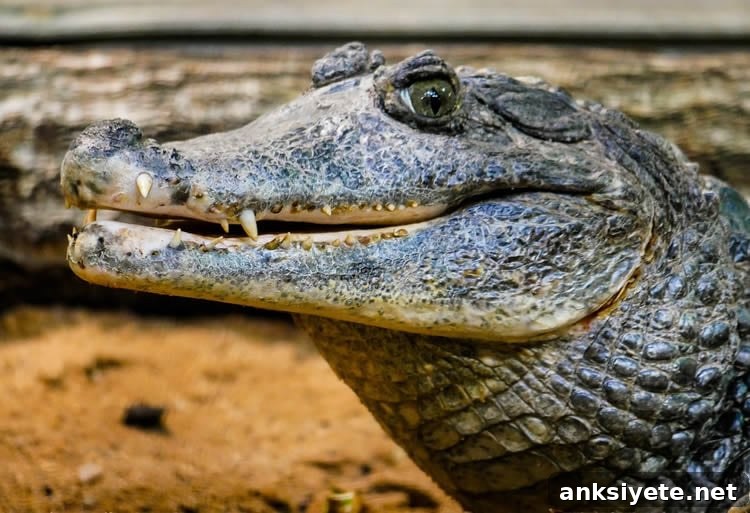
Summary: By presenting Nile crocodiles with a range of visual and auditory stimuli while scanning their brains with functional MRI, researchers found that the animals’ neural responses to complex sounds resemble patterns seen in birds and mammals. The team suggests that core mechanisms of sensory processing may have emerged early in vertebrate evolution.
Source: RUB.
What happens in a crocodile’s brain when it hears complex sounds? An international research team led by Dr. Felix Ströckens from the Department of Biopsychology at Ruhr-Universität Bochum used functional MRI (fMRI) to investigate how Nile crocodiles process sensory information. This study is the first to apply fMRI to a cold-blooded reptile, allowing the researchers to observe which brain regions respond to different visual and auditory stimuli. Their findings—published in Proceedings of the Royal Society B: Biological Sciences on April 25, 2018—reveal that complex sounds engage additional brain areas in crocodiles, producing activation patterns similar to those documented in birds and mammals.
Link to dinosaurs
Crocodiles are among the most ancient vertebrate lineages and have retained many morphological and behavioural characteristics over more than 200 million years. Because crocodilians are the closest living relatives of modern birds and share an early amniote ancestor with mammals, studying their brains provides a valuable window into the evolutionary origins of vertebrate neural systems. According to Felix Ströckens, examining crocodile brain function can help pinpoint when certain neural structures and sensory-processing behaviours first emerged during evolution.
Overcoming technical obstacles
The multinational research team, with collaborators from Iran, South Africa, France and Germany, set out to measure brain activity in juvenile Crocodylus niloticus using a 7 T MRI scanner. Applying fMRI to poikilothermic animals presented unique challenges because reptile physiology differs significantly from that of mammals. The team had to adjust scanner settings and experimental protocols to accommodate differences in temperature regulation, circulation, and baseline metabolic rates. These technical adaptations were essential to obtain reliable blood-oxygen-level-dependent (BOLD) signals in the crocodile brain.
Astonishing similarity of activation patterns
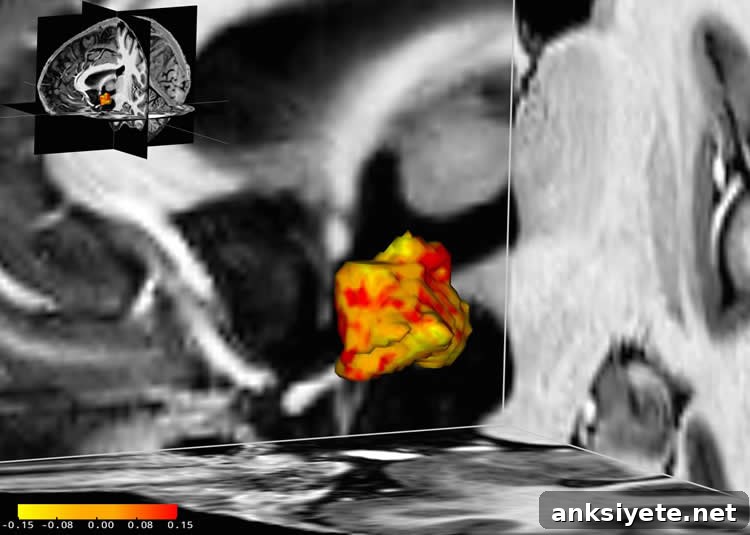
During scanning, the crocodiles were exposed to a variety of visual and auditory stimuli ranging from simple tones to more complex sounds, including examples of classical music. The researchers observed that simple auditory stimuli produced BOLD increases in specific regions of the anterior dorsal ventricular ridge (ADVR) associated with primary sensory input. In contrast, complex auditory stimuli recruited additional, more caudomedial areas of the ADVR. Visual stimulation similarly increased BOLD signals in rostral to mid-caudal portions of the dorso-lateral ADVR. These activation patterns align with known sensory projections from diencephalic structures and mirror the hierarchical recruitment of sensory areas reported in birds and mammals when processing complex stimuli.
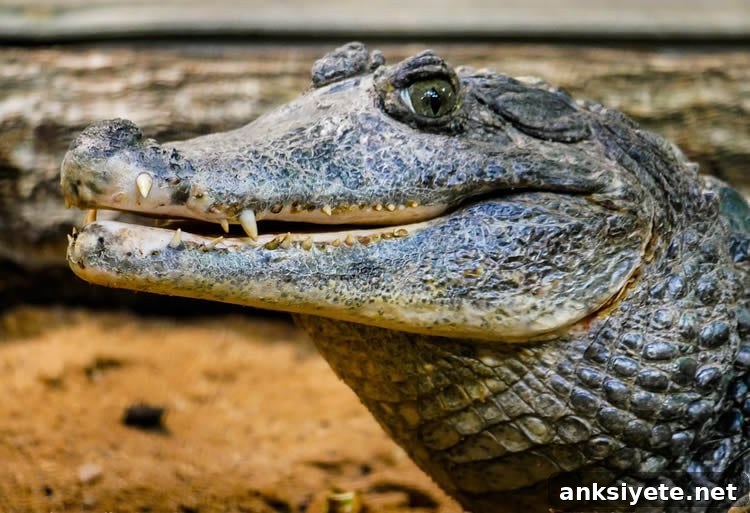
Implications: conserved sensory processing mechanisms
Because crocodiles display additional activation in higher-order telencephalic regions when exposed to complex auditory input—paralleling observations in birds and mammals—the authors infer that essential structural and functional features of vertebrate sensory processing were likely established early in amniote evolution. The resemblance of activation patterns across distant vertebrate groups suggests that core neural architectures for distinguishing simple from complex stimuli have deep evolutionary roots.
Moreover, by demonstrating that fMRI can be successfully applied to a poikilothermic species, the study opens a new methodological avenue for non-invasive investigation of brain function across a broader range of animals. This expands the toolkit available to evolutionary neurobiologists and enables comparative studies of sensory processing in species that have been difficult to study with conventional neuroimaging approaches.
Funding: Supported by the National Research Foundation of South Africa (Thuthuka Grant TTK14051567366), the German Research Foundation (Gu227/16-1) and Collaborative Research Centre 874.
Source: Felix Ströckens, Ruhr-Universität Bochum.
Publisher: Organized by NeuroscienceNews.com. Image source credited as public domain.
Original research: “Functional MRI in the Nile crocodile: a new avenue for evolutionary neurobiology” by Mehdi Behroozi, Brendon K. Billings, Xavier Helluy, Paul R. Manger, Onur Güntürkün and Felix Ströckens. Proceedings of the Royal Society B: Biological Sciences. Published April 25, 2018. doi: 10.1098/rspb.2018.0178
RUB (2018, May 3). Crocodiles Listen to Classical Music in MRI Scanner. NeuroscienceNews. Retrieved May 3, 2018.
Abstract
Crocodilians are important for understanding amniote neural evolution because they are the nearest living relatives of modern birds and share an early amniote ancestor with mammals. Although anatomical studies of the crocodilian brain exist, functional investigations have been scarce. This study applied functional magnetic resonance imaging (fMRI) to juvenile Crocodylus niloticus to record blood oxygenation level-dependent (BOLD) responses to visual and auditory stimulation. Visual stimuli increased BOLD signals in rostral to mid-caudal regions of the dorso-lateral anterior dorsal ventricular ridge (ADVR). Simple auditory stimuli elicited activity in rostromedial and caudocentral ADVR regions, consistent with known diencephalic sensory projections. Complex auditory stimuli recruited additional caudomedial ADVR areas, suggesting activation of higher-order sensory processing zones. These recruitment patterns parallel findings in birds and mammals and indicate that key structural and functional aspects of sensory processing have been conserved during sauropsid evolution. The study also demonstrates that fMRI can be adapted for use in poikilothermic species, providing a new, non-invasive approach for evolutionary neurobiology.