Summary: A Johns Hopkins Medicine study reports that eating processed, nitrate-cured meats may be linked to manic episodes. People hospitalized for mania were significantly more likely to have eaten cured meats prior to admission, and complementary rat experiments produced mania-like behavior when nitrates were included in the diet.
Source: Johns Hopkins Medicine
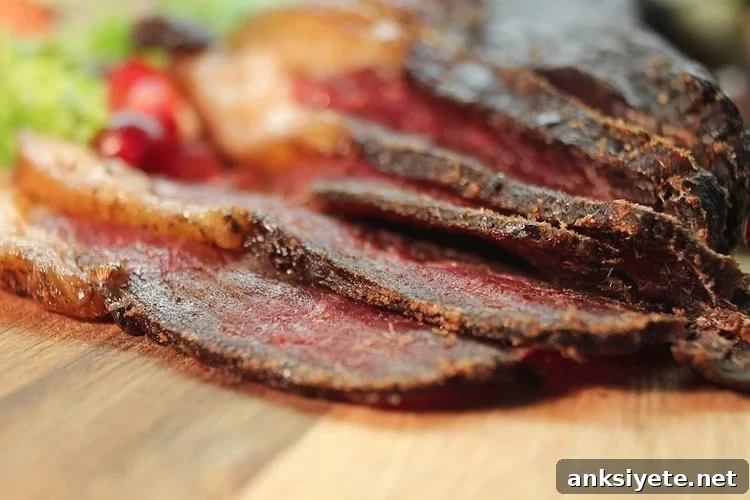
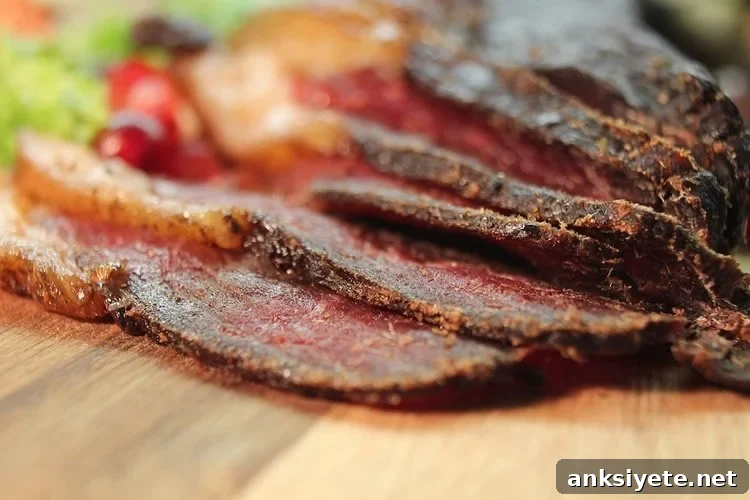
New research suggests nitrates used to cure processed meats — such as beef jerky, salami and hot dogs — could contribute to mania, a state of elevated mood, energy and activity most commonly seen in bipolar disorder.
Study overview
Researchers at Johns Hopkins analyzed dietary, health and demographic information from 1,101 adults, aged 18 to 65, collected between 2007 and 2017. The group included people with a range of psychiatric diagnoses as well as individuals with no psychiatric history. Approximately 55 percent of participants were female, 55 percent identified as Caucasian and 36 percent identified as African-American. Those with psychiatric conditions were recruited from clinical services; controls were recruited from the local community.
Human findings: association between cured meats and mania
The investigators found a strong and specific association between a history of eating nitrated, dry cured meats and current mania. After adjusting for other factors, people hospitalized for a manic episode were roughly 3.5 times more likely to report prior consumption of cured meats than people without a psychiatric disorder. This association was specific to mania: cured meat consumption was not linked to schizoaffective disorder, bipolar disorder in people who had not been hospitalized for mania, or major depressive disorder. Other foods included in the survey did not show similar associations.
The researchers emphasize that the study was observational and cannot prove causation. The dietary questionnaire did not capture frequency or precise timing of cured meat consumption, so it cannot specify how much or how often such foods would influence risk.
Rat experiments: nitrates reproduce mania-like behaviors
To investigate whether nitrates might play a causal role, the team conducted controlled experiments in rats. One experiment added store-bought, nitrate-prepared beef jerky to regular chow every other day. Within two weeks those animals developed irregular sleep patterns and increased activity, particularly during periods when they would normally rest, which the researchers describe as behavior reminiscent of human mania.
To isolate the effect of added nitrates, the researchers also tested a nitrate-free dried beef developed specifically for the study. Rats given the nitrate-free product behaved like controls, whereas those consuming nitrate-containing jerky again developed sleep disruptions and hyperactivity. Similar results occurred when nitrate was added directly to rat chow. Importantly, the nitrate doses were scaled to be comparable to amounts a person might ingest as a daily snack, such as a beef jerky stick or a hot dog.
Gut microbiome and brain pathway changes
The study also examined gut bacteria and brain gene expression in the animals. Rats fed nitrated diets showed altered intestinal microbiota compared with controls, and they had changes in brain molecular pathways previously implicated in bipolar disorder. These findings support the idea that dietary nitrates could influence brain function indirectly, for example via effects on gut microbes and downstream brain signaling.
Implications, limitations and next steps
The authors caution against drawing immediate clinical conclusions. Occasional consumption of cured meats is unlikely to trigger a manic episode for most people. Nonetheless, the findings add to growing evidence that environmental factors, including diet and the gut microbiome, may interact with genetic vulnerability to influence the risk and severity of neuropsychiatric conditions such as bipolar disorder.
Lead investigator Robert H. Yolken, M.D., notes that further research could clarify dose and timing effects and explore whether dietary changes might reduce risk in vulnerable individuals. Complementary work from the same group has shown that probiotic treatment after a manic episode can lower the chance of rehospitalization over the following six months, underscoring potential links between gut microbes and brain health.
Authors and funding
Key contributors include Seva G. Khambadkone, Zachary A. Cordner, Faith Dickerson, Emily G. Severance, Emese Prandovszky, Mikhail Pletnikov, Jianchun Xiao, Ye Li, Gretha J. Boersma, C. Conover Talbot Jr., Wayne W. Campbell, Christian S. Wright, C. Evan Siple, Timothy H. Moran, Kellie L. Tamashiro and Robert H. Yolken, among others.
Funding: This research was supported by the National Institute of Mental Health Silvio O. Conte Center grant (MH-94268) and the Stanley Medical Research Institute.
Abstract (concise)
Mania is a severe neuropsychiatric condition with complex causes. In a cohort study, history of eating nitrated dry cured meat was strongly and independently associated with current mania (adjusted odds ratio ~3.49). In complementary rat studies, diets containing added nitrate produced hyperactivity, sleep disruption and changes in brain pathways and intestinal microbiota. These convergent findings suggest nitrated cured meats may be an environmental factor associated with mania and support further research into dietary interventions and microbial mechanisms that could help prevent or treat manic episodes.