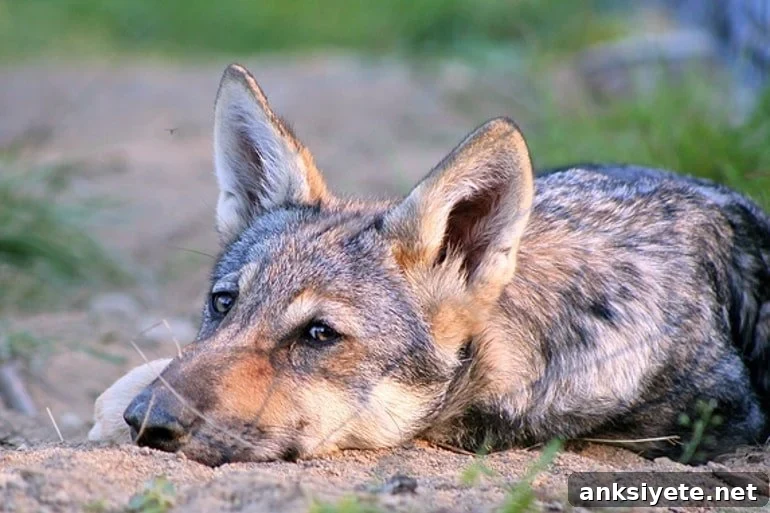
Summary: Wolves, like dogs, prefer a familiar person to a stranger. Familiar human presence reduces stress and promotes affiliative behavior in wolves, indicating that human-directed attachment is not unique to domestic dogs.
Source: Stockholm University
Researchers report in the journal Ecology and Evolution (published September 20) that wolves are capable of forming attachment-like bonds with human caregivers, showing discrimination between a familiar person and an unfamiliar stranger similar to that seen in dogs.
A team at Stockholm University tested 10 wolves and 12 dogs with a standardized behavioural protocol designed to measure attachment in canids. In the Strange Situation Test, 23-week-old wolves, like the dogs, consistently sought proximity with and showed affiliative behaviours toward a familiar person rather than toward a stranger.
Beyond seeking contact, wolves also displayed a stress response to the test environment—pacing and restlessness—yet this stress was visibly reduced when the familiar person returned, demonstrating that the human acted as a social stress buffer for the wolves.
These observations add to growing evidence that the capacity for human-directed attachment may have been present in wolf ancestors before domestication, challenging the idea that such social bonds evolved only after dogs were domesticated roughly 15,000 years ago.
“We felt there was a need for rigorous testing,” says Dr. Christina Hansen Wheat, PhD in Ethology at Stockholm University. “When wolves raised and socialized under identical conditions to dogs show human-directed attachment, it suggests that variation in this behaviour existed in ancestral populations and could have been acted on during early dog domestication.”
To examine the effects of upbringing and socialization, the research team hand-raised wolves and dogs from 10 days old under standardized conditions. During the Strange Situation Test, a familiar caregiver and an unfamiliar person alternated entering and leaving the test room, creating an environment intended to elicit attachment behaviours such as seeking contact or greeting the familiar person more than the stranger.
The researchers measured behaviours including proximity seeking, greeting, physical contact, and stress-related activity. Both wolves and dogs discriminated between the familiar person and the stranger, investing more time in contact and affiliative interactions with the familiar caregiver. Wolves, however, demonstrated higher stress-related behaviour during the test; crucially, this elevated stress diminished in the presence of the familiar human.
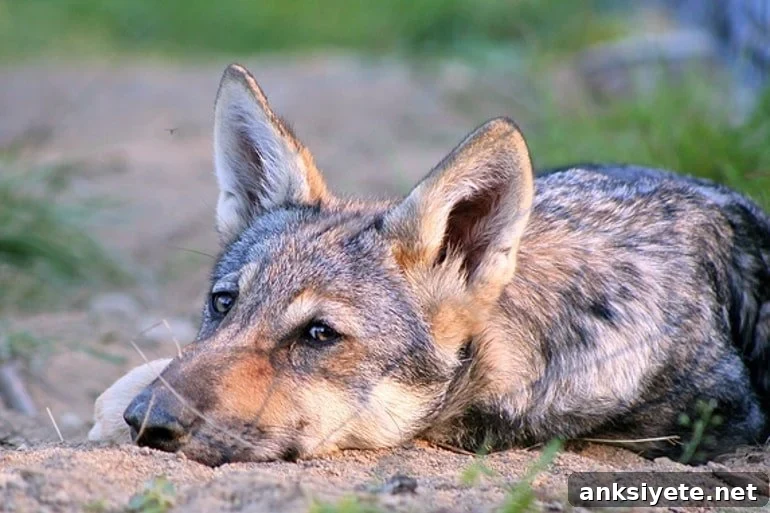
“It was clear the wolves, like the dogs, preferred the familiar person. The pacing stopped when their lifelong caregiver re-entered the room, revealing that the familiar human provided social buffering for stress,” Dr. Hansen Wheat explains. “To our knowledge, this is the clearest demonstration yet that wolves can form a bond with a human that affects their behaviour under stress.”
Understanding where dogs’ social behaviours originate requires comparing them with their wild relatives. Similarities between dogs and wolves in human-directed attachment suggest these traits may reflect ancestral variation rather than being entirely novel traits that emerged only after domestication.
Dr. Hansen Wheat and her team will continue to analyse the three years of behavioural data gathered from hand-raising wolves and dogs under the same conditions to further clarify shared and divergent behavioural traits between the two species.
The peer-reviewed article, “Human-directed attachment behaviour in wolves suggests standing ancestral variation for human-dog attachment bonds,” appears in Ecology and Evolution. The research was conducted without specific public, commercial, or not-for-profit grant funding.
About this animal behavior research news
Author: Karin Tjulin
Source: Stockholm University
Contact: Karin Tjulin – Stockholm University
Image: The image is credited to Christina Hansen Wheat / Stockholm University
Original Research: Open access. Title: “Human-directed attachment behaviour in wolves suggests standing ancestral variation for human-dog attachment bonds” by Christina Hansen Wheat et al., published in Ecology and Evolution.
Abstract
Human-directed attachment behaviour in wolves suggests standing ancestral variation for human-dog attachment bonds
Domesticated animals are often assumed to show increased sociability toward humans compared with their wild ancestors. Dogs (Canis familiaris) are well known for forming lasting social bonds with humans, including attachment, which involves emotional dependence and proximity seeking.
Some have proposed that the ability to form attachment with humans arose only after domestication. To address this, the present study used the standardized Strange Situation Test to quantify attachment behaviours in wolves (Canis lupus) and dogs hand-raised and socialized under identical conditions until the time of testing.
Results show that 23-week-old wolves and dogs equally discriminated between a stranger and a familiar person and expressed comparable attachment behaviours toward the familiar person. Wolves, but not dogs, displayed increased stress-related behaviours during the test, yet the presence of a familiar human buffered this stress response.
These findings indicate that wolves can exhibit attachment behaviours toward humans similar to dogs, supporting the idea that the capacity for human-directed attachment existed in ancestors of domestic dogs and was not necessarily a trait that evolved only after domestication began.