
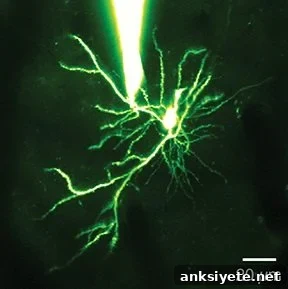
Dendrites — the branch-like extensions of neurons — were once regarded as passive wiring. New research from the University of North Carolina at Chapel Hill shows that dendrites actively process information, substantially increasing the brain’s computational capacity and offering new insight into how sensory information is represented and potentially how certain neurological disorders arise.
Researchers led by Spencer Smith, PhD, in the UNC School of Medicine recorded electrical signals directly from dendrites in the brains of mice and found that dendrites generate localized bursts of electrical activity, or dendritic spikes, that selectively respond to visual stimuli. These findings, published October 27 in the journal Nature, indicate that dendrites function as independent computational units rather than mere passive conduits for axonal signals.
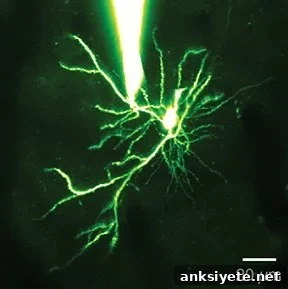
Conventional models emphasize axons as the primary sites for action potentials, the spikes that neurons use to send signals. However, many of the molecular components needed to generate spikes are also present within dendrites. Earlier studies on isolated brain tissue had shown that dendrites are capable of producing electrical spikes, but whether dendritic spikes occur during normal sensory processing in living animals remained unclear.
To address this question, Smith and colleagues performed technically demanding in vivo electrophysiology. They used patch-clamp recording to attach a microscopic glass pipette to individual dendrites in the cortex of anesthetized and awake mice. This approach allowed the team to record the dendrite’s own electrical activity while the animals viewed controlled visual stimuli on a screen.
“Attaching the pipette to a dendrite is tremendously technically challenging,” Smith explained. The dendrite cannot be approached from arbitrary angles and is often not directly visible, so researchers must rely on electrical feedback while carefully guiding the pipette into contact. To improve the success rate, Smith built a custom two-photon microscope system that aided the delicate recordings.
When the researchers monitored dendritic electrical activity as mice viewed visual patterns, they observed bursts of spikes localized to dendritic branches. Crucially, these dendritic spikes were stimulus-selective: particular visual inputs triggered spikes in specific dendrites. Simultaneous calcium imaging confirmed that dendritic branches produced spiking while the soma or other compartments of the same neuron did not, demonstrating that the response reflected local processing in the dendrite rather than a global neuronal event.
To support their experimental observations, co-author Tiago Branco, PhD, developed a biophysical computational model of neurons showing that known cellular mechanisms can produce the dendritic spiking patterns recorded in vivo. Together, the electrical recordings, optical calcium signals, and computational modeling converge on the conclusion that dendrites perform active, localized computations that shape how sensory information is represented by cortical neurons.
These results have several important implications. First, they suggest the brain’s computing power may be substantially larger than previously estimated, since each dendritic branch can act as a semi-independent processing unit. Second, understanding dendritic computation could change how scientists model neural circuits and interpret neuronal coding of sensory inputs. Finally, abnormal dendritic integration may contribute to neurodevelopmental or neuropsychiatric disorders; the authors note that conditions such as Timothy syndrome, which involves disrupted calcium signaling, could involve altered dendritic processing.
Study details and acknowledgments
The study authors include Spencer L. Smith, Ikuko T. Smith, Tiago Branco, and Michael Häusser. Funding and fellowship support came from the Human Frontier Science Program (Long-Term Fellowship and Career Development Award), a Klingenstein Fellowship, a Helen Lyng White Fellowship, Wellcome Trust and Royal Society fellowships, the Medical Research Council (UK), the European Research Council, and the Gatsby Charitable Foundation.
Contact: Mark Derewicz – UNC
Source: UNC press release
Original research: “Dendritic spikes enhance stimulus selectivity in cortical neurons in vivo” by Spencer L. Smith, Ikuko T. Smith, Tiago Branco and Michael Häusser. Published online October 27, 2013 in Nature. DOI: 10.1038/nature12600
#neuroscience, #electrophysiology, #dendrites