
Summary: New research validates that a mutation-driven defect in intracellular transport contributes to familial Alzheimer’s disease and identifies a potential therapeutic target.
Source: UCSD.
Study confirms mutation-driven transport defects in neurons and points to an existing enzyme inhibitor as a corrective approach.
Researchers at the University of California San Diego School of Medicine report that inherited mutations linked to familial Alzheimer’s disease (fAD) disrupt the cellular pathways neurons use to move proteins and lipids internally. The team shows that these transport defects—long suspected but not well characterized in human neurons—reduce delivery of key molecules to axons and may be reversible using β-secretase inhibitors. The findings were published online October 11 in Cell Reports.
“Our results further illuminate the complex processes involved in the degradation and decline of neurons, which is, of course, the essential characteristic and cause of AD,” said the study’s senior author Larry Goldstein, PhD, Distinguished Professor in the Departments of Neuroscience and Cellular and Molecular Medicine at UC San Diego School of Medicine and director of both the UC San Diego Stem Cell Program and Sanford Stem Cell Clinical Center at UC San Diego Health. “But beyond that, they point to a new target and therapy for a condition that currently has no proven treatment or cure.”
Alzheimer’s disease is a progressive neurodegenerative disorder marked by memory loss and declining cognitive function. It affects tens of millions worldwide and an estimated 5.4 million Americans. Prevalence increases with age: about one in ten people over 65 and roughly one in three over 85 are affected. To date there are no therapies that definitively halt or reverse disease progression.
Clinically and genetically, Alzheimer’s is commonly separated into sporadic (sAD) and familial (fAD) forms. Sporadic AD is far more common and lacks a single known initiating genetic cause, while familial AD results from inherited mutations in genes such as APP and PS1. Regardless of origin, AD brains are characterized by the buildup of amyloid plaques and tau-based neurofibrillary tangles, pathological features associated with neuronal stress, dysfunction, and eventual cell death.
Beyond the long-standing “amyloid cascade” model—where fragments of amyloid precursor protein (APP) and tau drive toxicity—evidence has pointed to defects in endocytic trafficking as an important contributor. Endocytic trafficking is the cellular process that internalizes extracellular material and recycles membrane components in vesicles for distribution within the cell. Deficits in these pathways could impair neuronal maintenance and synaptic function, but previous investigations relied largely on non-neuronal cells or overexpression models, leaving uncertainty about the relevance of these mechanisms in human neurons at physiological expression levels.
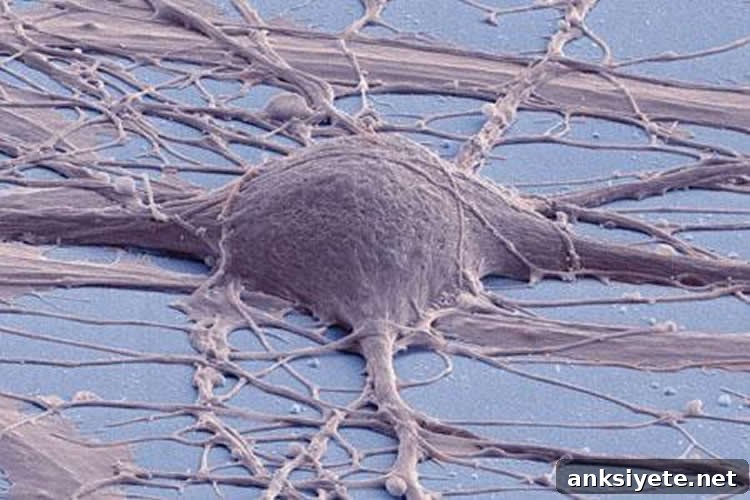
To study these processes directly in human neurons, the UC San Diego team generated induced pluripotent stem cell (iPSC)-derived neurons and used genome editing tools (CRISPR and TALEN) to introduce fAD-associated PS1 and APP mutations at their native genomic loci. This “disease-in-a-dish” strategy allowed examination of cellular trafficking under physiologically relevant expression levels.
The researchers observed that neurons carrying fAD mutations show disrupted distribution and movement of APP and endocytosed lipoproteins. Specifically, APP accumulated in the neuronal soma (cell body) while axonal APP levels were reduced. Lipoprotein uptake and delivery to axons were similarly impaired. These defects implicate a failure in both endocytosis (the uptake and recycling of vesicles) and transcytosis (directed movement of cargo from the soma toward axons).
Previous work by the group had linked PS1 and APP mutations to impaired activity of particular cellular enzymes. In the current study they demonstrate that treating mutated fAD neurons with a β-secretase inhibitor restores both endocytosis and soma-to-axon transcytosis of APP and lipoproteins, indicating that accumulation of specific APP cleavage products—rather than extracellular Aβ alone—may interfere with vesicle formation from recycling compartments marked by Rab11, a transcytotic GTPase.
The study’s co-first authors are Grace Woodruff and Sol M. Reyna. Other co-authors include Mariah Dunlap, Rik Van Der Kant, Julia A. Callender, Jessica E. Young, Elizabeth A. Roberts, and Lawrence S.B. Goldstein, all affiliated with UC San Diego.
Disclosure: Lawrence S.B. Goldstein has an equity interest in Human Longevity, Inc. and serves on the company’s Scientific Advisory Board. This arrangement was reviewed and approved by the University of California San Diego under its conflict-of-interest policies.
Funding: Research support was provided by the National Institutes of Health, the California Institute for Regenerative Medicine, the Tina Nova scholarship, an ERC Marie Curie International Outgoing Fellowship, Alzheimer’s Netherlands, and the NIH/National Institute on Aging.
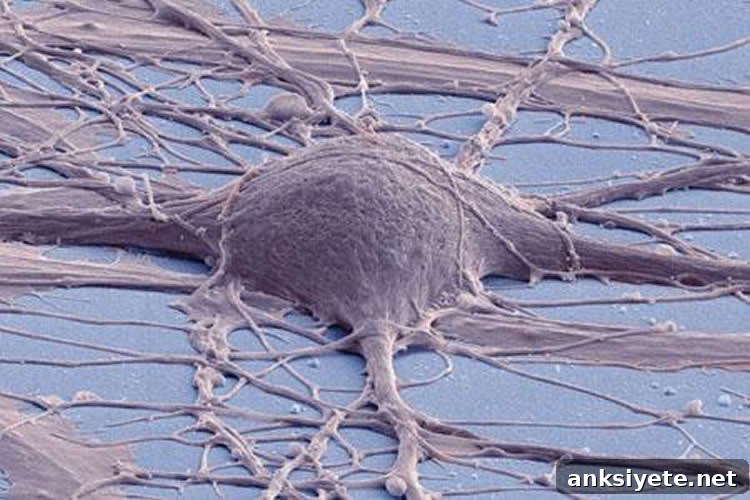
Reporting: Scott LaFee, UCSD. Image credit: Thomas Deerinck, National Center for Microscopy and Imaging Research, UC San Diego.
Original research: Woodruff G., Reyna S.M., Dunlap M., Van Der Kant R., Callender J.A., Young J.E., Roberts E.A., and Goldstein L.S.B. “Defective Transcytosis of APP and Lipoproteins in Human iPSC-Derived Neurons with Familial Alzheimer’s Disease Mutations,” Cell Reports. Published online October 11, 2016. doi:10.1016/j.celrep.2016.09.034
Abstract
Defective Transcytosis of APP and Lipoproteins in Human iPSC-Derived Neurons with Familial Alzheimer’s Disease Mutations
Highlights
• Familial Alzheimer’s disease mutations impair neuronal endocytosis and soma-to-axon transcytosis of APP and lipoproteins.
• Reduced lipoprotein uptake and transcytotic delivery can be rescued by β-secretase inhibition.
Summary
This study examined early cellular phenotypes caused by familial Alzheimer’s disease (fAD) mutations introduced into isogenic human iPSC-derived neurons using genome editing. Neurons carrying PS1 or APP fAD mutations exhibited deficits in endocytic recycling and in the directed movement of APP and lipoproteins from soma to axon. Those deficits correlated with accumulation of β-C-terminal fragments (β-CTFs) of APP and a slowdown in vesicle formation from an endocytic recycling compartment marked by Rab11. Treatment with a β-secretase inhibitor restored both endocytosis and transcytosis, suggesting that specific APP processing intermediates—not extracellular Aβ alone—contribute to the trafficking defects. Reduced axonal delivery of lipoproteins and other essential cargo could compromise synaptic maintenance and contribute to early neuronal decline in fAD.