Summary: Tracking eye movements and pupil responses can reveal true receptive vocabulary in people diagnosed with Level 3 autism.
Source: University of Vermont
Standard vocabulary tests often fail to capture the language abilities of people with the most severe forms of autism spectrum disorder (Level 3 ASD). Traditional assessments typically ask the participant to point to a picture after hearing a spoken word, a task that depends as much on following instructions, motor responses, and cooperation as on actual word knowledge.
Poor assessment accuracy has important consequences. Inaccurate test results can lead to ineffective teaching approaches, limit appropriate clinical interventions, and discourage researchers from studying this underserved group. That scarcity of research, in turn, hampers efforts to improve the quality of life for people with Level 3 ASD.
Emily Coderre, the study’s lead author and a faculty member in the University of Vermont’s Department of Communication Science and Disorders, highlights these concerns in a new study published in the journal Cognitive and Behavioral Neurology.
Coderre and colleagues at Johns Hopkins Medicine tested alternatives to conventional behavioral assessments by measuring implicit indicators of word knowledge—signs that do not require an explicit behavioral response. Their results indicate that methods such as eye-tracking and pupillometry, which have rarely been applied to individuals with Level 3 ASD, may more closely reflect real vocabulary knowledge and align with caregiver reports, often considered the best available benchmark.
“Children and adults with severe autism frequently score far below their true language level on standard tests,” Coderre explains. “They may not grasp task instructions, be unable to point to a picture, be frightened by testing equipment, or choose not to engage. Our study suggests a better way to assess what these individuals actually know.”
Three implicit measures of receptive vocabulary
The research used three implicit assessment methods to estimate receptive vocabulary in five adults with Level 3 ASD. Each approach gauges understanding without requiring conventional overt responses.
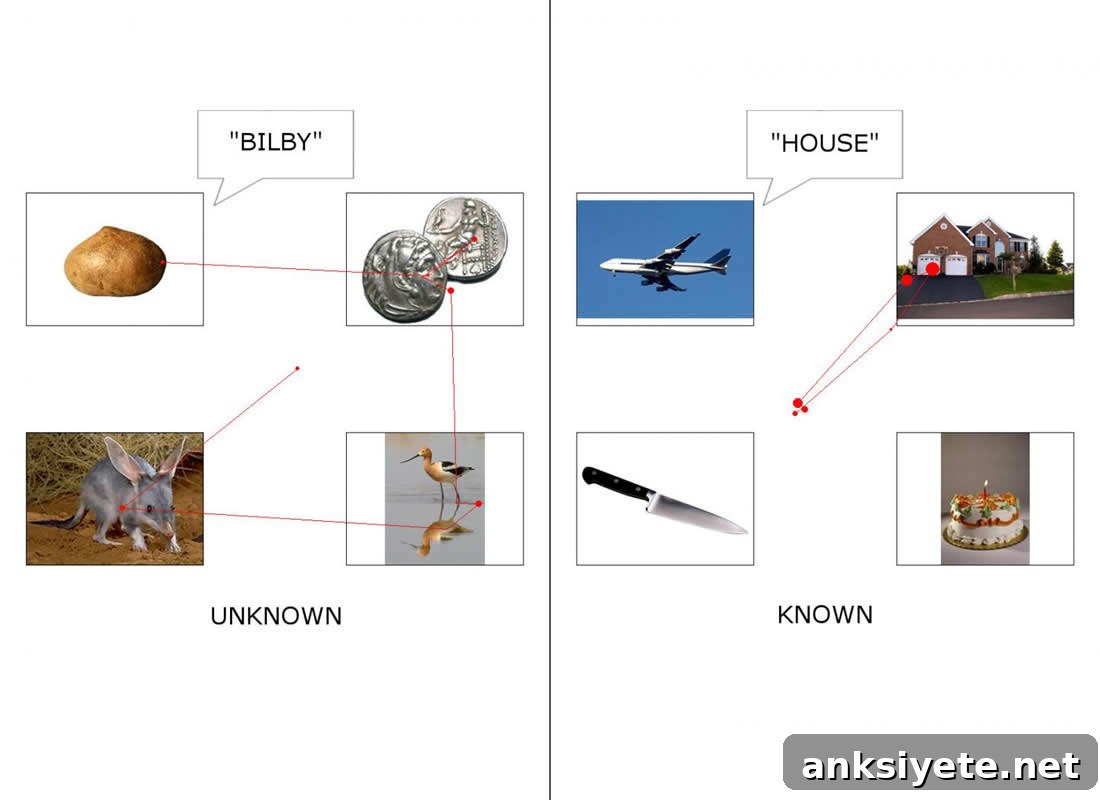
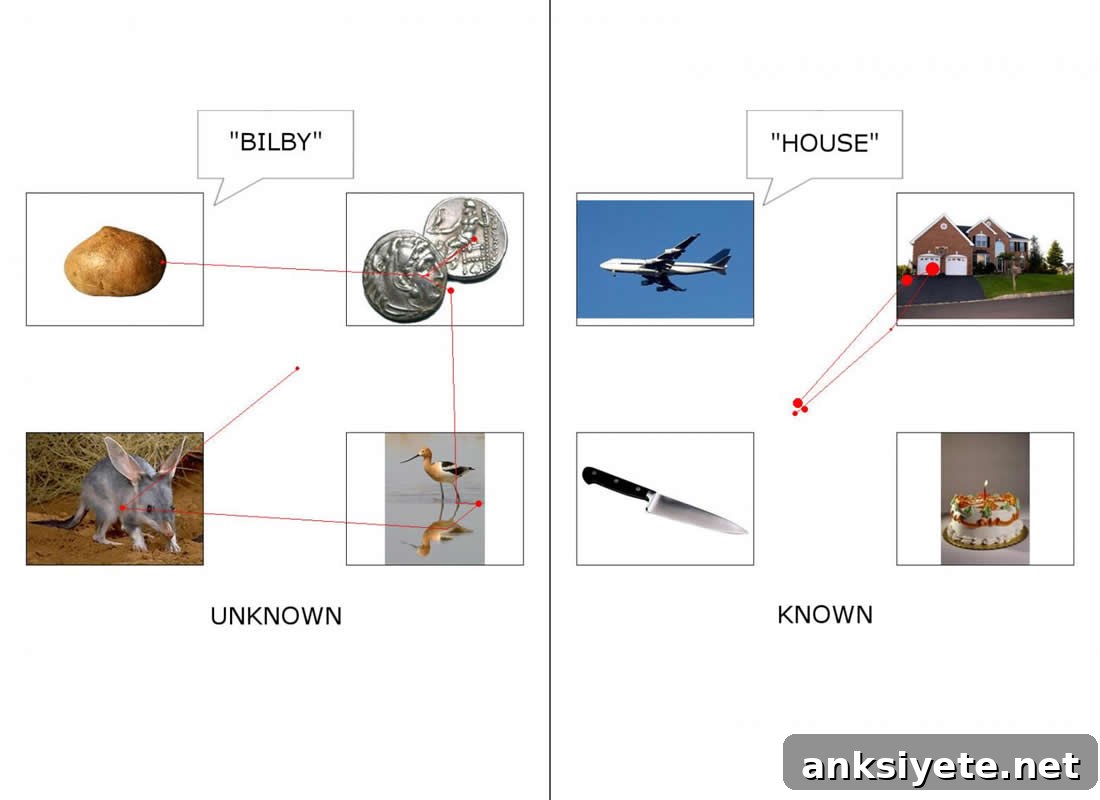
First, the team used eye movement monitoring. During a visual-world task, participants heard a single spoken word while four images appeared on a screen. Researchers recorded eye movements: a fast, sustained fixation on the image that matched the spoken word signaled recognition, whereas rapid shifting across images suggested the word was unfamiliar.
Second, pupillary dilation was measured while participants completed the same type of four-image task. Larger pupil dilation after hearing a word is a physiological indicator of greater cognitive effort and uncertainty, suggesting the word was not known; little or no dilation suggests the word was likely recognized with ease.
Third, the study recorded event-related potentials (ERPs) via electroencephalography (EEG) during a picture-word congruity task. When an image and word are congruent, the brain shows characteristic electrical patterns that differ from the patterns produced by incongruent pairs. These neural signatures were used to infer whether participants recognized the spoken words.
The three measures varied in sensitivity across the five participants. While each method showed promise for estimating receptive vocabulary, results indicate that optimal assessment may require tailoring the choice of implicit measure to the individual.
Coderre’s team previously validated these methods in a group without ASD, finding high accuracy for the same implicit measures. That prior work strengthens confidence that eye-tracking, pupillometry, and ERPs can reliably capture word knowledge when traditional testing is unsuitable.
Implications for interventions and research
Although this study involved a small sample and its findings are preliminary, the implications are meaningful. Using implicit measures to assess receptive vocabulary may allow clinicians and educators to better match interventions to each person’s true language knowledge, increasing the effectiveness of language therapies and supports.
“Language is often an area of major difficulty for individuals at the severe end of the autism spectrum, where many have limited or no functional spoken language,” Coderre said. “Any method that can more accurately reveal what someone knows can directly improve their care and quality of life.”
Beyond language assessment, these nonverbal, physiological techniques could be extended to other domains of cognition. For example, nonverbal intelligence tests that require visual problem solving—such as selecting a missing puzzle piece from alternatives—might be adapted to eye movement and pupillometry paradigms to yield more valid measures for people with Level 3 ASD.
“These techniques could very well be extended to other domains,” Coderre said.
Applying implicit measures more broadly may help close a major gap in autism research. Much of the existing literature focuses on individuals who are more functionally verbal, leaving those with severe impairments understudied. Improved assessment tools can enable more robust research with this population, providing insights into how their strengths and challenges compare with others on the spectrum and informing tailored interventions.
Source:
University of Vermont
Media Contacts:
Jeff Wakefield – University of Vermont
Image source:
The image is adapted from the University of Vermont news release.
Original research (open access):
“Implicit Measures of Receptive Vocabulary Knowledge in Individuals With Level 3 Autism.” Emily Coderre; Mariya Chernenok; Jessica O’Grady; Laura Bosley; Barry Gordon; Kerry Ledoux.
Cognitive and Behavioral Neurology. doi: 10.1097/WNN.0000000000000194
Abstract (summary)
Implicit measures of cognition are crucial for assessing knowledge in people with Level 3 autism, who often cannot produce reliable overt responses. This study evaluated whether eye movement monitoring (EM), pupillary dilation (PD), and event-related potentials (ERPs) can estimate receptive vocabulary in individuals with Level 3 autism. Five adults participated in repeated measures using a visual-world task (EM and PD) and a picture-word congruity task (ERP). High-frequency known words (e.g., bus, airplane) and low-frequency unknown words (e.g., ackee, cherimoya) were presented. Single-subject analyses indicated that these implicit measures hold promise for estimating receptive vocabulary, though sensitivity varied by participant. The authors conclude that implicit assessments may be valuable for measuring language ability in Level 3 autism when individualized approaches are used.