
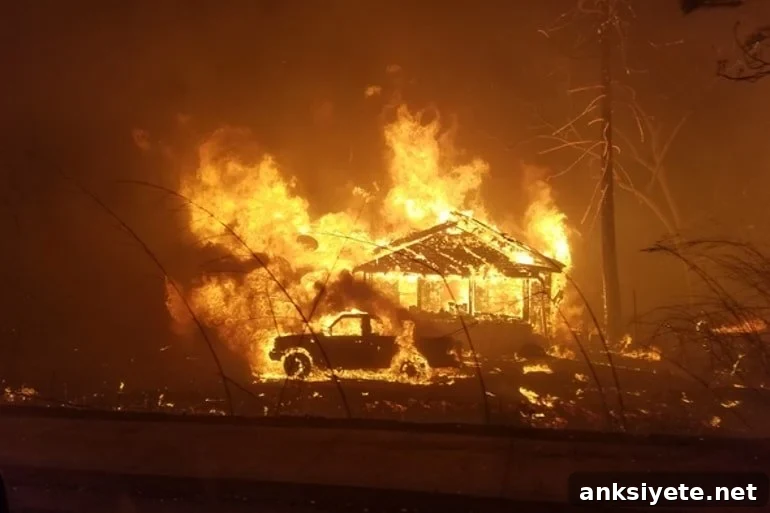
Summary: Survivors and witnesses of the 2018 Camp Fire in California demonstrated measurable changes in brain activity and cognitive performance months after the event. These findings strengthen evidence for the psychological and neurological impact of extreme climate events—often described as “climate trauma.”
Source: UCSD
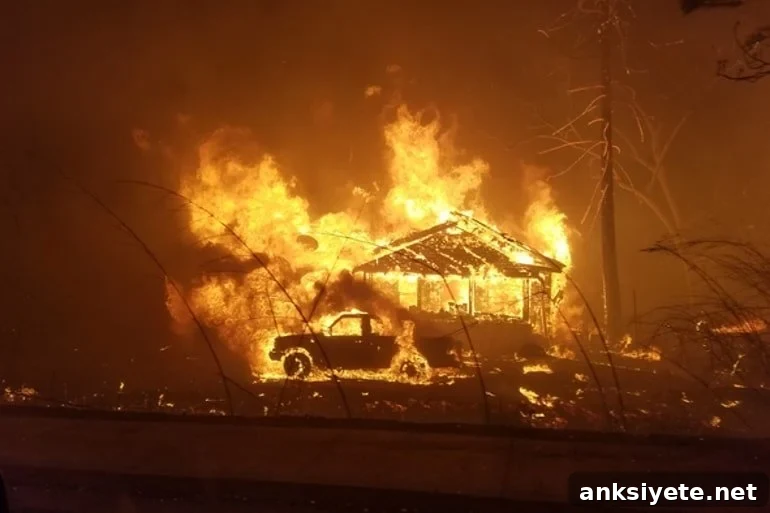
In November 2018, the Camp Fire burned 239 square miles, destroyed 18,804 structures and claimed 85 lives, making it the deadliest and most destructive wildfire in California history.
Three years after the disaster, researchers at the University of California San Diego published research documenting long-term psychological effects of the fire. That earlier work showed that people exposed to the Camp Fire experienced persistent mental health problems, including increased rates of post-traumatic stress disorder, anxiety and depression.
In a subsequent study published online in PLOS Climate on January 18, 2023, senior author Jyoti Mishra, PhD—associate professor in the Department of Psychiatry at UC San Diego School of Medicine, director of the Neural Engineering and Translation Labs, and associate director of the UC Climate and Mental Health Initiative—led a team that examined whether climate trauma from the Camp Fire produced detectable changes in cognitive processing and brain function.
Using synchronized cognitive testing and electroencephalography (EEG), the researchers identified clear differences in how the brains of exposed individuals processed interference and exercised cognitive control. In short, people affected by the Camp Fire showed increased neural activity in brain regions involved in managing distracting or intrusive thoughts, and they performed worse on tasks that require suppressing interference.
“To manage everyday demands, our brains must filter irrelevant information and control intrusive memories or thoughts so we can stay focused on goals,” Mishra said. “Extreme climate events are increasing in frequency and intensity, and their psychological consequences are already documented. This study shows that the consequences can also extend to measurable changes in brain function and cognition.”
The study enrolled three groups: 27 people who were directly exposed to the fire (for example, their homes were destroyed), 21 who were indirectly exposed (they witnessed the fire or its aftermath but were not directly displaced), and 27 age- and gender-matched controls who were not exposed. All participants completed cognitive tests while their brain activity was recorded with EEG.
Rates of recent psychological trauma differed markedly across groups: 67% of the directly exposed reported recent trauma, compared with 14% of the indirectly exposed and 0% of the controls. On cognitive tests targeting interference processing—the ability to ignore distracting information—fire-exposed participants, on average, exhibited poorer performance.
EEG data revealed that individuals who reported trauma showed greater stimulus-evoked activity in frontal and fronto-parietal brain regions during interference tasks. The pattern suggests these brains were recruiting extra cognitive-control resources to keep up with task demands—an apparent compensatory response that may impose additional neural cost and increase vulnerability to dysfunction in other areas of cognition or daily functioning.
“Finding altered interference processing and corresponding frontal brain responses provides a measurable neural signature of climate-related trauma,” Mishra said. “These objective brain measures can inform development of interventions that target the neurocognitive consequences of extreme climate exposures, complementing existing behavioral and social supports.”
The research team included Gillian K. Grennan (UC San Diego), Mathew C. Withers (California State University, Chico), and Dhakshin S. Ramanathan (UC San Diego and VA San Diego Medical Center).
About this environmental neuroscience research news
Author: Scott LaFee
Source: UCSD
Contact: Scott LaFee – UCSD
Image: Image credited to National Institute of Standards and Technology
Original Research: Open access. “Differences in interference processing and frontal brain function with climate trauma from California’s deadliest wildfire” by Jyoti Mishra et al., published in PLOS Climate.
Abstract
Differences in interference processing and frontal brain function with climate trauma from California’s deadliest wildfire
As climate change drives more frequent and intense extreme weather events, the mental health of affected communities is an urgent concern. In a prior study of 725 Californians, researchers found that those directly exposed to the 2018 Camp Fire experienced greater chronic symptoms of post-traumatic stress disorder, anxiety and depression than unexposed controls.
This follow-up analysis focused on a subsample: individuals directly exposed (n = 27), indirectly exposed (n = 21), and non-exposed, age- and gender-matched controls (n = 27). All participants completed a cognitive interference task while EEG recorded stimulus-evoked brain activity. The directly exposed group reported high rates of recent trauma (67%), compared with 14% of indirectly exposed and none of the controls.
Fire-exposed participants showed clear cognitive deficits on interference processing tasks, and their EEGs revealed greater fronto-parietal activation during those tasks. Across the full sample, stronger left frontal stimulus-evoked activity correlated with better interference processing efficiency, indicating that the increased frontal activation seen in exposed individuals may reflect compensatory cognitive-control engagement.
To the authors’ knowledge, this is the first study to document cognitive and underlying neural changes associated with recent climate-related trauma, highlighting the need for interventions that address both psychological symptoms and neurocognitive function following extreme climate events.