
The brain’s internal “GPS” stays active during sleep, a discovery that may shed light on navigational difficulties seen in Alzheimer’s disease and other neurological conditions.
Scientists at NYU Langone Medical Center have demonstrated that head direction cells—neurons that encode the direction an animal is facing—remain electrically active during sleep and continue to represent a coherent sense of orientation. The findings, gathered in mice, show that the brain’s directional system keeps operating both during REM sleep, when dreaming is most intense, and during slow-wave sleep, suggesting that navigation-related circuits are engaged in internal processing even when external sensory input is absent. Understanding how these navigation circuits function during sleep could offer clues for treating early navigational impairments in neurodegenerative disorders such as Alzheimer’s disease.
Published online in Nature Neuroscience, the study reports that head direction neurons continued to encode a “virtual” gaze direction during sleep. During REM sleep, the internal compass of these neurons moved at speeds similar to those observed when animals were awake and exploring. Surprisingly, during slow-wave sleep the neural representation accelerated—by roughly tenfold—consistent with the idea that the brain may be replaying or compressing sequences of orientation information when consolidating memory.
“We have long known that the brain remains active during sleep,” said senior investigator Gyorgy Buzsaki, MD, PhD, Biggs Professor of Neural Sciences at NYU Langone and head of its Neuroscience Institute. “These results reveal how one important sensory modality—our sense of direction—continues to operate internally. Head direction signals are a fundamental part of the brain’s navigation system because they help reset the internal compass and align spatial maps whenever we reorient ourselves in the environment.”
Buzsaki and colleagues interpret coordinated patterns of head direction activity during sleep as the brain’s way of internally simulating gaze shifts and spatial trajectories. “Even when the brain disengages from the environment, it appears to actively explore and organize information,” he added. The new data support a broader theory that mammalian brains do not passively wait for sensory inputs but actively generate internal activity that may prime or predict future sensory experiences.
The experimental protocol combined continuous video tracking of head orientation with electrophysiological recordings from brain regions known to harbor head direction cells, including the anterodorsal thalamic nucleus and the postsubiculum. The team compared neural patterns recorded while mice explored different environments to those recorded during subsequent sleep episodes. The result was a clear correspondence: the directional signal persisted, and its dynamics differed reliably between REM and slow-wave sleep stages.
Lead author Adrien Peyrache, PhD, noted that the observed coordination of head direction activity across sleep likely contributes to memory consolidation. “The patterned activity we observed during most sleep periods appears to represent a rehearsal or consolidation of places, events, and temporal sequences—a kind of navigational backup that helps store spatial information in memory,” Peyrache said.
The investigators plan to extend this work by recording from additional brain areas involved in navigation and more complex behaviors to determine whether similar replay or internal simulation occurs across broader networks. Future studies will also explore whether head direction and navigation signals can be manipulated or predicted, with potential implications for interventions that target navigational deficits.
Funding for the study came from National Institutes of Health grant NS34994 and National Science Foundation grant SBE0542013, with additional support from a Human Frontier Science Program long-term fellowship and a European Molecular Biology Organization postdoctoral fellowship. The research was conducted entirely at NYU Langone Medical Center. In addition to Drs. Gyorgy Buzsaki and Adrien Peyrache, contributors included Marie Lacroix, PhD, and Peter Petersen, PhD.
Contact: David March, NYU Langone Medical Center
Source: NYU Langone Medical Center press release
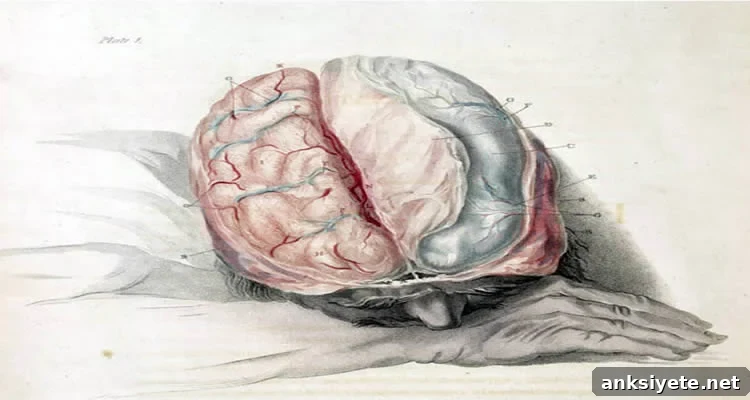
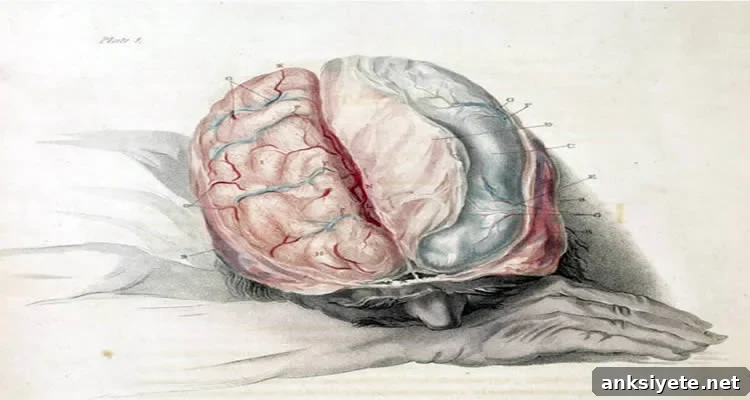
Image source: Charles Bell (1774–1842), The Anatomy of the Brain, Explained in a Series of Engravings (public domain).
Original research: “Internally organized mechanisms of the head direction sense” by Adrien Peyrache, Marie M. Lacroix, Peter C. Petersen, and György Buzsáki, Nature Neuroscience. Published online March 2, 2015. DOI: 10.1038/nn.3968