
Summary: A large-scale, cross-study analysis of EEG data uncovers brain activity patterns that are consistent across people and tasks, offering new insights for neuroscience and neurotechnology.
Source: U.S. Army Research Laboratory
Big-data methods in neuroscience are revealing general patterns that link brain activity, cognitive state, and task performance.
Neurotechnology has only recently begun to explore true big-data approaches. Traditionally, meta-analyses in human neuroscience have pooled published results rather than the primary recordings themselves, limiting the depth and generalizability of conclusions. In contrast, the study described here represents one of the first efforts to aggregate raw electroencephalography (EEG) recordings from a diverse set of experiments to identify neural signatures that recur across tasks, individuals, and recording conditions.
The U.S. Army is particularly interested in understanding how a Soldier’s cognitive state affects mission performance. By characterizing the neural correlates of attention, workload, and other cognitive aspects, researchers hope both to predict performance and to design systems that can mitigate deficits or augment human capabilities.
Researchers from the U.S. Army Combat Capabilities Development Command’s Army Research Laboratory collaborated with the University of Texas at San Antonio and Intheon Labs to assemble a first-of-its-kind EEG mega-analysis. Their effort combined raw data from 17 distinct studies, conducted at six different sites, into a single analytical framework. The experimental paradigms represented in the pooled corpus are varied and include tasks such as simulated driving and visual search, ensuring a heterogeneous dataset suitable for detecting broad, generalizable patterns.
“Most human neuroscience studies recruit a small number of participants to perform narrowly defined tasks,” said Dr. Jonathan Touryan, an Army scientist and co-author on the work. “That approach limits the ability to generalize findings. Aggregating raw data across studies helps reveal neural features that consistently link brain activity and behavior across a wider population and a broader set of cognitive demands.”
Conducting an EEG mega-analysis poses substantial challenges. Studies differ in hardware (electrode types and configurations), task designs, annotation schemes, and in the natural variability between and within individuals over time. Those sources of heterogeneity make it difficult to identify robust relationships between neural signals and behavior. Mega-analysis addresses this by pooling large, heterogeneous datasets and applying consistent preprocessing and annotation strategies to reveal universal neural features.
To harmonize data across studies, the team developed Hierarchical Event Descriptors (HED tags), an ontology for consistently labeling the wide variety of experimental events found in diverse datasets. The HED system helps standardize the description of stimuli, participant actions, and task events so that comparable event types can be identified automatically across studies. This ontology has been integrated into existing brain data organization standards, improving interoperability for large-scale EEG research.
In addition to a common event vocabulary, the researchers built an automated preprocessing pipeline capable of cleaning and standardizing thousands of high-dimensional EEG time series. The pipeline handles line-noise removal, interpolation of noisy channels, robust referencing, ocular artifact removal, and outlier detection at scale. The automated workflow made it possible to analyze more than 1,000 recording sessions in a consistent manner and to extract comparable spectral, amplitude and event-related features across studies.
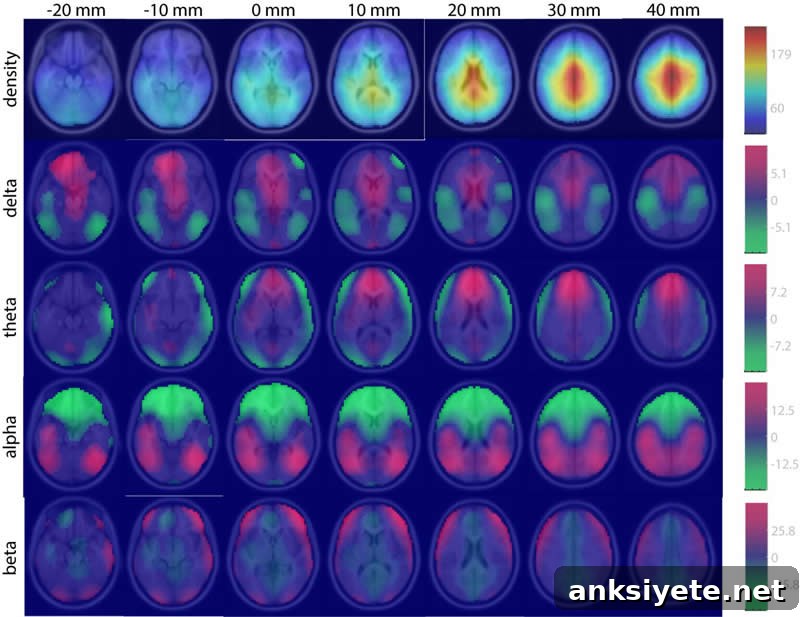
Analysis of the pooled data revealed consistent spatial and frequency patterns. For example, the team observed higher alpha-band amplitudes in posterior cortical regions compared with anterior regions and elevated beta activity in temporal areas. They also reported reliable differences in the aperiodic slope of EEG spectra across brain regions. When cognitive event annotations (via HED tags) were applied, representational similarity analyses showed that EEG responses tied to the same cognitive aspects were significantly more similar across recordings than responses tied to different aspects.
These findings demonstrate that EEG mega-analysis can identify neural signatures that generalize across experimental paradigms, headset configurations, and recording sites. Such generalized insights are essential for next-generation neurotechnologies that aim to monitor cognitive state, improve human-machine teaming, and enable adaptive autonomy in complex operational environments.
Much of the data used in this work were gathered over a decade through the U.S. Army’s Cognition and Neuroergonomics Collaborative Technology Alliance and have been deposited in an online data repository for use by the broader research community. The Army continues to leverage this dataset in projects that support human-autonomy integration for future combat systems.
Source:
U.S. Army Research Laboratory
Media Contacts:
Patti Riippa – U.S. Army Research Laboratory
Image Source:
Image credit: U.S. Army.
Original Research (open access)
“Automated EEG mega-analysis I: Spectral and amplitude characteristics across studies.” Jonathan Touryan et al. DOI: 10.1016/j.neuroimage.2019.116361
“Automated EEG mega-analysis II: Cognitive aspects of event related features.” Jonathan Touryan et al. DOI: 10.1016/j.neuroimage.2019.116054