
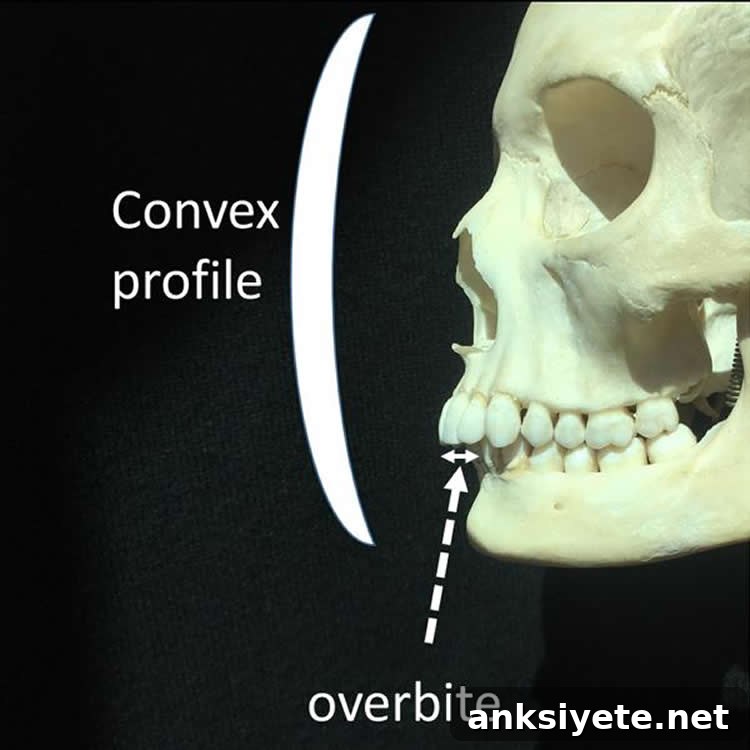
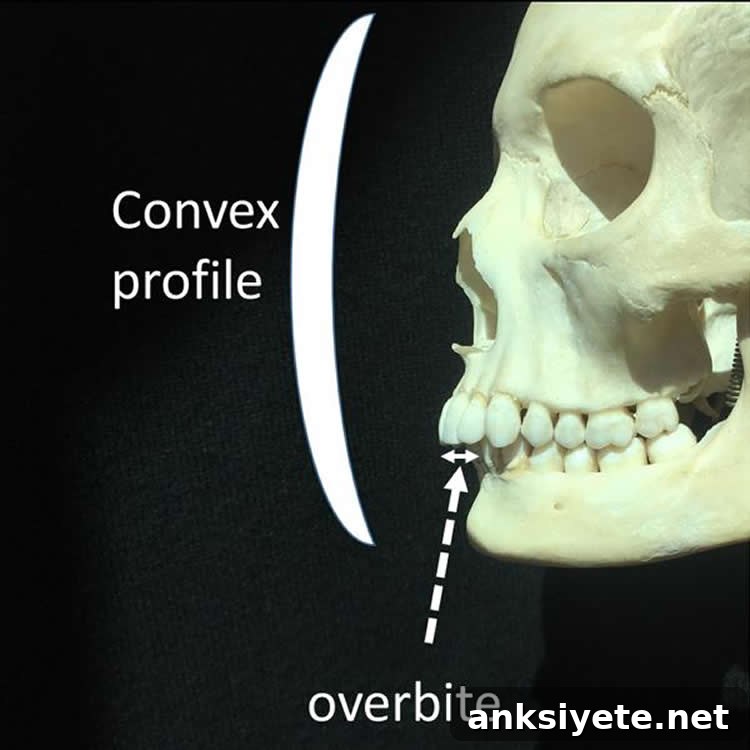
Summary: Researchers have identified a link between facial structure and handedness. Analysis of more than 13,500 people found that a lower face profile characterized by a slightly recessed lower jaw — commonly called an overbite or slender jaw — is associated with an increased likelihood of being left-handed. The study author suggests the same genetic factors that influence jaw shape may also relate to tuberculosis susceptibility and handedness.
Source: UW Medicine.
Characteristic also associated with overbite and tuberculosis, investigator notes
A new analysis of three national U.S. health surveys shows people with a slender lower face are about 25 percent more likely to be left-handed than those without that facial profile. The study examined data from 13,663 participants and used detailed records from 13,536 individuals who had complete information for the variables analyzed.
Slender lower faces — often recognized clinically as bilateral retrognathism, a condition where the lower jaw sits slightly back relative to the upper jaw — produce a convex facial profile and are commonly described as an overbite. This facial pattern affects roughly one in five U.S. adolescents in historic survey data and was assessed in the surveys by observing how the upper and lower teeth come together.
Philippe P. Hujoel, a professor at the University of Washington School of Dentistry and adjunct professor of epidemiology at the School of Public Health, is the author of the study. He explains that the finding suggests a potential genetic connection: some of the same inherited traits that shape lower face structure may also influence handedness. Hujoel notes that slender facial features were historically linked to susceptibility to tuberculosis (TB), and he hypothesizes these traits could share an underlying genetic basis.
The analysis used logistic regression to assess the relationship between lower face phenotype and handedness while adjusting for sex, ancestry, geography, and income. Results showed that bilateral retrognathism was associated with a 25% increase in the odds of being non-right-handed (odds ratio 1.250; 95% confidence interval 1.076–1.453; p < .004). These findings are reported in the peer-reviewed journal Laterality: Asymmetries of Body, Brain and Cognition.
Hujoel places the new results in a broader evolutionary and historical context. He highlights that clinicians have long noted a connection between a slender physique and TB susceptibility. Ancient medical observers first linked narrow facial features to TB risk nearly two millennia ago, and 20th-century research reinforced the clinical observation that a thin body type and associated facial features often accompanied higher TB vulnerability. Today, low body weight is still listed by public health authorities as a marker for increased TB risk.
Because TB has influenced human populations over centuries, Hujoel suggests the genetics influencing TB susceptibility may have left signatures in other traits, such as facial structure and possibly handedness. He points to geographic patterns that seem to align with this idea: regions historically described as TB hotspots have tended to show higher rates of left-handedness and more slender facial profiles, while populations noted for stronger facial features in historical accounts often showed higher right-hand dominance. Hujoel stresses that these observations are only hypotheses and that further research is needed to determine whether the associations reflect shared genetic causes or are coincidental.
Beyond the scientific implications, the author comments on cultural perceptions. In early 20th-century typologies, slender body types were labeled “ectomorphs,” a term that persists informally today. In a contemporary context — where obesity is common and right-handedness is the norm — people with slender builds may be perceived as different, and the slightly elevated likelihood of left-handedness is another trait that distinguishes this group.
Source: Brian Donohue — UW Medicine.
Image credit: Philippe Hujoel.
Original research: Philippe P. Hujoel, “Handedness and lower face variability: Findings in three national surveys,” Laterality: Asymmetries of Body, Brain and Cognition. Published online April 26, 2017. DOI: 10.1080/1357650X.2017.1317265.
Abstract
Lower face variability in modern humans has been linked to several phenotypic traits, including body type and handedness. This study reviewed lower face variability and handedness using three national health surveys in the United States, totaling 13,663 participants, with 13,536 participants providing complete data. Lower face variability was coded as one of six facial phenotypes and analyzed for its relationship to handedness through logistic regression models that adjusted for sex, ancestry, geography, and income. The primary finding was that bilateral retrognathism, a lower face phenotype characterized by a convex profile and slender jaws, was associated with a 25% increased odds of non-right-handedness (odds ratio 1.250; 95% CI: 1.076–1.453; p < .004). The author proposes that the association between convex facial profile and non-right-handedness may be rooted in genetic polymorphisms related to tuberculosis susceptibility, though additional research is necessary to clarify causation.