
Summary: New research from the University of Massachusetts Amherst reveals how the amygdala contributes to prepulse inhibition (PPI) of the acoustic startle reflex by activating inhibitory neurons in the mouse brain stem. These findings clarify a key sensorimotor gating circuit and may help guide development of therapies for schizophrenia, OCD, PTSD, and other conditions marked by impaired sensory filtering.
Source: UMass
The startle reflex is an instinctive, rapid response to sudden stimuli like loud noises. To prevent overload and filter out irrelevant inputs, the nervous system uses sensorimotor gating — an automatic, pre-attentive process that reduces responses to unexpected stimuli. When this mechanism falters, people can experience attention problems and cognitive deficits.
Sensorimotor gating is most commonly measured by prepulse inhibition (PPI): a weak stimulus presented before a startling stimulus reduces the magnitude of the subsequent startle. Deficits in PPI are a hallmark of schizophrenia and are also reported in other neurological and psychiatric disorders, including post-traumatic stress disorder (PTSD) and obsessive-compulsive disorder (OCD).
“Reduced sensorimotor gating is a hallmark of schizophrenia and often accompanies attention and other cognitive impairments,” says neurologist Karine Fénelon, assistant professor of biology at UMass Amherst. “Although reversing PPI deficits in rodents is widely used for antipsychotic drug screening, the exact neuronal circuits and cellular mechanisms that produce PPI have remained incompletely understood.”
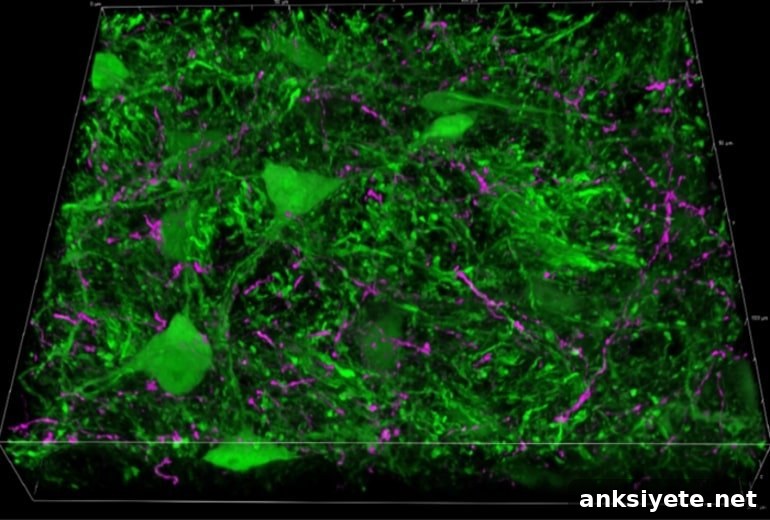
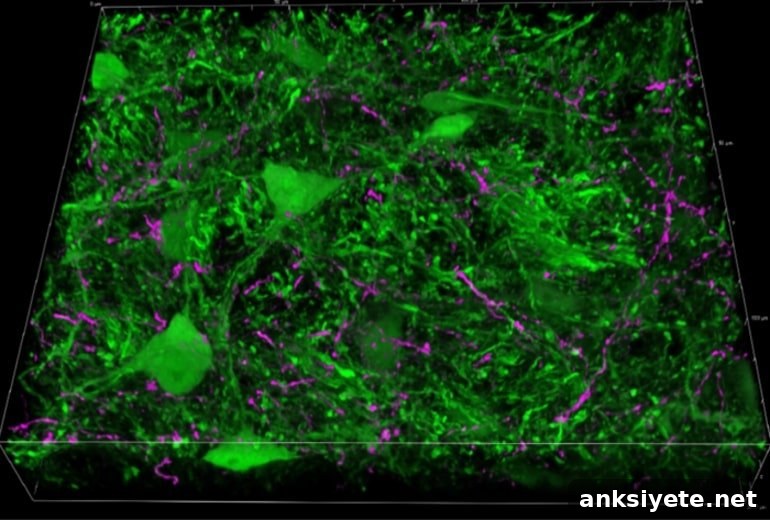
In new experiments, Fénelon and her team — including then-Ph.D. student Jose Cano (now a postdoctoral researcher at the University of Rochester Medical Center) and Ph.D. student Wanyun Huang — traced the pathway by which the amygdala, a brain region often linked with fear and emotional processing, modulates PPI. Their study, published in BMC Biology, shows that excitatory inputs from the central nucleus of the amygdala (CeA) activate small inhibitory glycinergic neurons in the caudal pontine reticular nucleus (PnC) of the brain stem, thereby contributing to startle inhibition.
Historically, scientists thought midbrain cholinergic neurons were the critical drivers of PPI because of links between schizophrenia and cholinergic dysfunction. Advances in optogenetics — a precision method that uses light to activate or inhibit genetically defined neurons — allowed Fénelon’s group to revisit that assumption and selectively probe specific amygdala-to-brain-stem circuits.
The researchers first used anatomical tracers and immunohistochemistry to map CeA projections to the PnC and found that those inputs target PnC neurons, including GlyT2-expressing glycinergic cells. They then used optogenetic manipulation in live mice to test the functional role of this connection. Silencing the excitatory synapses from the amygdala to the PnC, or silencing the PnC glycinergic neurons themselves, reduced PPI. Conversely, optogenetic activation of CeA inputs produced partial PPI. These manipulations produced reductions in PPI that resembled the deficits seen in people with schizophrenia and in animal models of the disease.
To confirm the synaptic mechanism, the team paired optogenetic stimulation with electrophysiological recordings from individual PnC neurons in thin brain slices (in vitro). These whole-cell recordings demonstrated directly that glutamatergic inputs from the CeA produce excitation of GlyT2-positive inhibitory neurons in the PnC. In other words, amygdala-derived excitation drives a feedforward inhibitory circuit in the brain stem that dampens the startle response when a prepulse is present.
Fénelon describes the discovery as “an important piece of the puzzle” in identifying the neural substrate of PPI. With this circuit mapped, her lab is now using the new information to search for other pathways that contribute to pre-attentive inhibition and to test strategies for reversing PPI deficits in mouse models of schizophrenia. Pinpointing precise circuit elements could guide the development of therapies that more effectively restore sensory gating without broad, non-specific effects.
About this neuroscience research news
Source: UMass
Contact: Patty Shillington – UMass
Image: The image is credited to UMass Amherst
Original Research: Open access. “The amygdala modulates prepulse inhibition of the auditory startle reflex through excitatory inputs to the caudal pontine reticular nucleus” by Karine Fénelon et al., BMC Biology
Abstract
The amygdala modulates prepulse inhibition of the auditory startle reflex through excitatory inputs to the caudal pontine reticular nucleus
Background
Sensorimotor gating is a foundational pre-attentive process in which a sensory cue can inhibit a motor response. It is commonly measured using prepulse inhibition (PPI) of the auditory startle reflex. PPI deficits appear in schizophrenia and other neuropsychiatric disorders and are often associated with attention and cognitive impairments. While reversing PPI deficits in animal models is a standard step in preclinical antipsychotic research, the precise neurotransmitters and synaptic pathways responsible for PPI have remained unclear under normal physiological conditions.
Recent studies have challenged the long-standing idea that cholinergic midbrain inputs to the PnC mediate PPI. Instead, glutamatergic excitation combined with glycinergic and GABAergic inhibition at the PnC is now implicated. Given that amygdalar dysfunction disrupts PPI and appears in several disorders with impaired sensory gating, this study tested whether direct projections from the amygdala to the PnC contribute to PPI.
Results
Using wild-type and GlyT2-eGFP transgenic mice, the authors employed tract-tracing, neuronal reconstructions, and immunohistochemistry to show that the central amygdala sends glutamatergic projections to the PnC that contact GlyT2-positive neurons. Optogenetic inhibition of CeA-to-PnC synapses decreased PPI in vivo, whereas optogenetic activation of these inputs produced partial PPI. In GlyT2-Cre mice, in vitro whole-cell recordings combined with optogenetic stimulation confirmed that CeA inputs activate GlyT2-positive PnC neurons. Photo-inhibition of GlyT2-positive neurons in vivo further implicated these inhibitory cells in the PPI pathway.
Conclusions
These results reveal a feedforward inhibitory mechanism in the brain stem startle circuit: glutamatergic inputs from the amygdala recruit GlyT2-positive PnC neurons to produce prepulse inhibition. The findings refine our understanding of the neural basis of PPI and offer insight relevant to neuropsychiatric and neurological disorders characterized by disrupted sensorimotor gating.