
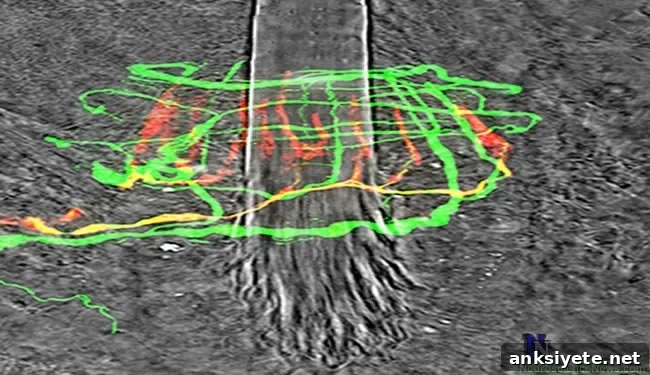
MDC researchers identify new function of a well-known gene
Researchers at the Max Delbrück Center for Molecular Medicine (MDC) in Berlin-Buch have discovered that the gene c-Maf, long recognized for its role in lens development, is also essential for the formation and function of mechanosensory neurons responsible for touch. This finding links a well-known transcription factor to peripheral sensory neuron development and to a specific loss of tactile sensitivity when the gene is disrupted.
The team, led by Professor Carmen Birchmeier and Dr. Hagen Wende in collaboration with Professor Gary Lewin and Dr. Stefan Lechner, used genetic approaches in mice to remove c-Maf selectively from sensory neurons. Mice lacking c-Maf in these neurons showed a marked reduction in specialized touch receptors called Pacinian corpuscles and were unable to detect high-frequency vibrations. Parallel studies of a human family carrying a c-Maf mutation revealed a similar sensory deficit: affected individuals develop early-onset cataracts and exhibit impaired touch sensation, with practical difficulties such as maintaining grip on thin objects like sheets of paper.
c-Maf was previously characterized primarily as a regulator of lens cell development. The new research expands its known functions by demonstrating a critical role in the peripheral nervous system. In mammals, the dorsal root ganglia—clusters of sensory neuron cell bodies located adjacent to the spinal cord—house the mechanosensory neurons that innervate the skin. These neurons extend long axons to form endings in the skin that detect mechanical stimuli. Those endings include specialized structures such as Pacinian corpuscles, which are tuned to sense rapid, high-frequency vibrations generated when fingers move over textured surfaces.
Mechanosensory neurons convert mechanical deformation into electrical signals that travel along axons to the central nervous system, where they are interpreted as touch, vibration, and pressure. The MDC team found that when c-Maf is absent in these neurons, the development and structural integrity of mechanosensory endings are compromised. In the genetically modified mice, only a few Pacinian corpuscles formed, and those few were structurally abnormal. Functionally, this translated into deficits in detecting vibratory cues that normally rely on intact Pacinian receptors.
Human data mirrored the mouse results. Members of the Swiss family carrying a mutant form of c-Maf experience early cataracts—consistent with the gene’s known role in the eye—and also show measurable impairments in touch perception. The clinical manifestations reported by the researchers include difficulty handling thin, flexible objects, suggesting a loss of fine tactile discrimination and the high-frequency vibration sense required for precise manual tasks.
Professor Birchmeier summarized the implications: c-Maf is an important transcription factor for peripheral sensory neuron development and for the formation of functional touch receptors. These results highlight how a single developmental regulator can influence distinct organ systems—the eye and the somatosensory system—and how mutations that affect developmental programs can produce combined clinical phenotypes such as early cataracts and tactile deficits.
The study provides insight into the molecular basis of touch sensation and identifies c-Maf as a key factor in establishing the mechanosensory circuitry that underlies vibration detection and other tactile modalities. Understanding the gene networks that drive sensory neuron differentiation may inform future research into congenital sensory disorders and guide attempts to restore or protect touch function in disease or injury.
Notes about this neuroscience research article
Contact: Barbara Bachtler – Max Delbrück Center for Molecular Medicine (MDC) Berlin-Buchin the Helmholtz Association
Source: Helmholtz Association of German Research Centres press release
Image Source: Neuroscience image adapted from press release image with credit to Hagen Wende/Copyright: MDC.
Original Research: Abstract for “The transcription factor c-Maf controls touch receptor development and function” by Hagen Wende, Stefan G. Lechner, Cyril Cheret, Steeve Bourane, Maria E. Kolanczyk, Alexandre Pattyn, Katja Reuter, Francis L. Munier, Patrick Carroll, Gary R. Lewin and Carmen Birchmeier in Science Express