
Stem cell–derived 3D neural constructs enable rapid, accurate screening for developmental neurotoxicity
Researchers at the Morgridge Institute for Research and the University of Wisconsin–Madison have developed a faster, lower-cost, and more biologically relevant screening approach to detect chemicals and drugs that may harm the developing human brain.
Published in the Sept. 21, 2015 issue of PNAS, the study presents a predictive platform that combines human pluripotent stem cell–derived neural tissues, chemically defined hydrogels, RNA sequencing, and machine learning to assess developmental neurotoxicity. By modeling multiple cell types and interactions found in the developing brain, this approach bridges the gap between simple cell cultures and animal testing while improving relevance to human physiology.
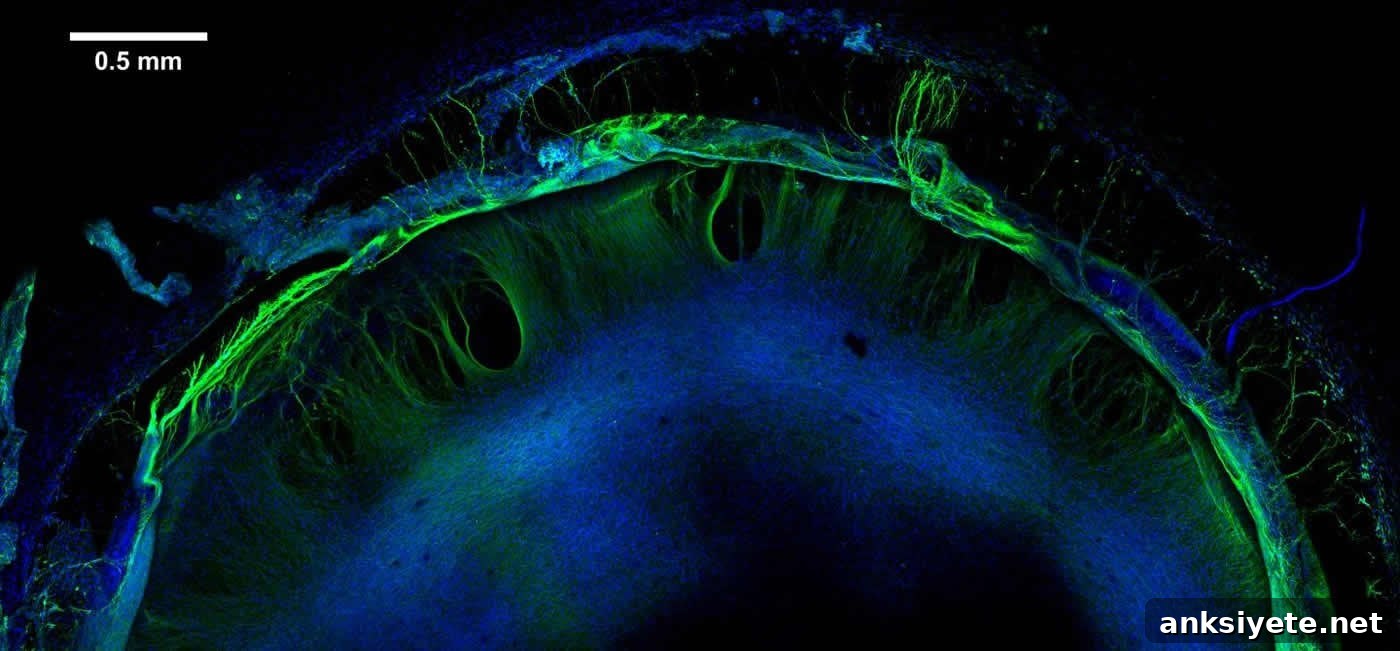
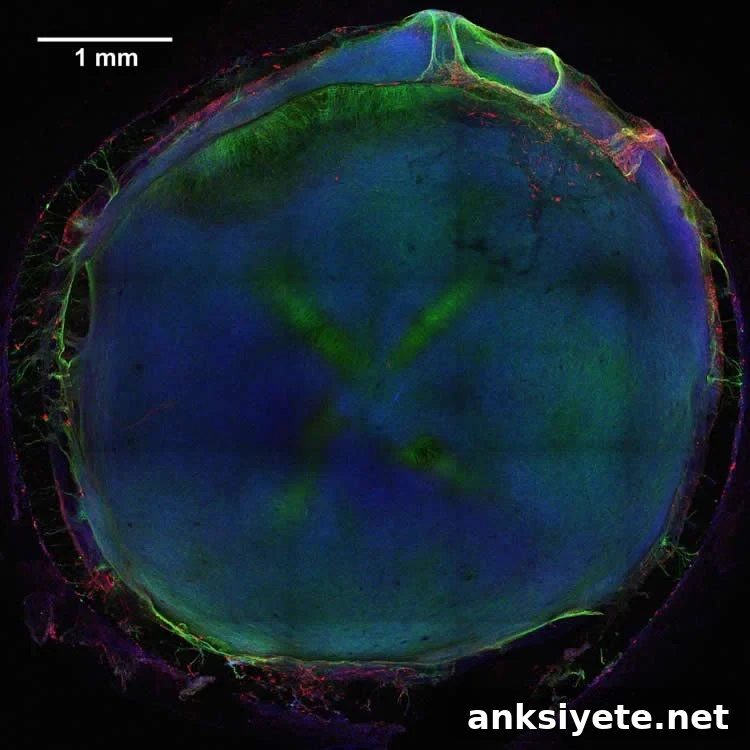
The team produced three-dimensional neural constructs by culturing human embryonic stem cell–derived neural progenitor cells together with vascular cells and microglial precursors on engineered polyethylene glycol hydrogels. These precursor cells self-assembled into organoid-like tissues with diverse neuronal and glial populations, interconnected vascular networks, and ramified microglia—capturing key aspects of early human brain development that single-layer cell cultures lack.
“We were surprised by how complex and organized the tissues became,” says Michael Schwartz, co-lead author and assistant scientist in biomedical engineering at UW–Madison. “The cells formed structures and interactions that resembled developing neural tissue, and that complexity improved the biological relevance of our toxicity readouts.”
To build a predictive toxicity model, the researchers exposed hundreds of replicate neural constructs to a set of 60 well-characterized chemicals—both known toxicants and non-toxic reference compounds—then measured global gene expression by RNA sequencing. Using those transcriptomic profiles as input, a linear support vector machine (SVM) was trained to distinguish toxic from non-toxic chemical effects.
After training on 240 neural constructs (duplicates at two time points), the SVM demonstrated strong predictive performance. A leave-one-out cross-validation estimated an accuracy of 0.91, and in a blinded trial the model correctly classified 9 of 10 previously unseen chemicals. This combination of reproducible 3D neural models, RNA-Seq fingerprints, and machine learning produced a rapid and scalable screening pipeline for developmental neurotoxicity.
Professor William L. Murphy led development of the synthetic hydrogels—minimal, peptide-presenting polyethylene glycol matrices that permit cells to attach, remodel the matrix, and self-organize. “The hydrogels provide a controlled environment that lets the cells do the work of forming tissues,” Murphy notes. That control was essential to achieve consistency across hundreds of samples, despite the cellular diversity present in each construct.
Biostatistics and medical informatics expertise contributed to robust model evaluation: Professor C. David Page and collaborators employed rigorous holdout-testing methods to reduce bias and validate the predictive performance of the classifier. The result is a high-throughput compatible system that retains human-specific features missing from animal studies and simple monolayer assays.
James A. Thomson, who leads the regenerative biology team at Morgridge and is a pioneer in stem cell research, emphasizes the broader implications: “Traditional toxicity testing often relies on multi-generational rodent studies that can cost around $1 million per chemical. With well over 100,000 commercial chemicals largely untested for developmental neurotoxicity, scalable human-relevant screens are urgently needed to prioritize candidates for more detailed study.”
Beyond classification, the RNA-Seq datasets generated by this platform offer mechanistic value. Changes in gene-expression patterns can reveal molecular pathways and cellular processes disrupted by exposures, helping researchers identify toxicological fingerprints and potential mechanisms underlying adverse neurodevelopmental outcomes.
About this neurology research
The study was a multidisciplinary collaboration including Michael P. Schwartz, Zhonggang Hou, Nicholas E. Propson, Jue Zhang, Collin J. Engstrom, Vitor Santos Costa, Peng Jiang, Bao Kim Nguyen, Jennifer M. Bolin, William Daly, Yu Wang, Ron Stewart, C. David Page, William L. Murphy, and James A. Thomson. Funding was provided by the National Institutes of Health through the Tissue Chip for Drug Screening program, with chemical lists contributed by the Environmental Protection Agency for model training and validation.
This stem cell–based platform—combining engineered hydrogels, multi-lineage neural constructs, transcriptomic profiling, and machine learning—represents a promising high-throughput strategy for predicting developmental neurotoxicity and prioritizing chemicals and drug candidates for further testing.
Abstract summary: Human pluripotent stem cell-derived neural constructs were assembled on chemically defined polyethylene glycol hydrogels to model the developing brain. These 3D tissues contained neurons, glia, vascular networks, and microglia and produced reproducible RNA-Seq signatures. A linear support vector machine trained on expression profiles from 34 toxic and 26 nontoxic chemicals achieved strong predictive performance in cross-validation and correctly classified 9 of 10 blinded test compounds.