
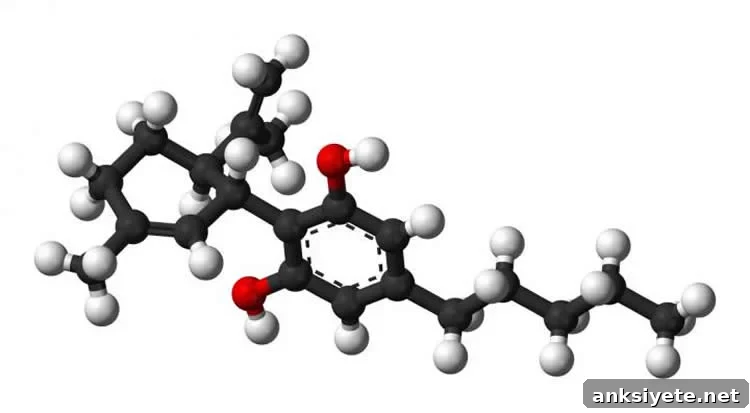
Summary: Researchers report that cannabidiol (CBD), a non-psychoactive component of cannabis, can reduce psychiatric risks associated with THC exposure in an animal model.
Source: Indiana University.
IU neuroscientists report that cannabidiol reduces THC-induced memory and behavioral deficits in adolescent mice
Neuroscientists at Indiana University published a study on Sept. 5 showing that cannabidiol (CBD), the non-intoxicating compound found in cannabis, appears to protect the brain from several long-term negative effects caused by Δ9-tetrahydrocannabinol (THC), the plant’s primary psychoactive ingredient.
Previous research has linked heavy, long-term cannabis use during adolescence to an elevated risk of psychiatric and neurological disorders later in life, including conditions that resemble features of schizophrenia. These risks are of growing concern because selective breeding over recent decades has produced cannabis strains with substantially higher THC concentrations, while levels of CBD have declined.
“This study confirms in an animal model that substantial THC exposure during adolescence can produce enduring behavioral changes,” said lead author Dr. Ken Mackie, professor in the IU College of Arts and Sciences’ Department of Psychological and Brain Sciences and director of the Linda and Jack Gill Center for Biomolecular Science at IU Bloomington. “It also suggests that cannabis strains containing more balanced amounts of THC and CBD may pose considerably less long-term risk because CBD can counteract THC’s harmful effects.”
THC is the compound responsible for cannabis’ intoxicating “high.” Because plant chemistry links THC and CBD production, strains with higher THC typically have reduced CBD content. Analysis of cannabis samples has shown large increases in THC over time and concurrent declines in CBD, increasing adolescent exposure to higher-potency THC.
Unlike THC, CBD does not produce intoxication. It has gained attention in medicine—for example, as an effective treatment for certain severe childhood epilepsies—and its medical use has been recognized in several jurisdictions.
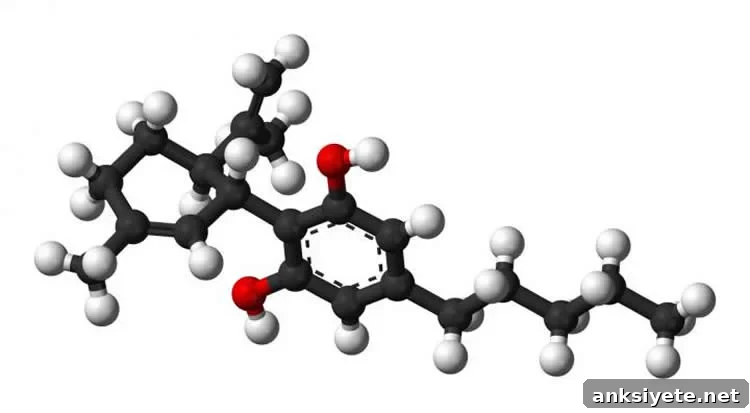
To examine behavioral outcomes, IU researchers assigned male mice—either in adolescence or early adulthood—to five groups. Three groups received daily injections of 3 mg/kg of either THC, CBD, or a combination of THC plus CBD for three weeks. Two control groups received either a placebo vehicle or no handling/injections. After treatment, researchers evaluated all mice for memory, repetitive or compulsive-like behaviors, and anxiety immediately and again six weeks after the end of drug exposure.
Mice treated with THC alone displayed impaired object recognition and increased repetitive/compulsive behaviors immediately after treatment. In adolescent mice these deficits persisted six weeks later, while adult mice recovered on memory and repetitive behavior measures; however, both adolescent and adult mice showed a delayed, longer-term increase in anxiety-like behavior.
In contrast, animals that received CBD alone showed no measurable behavioral changes either immediately or after the six-week abstinence period. Most notably, mice given CBD together with THC showed no short- or long-term behavioral impairments in any of the tests administered. These findings indicate that concurrent CBD administration prevented the cognitive, compulsive-like, and anxiety-related effects induced by chronic THC exposure in this mouse model.
The study’s first author is Michelle Murphy, a Ph.D. student in the IU Bloomington Program in Neuroscience and in the Department of Counseling and Educational Psychology at the IU School of Education. Coauthors include Heather Bradshaw (associate professor), research scientist Jim Wager-Miller, Ph.D. student Emma Leishman, and undergraduate researchers Joanna Winstone and Sierra Mills, all affiliated with IU Bloomington departments and research programs.
Funding: The research was supported by the National Institute on Drug Abuse (NIDA) at the National Institutes of Health.
Publication information: The full open-access research article is titled “Chronic Adolescent Δ9-Tetrahydrocannabinol Treatment of Male Mice Leads to Long-Term Cognitive and Behavioral Dysfunction, Which Are Prevented by Concurrent Cannabidiol Treatment,” authored by Murphy M., Mills S., Winstone J., Leishman E., Wager-Miller J., Bradshaw H., and Mackie K., and published in Cannabis and Cannabinoid Research (published online September 1, 2017). DOI: 10.1089/can.2017.0034.
Abstract (summary)
Introduction: Adolescent cannabis use is common, and growing access to high-potency THC raises concerns about developmental consequences and later psychiatric disease risk. Because high-THC cannabis often contains reduced cannabidiol, understanding THC–CBD interactions during neurodevelopment is essential. This study evaluated immediate and long-term behavioral effects of chronic THC, CBD, and combined THC+CBD exposure in male mice.
Methods: Male CD1 mice received daily injections of THC (3 mg/kg), CBD (3 mg/kg), the combination (3 mg/kg each), vehicle, or no treatment during adolescence (postnatal days 28–48) or early adulthood (postnatal days 69–89). Behavioral measures were taken one day after treatment and again 42 drug-free days later. Tests included open field, novel object recognition (NOR), marble burying, elevated plus maze (EPM), and nestlet shredding.
Results: Adolescent THC exposure produced immediate and persistent deficits in object recognition and increased compulsive-like behaviors; adult THC exposure caused immediate but not lasting memory impairment. THC exposure at either age produced a delayed increase in anxiety-like behavior. All THC-induced abnormalities were prevented when CBD was administered concurrently. CBD alone had no detectable behavioral effects.
Conclusion: Chronic THC exposure during adolescence can produce long-lasting behavioral changes that share features with psychiatric conditions such as schizophrenia. Concurrent CBD treatment prevented these THC-induced deficits in this mouse model, supporting the hypothesis that more balanced THC:CBD ratios could reduce long-term risks associated with adolescent cannabis use.