
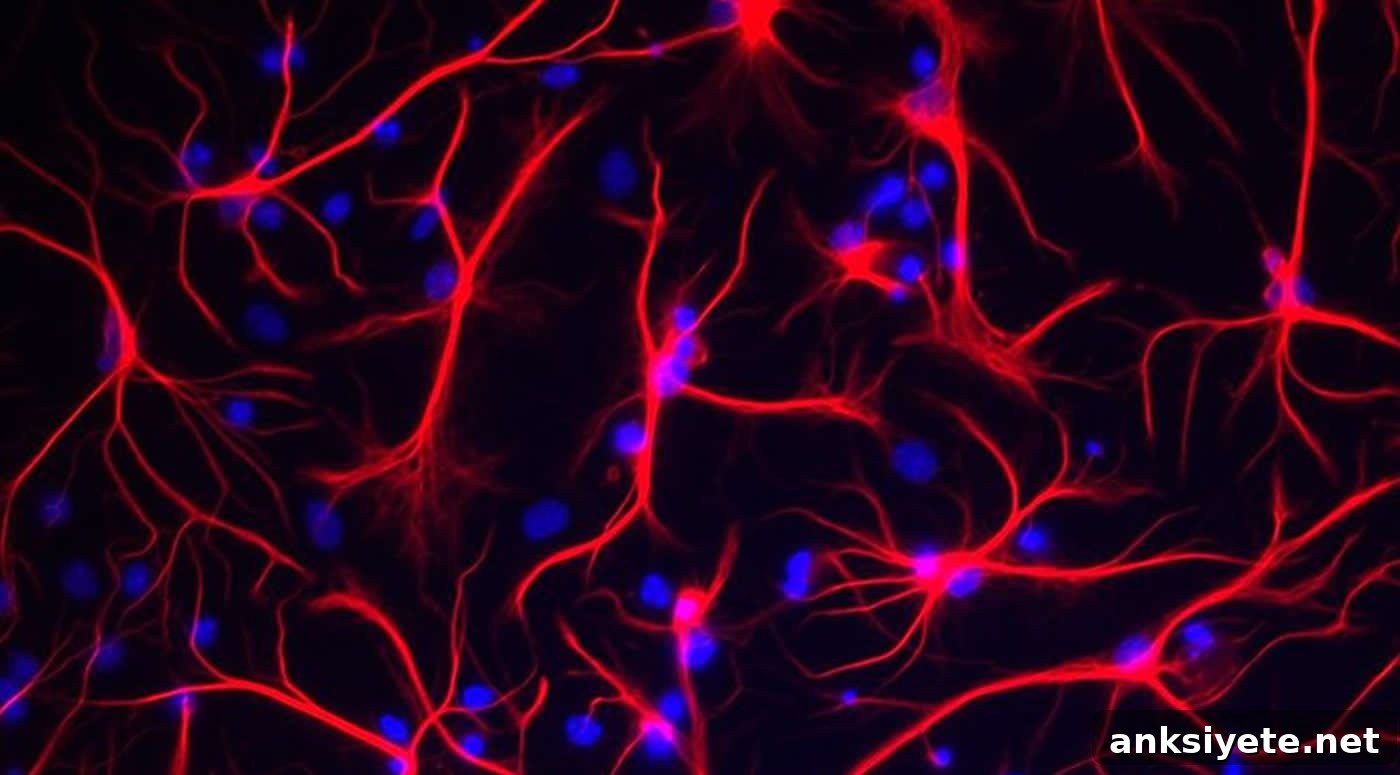
Summary: New research indicates that astrocytes can become toxic and may drive many neurodegenerative diseases.
Source: Stanford.
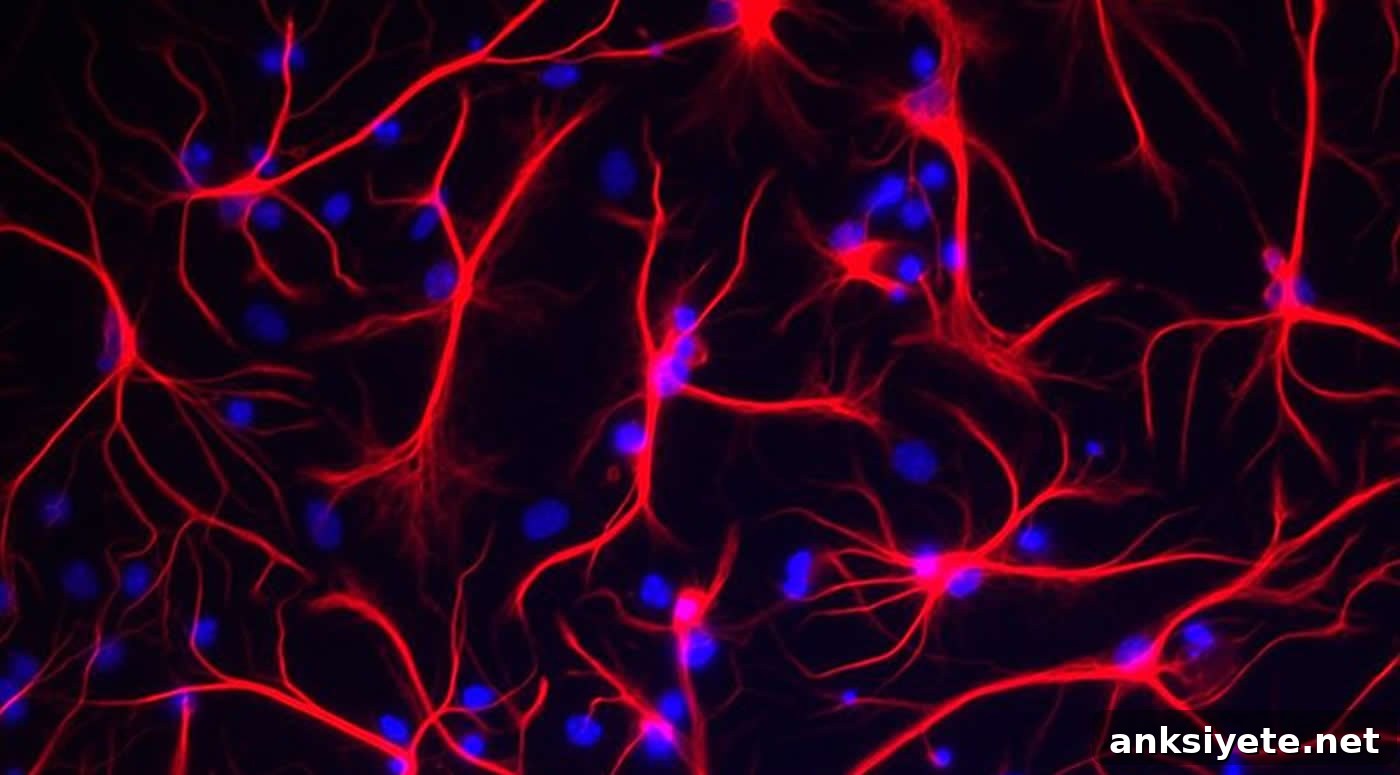
Astrocytes — brain cells roughly four times more abundant than neurons — perform many essential support functions in the central nervous system. Researchers at Stanford University School of Medicine now report that under certain conditions these cells can transform into a destructive form that kills neurons and likely contributes to a range of neurodegenerative diseases.
The study reporting these findings was published online January 18 in Nature.
“We’ve learned astrocytes aren’t always the good guys,” said the study’s senior author, Ben Barres, MD, PhD, professor of neurobiology, developmental biology and neurology. “An aberrant astrocyte type turns up in suspicious abundance at sites of injury and in brain tissue from patients with Alzheimer’s, Parkinson’s, multiple sclerosis and other disorders. That has important implications for therapy.”
Stanford postdoctoral scholar Shane Liddelow, PhD, is the study’s lead author. Barres, who has spent decades studying non-neuronal brain cells, described the results as the most important discovery his lab has made.
Until now, most drug development has focused on neurons. This work suggests an alternative strategy: preventing astrocytes’ conversion to a neurotoxic form, or neutralizing the neuron-killing factor those cells release, could protect neurons and slow or prevent neurodegeneration.
Role of astrocytes
Astrocytes were once thought to be passive structural elements. Today they are recognized as active, essential partners for neurons: supplying nutrients, regulating blood flow, maintaining the chemical environment around synapses, shaping synapse formation and pruning unused synapses to support efficient neural circuits. Following injury, stroke, infection or disease, astrocytes can shift from a resting state into “reactive” states with changed morphology and behavior. Whether reactive astrocytes help or harm the brain was unclear until recent work from Barres’ team.
In 2012, the group identified two reactive astrocyte subtypes, called A1 and A2. A2 astrocytes, associated with oxygen deprivation such as stroke, produce factors that support neuron survival and repair. A1 astrocytes, by contrast, arise following exposure to bacterial components such as LPS and are associated with inflammatory responses. The new study clarifies how A1 astrocytes are generated and what they do once formed.
Pro-inflammatory factors
The study shows that microglia — the immune cells of the brain — become activated by injury, inflammation or LPS exposure and release inflammatory signals that convert resting astrocytes into A1 astrocytes. In experiments with mice, the researchers identified three microglia-derived factors that together induce the A1 state: TNF-alpha, IL-1-alpha and C1q. Each factor alone produced a partial effect; combined, they were sufficient to drive astrocytes into a fully neurotoxic A1 phenotype.
A1 astrocytes lose the supportive functions of resting astrocytes. They fail to promote normal synapse formation and maintenance, and they are unable to perform normal synaptic pruning. Instead, A1 astrocytes secrete a potent toxin that kills neurons and damages other glial cells.
In cultured experiments, retinal ganglion cells (RGCs) — neurons that transmit visual information from the eye to the brain — developed far fewer functional synapses when grown with A1 astrocytes than with resting astrocytes. Media conditioned by A1 astrocytes was directly toxic: increasing concentrations of A1-conditioned broth killed nearly all healthy RGCs. The A1 toxic effect extended to other neuron types, including spinal motor neurons implicated in amyotrophic lateral sclerosis and dopaminergic neurons implicated in Parkinson’s disease. A1-conditioned media also impaired oligodendrocyte development; these cells form the myelin insulation around nerve fibers and are attacked in multiple sclerosis.
Staving off A1 formation
To test whether blocking A1 formation could prevent neuronal death, the investigators severed optic nerves in rodents — a manipulation that normally leads to rapid death of retinal ganglion cells. After axotomy, reactive A1 astrocytes emerged quickly near the injury. However, neutralizing the three microglial signals (TNF-alpha, IL-1-alpha and C1q) with targeted antibodies prevented A1 induction and protected injured neurons from degeneration. These experiments indicate that microglia-driven A1 formation is a major cause of neuron death after axonal injury.
Analysis of human postmortem brain tissue from people with Alzheimer’s, Parkinson’s, Huntington’s disease, amyotrophic lateral sclerosis and multiple sclerosis showed abundant A1 astrocytes concentrated where disease pathology is most active. For example, nearly 60 percent of astrocytes in the affected prefrontal cortex of Alzheimer’s samples were A1 type. Because A1s are toxic to both neurons and oligodendrocytes, their presence in diseased tissue strongly implicates them in driving neurodegeneration across multiple disorders.
Ongoing work aims to identify the specific neurotoxin secreted by A1 astrocytes. Barres and colleagues are optimistic: blocking A1 formation or counteracting the secreted toxin could make acute injuries and chronic neurodegenerative conditions more treatable than previously thought.
Key contributors from Stanford include Shane Liddelow, Kevin Guttenplan, Laura Clarke, Todd Peterson, Brooke Napier, Christopher Bohlen, Frederick Bennett, Mariko Bennett, Alexandra Münch, Won-Suk Chung and Marion Buckwalter, alongside senior author Ben A. Barres. Additional collaborators came from the University of California–San Francisco, the Technical University of Munich, Boston Children’s Hospital, Johns Hopkins University and Harvard University.
Funding: The research was supported by the National Institutes of Health (grants R01AG048814 and R01DA015043), the Christopher and Dana Reeve Foundation, the Novartis Institute for Biomedical Research, the Dr. Miriam and Sheldon G. Adelson Medical Research Foundation, the JPB Foundation, the Cure Alzheimer’s Fund, the Glenn Foundation and Vincent and Stella Coates. Stanford’s Department of Neurobiology also provided support.
Barres is a co-founder of Annexon Biosciences, which has developed and sought patent protection for an inhibitory antibody to C1q. Drugs that block TNF-alpha and IL-1-alpha are already available, highlighting potential near-term therapeutic strategies.
Neurotoxic reactive astrocytes are induced by activated microglia. Reactive astrocytes are strongly induced by CNS injury and disease, but their role has been unclear. This study shows that a reactive subtype, A1, is induced by classically activated neuroinflammatory microglia through secretion of IL-1α, TNF and C1q. These cytokines together are necessary and sufficient to induce A1 astrocytes. A1 astrocytes lose the ability to support neuronal survival, outgrowth, synaptogenesis and phagocytosis, and instead induce death of neurons and oligodendrocytes. Blocking A1 formation prevents death of axotomized CNS neurons in vivo. A1 astrocytes are abundant in human neurodegenerative diseases, suggesting they contribute to neuronal and oligodendrocyte loss and represent a promising target for new treatments.
Original study: “Neurotoxic reactive astrocytes are induced by activated microglia” by Shane A. Liddelow, Kevin A. Guttenplan, Laura E. Clarke, Frederick C. Bennett, Christopher J. Bohlen and colleagues, published in Nature, January 18, 2017.