
Summary: A new study reports that disrupting the brain’s master circadian clock in mice produces depression- and anxiety-like behaviors.
Source: Elsevier.
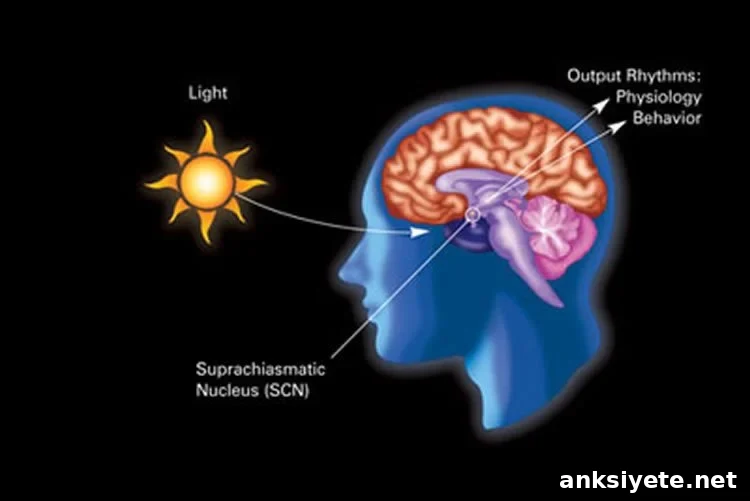
Disrupting the daily rhythm of the brain’s master clock produces depression- and anxiety-like behaviors in mice, according to a new study published in Biological Psychiatry. The research links the suprachiasmatic nucleus (SCN) and its molecular clockwork to mood regulation and offers a clearer view of how circadian disruption may contribute to mood disorders such as major depressive disorder and bipolar disorder.
“Our data show that perturbing circadian rhythms in otherwise undisturbed animals is enough to elicit behaviors resembling human depression,” said first author Dr. Dominic Landgraf of the University of California, San Diego.
Circadian clocks coordinate daily cycles of sleep, wakefulness, feeding and many physiological processes. When those internal rhythms are disrupted, physical and mental health can suffer. Until now, it was unclear whether circadian disturbance is a cause or a consequence of mood disorders. The new study, led by David K. Welsh, establishes a causal role for SCN circadian function in mood-related behavior by selectively reducing clock gene activity in the brain’s central pacemaker.
The researchers created a targeted genetic mouse model by reducing expression of Bmal1, a core clock gene, specifically within the SCN. This approach weakened the SCN’s rhythmic output by roughly 80% while leaving neighboring brain areas, neuronal connections and light input pathways intact. Targeting the SCN in this precise way allowed the team to isolate the effect of the central clock without confounding influences from global gene mutations, lesions, or direct light manipulations.
Behavioral testing revealed that mice with attenuated SCN rhythms displayed several changes consistent with depressive and anxious states. In learned helplessness paradigms, these mice were slower to escape an aversive situation, indicating reduced motivation and increased behavioral despair. In the tail suspension test they spent more time immobile, another common measure of behavioral despair in rodents. The mice also avoided brightly lit areas in a light/dark box, a behavior interpreted as increased anxiety-like avoidance of open or illuminated spaces.
Physiology was affected as well: SCN-Bmal1 knockdown mice gained more weight than control animals despite consuming similar amounts of food, suggesting altered energy balance or metabolic regulation tied to central clock disruption. The mice also showed an abnormal daily pattern of corticosterone and a blunted corticosterone response to stress, indicating that disruption of SCN rhythms can perturb the stress hormone system that is often dysregulated in mood disorders.
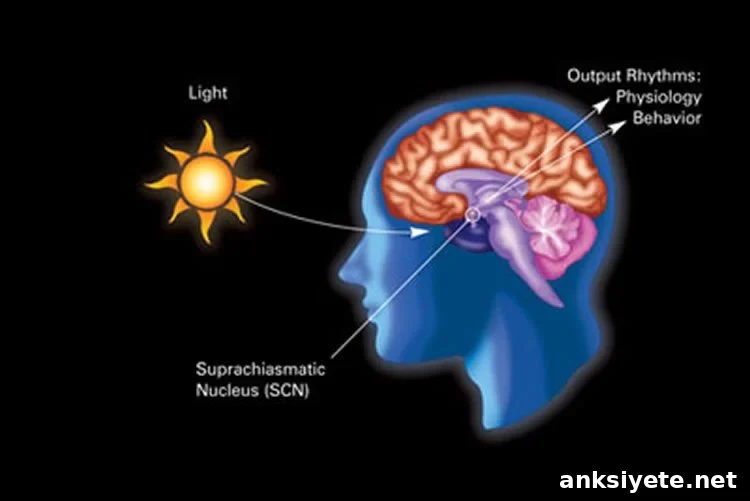
Importantly, the results show that even though the SCN does not directly control mood, weakening its circadian signals is sufficient to trigger behaviors that model helplessness, behavioral despair and anxiety in mice. This establishes the SCN-Bmal1 knockdown mouse as a new preclinical model for studying how central-clock disruption contributes to depressive states.
“We have long known that circadian rhythm disruptions may contribute to depression, particularly in people at risk for major depression or bipolar disorder,” commented Dr. John Krystal, Editor of Biological Psychiatry. “This study provides further evidence implicating the Bmal1 gene and SCN rhythms in the link between circadian timing and mood.”
According to the authors, these findings are an important step toward development of treatments that target the circadian system directly, with the aim of correcting clock dysfunction to improve mood and metabolic health in patients with mood disorders.
Source: Rhiannon Bugno – Elsevier
Image Source: NeuroscienceNews.com image is in the public domain.
Original Research: Abstract for “Genetic Disruption of Circadian Rhythms in the Suprachiasmatic Nucleus Causes Helplessness, Behavioral Despair, and Anxiety-like Behavior in Mice” by Dominic Landgraf, Jaimie E. Long, Christophe D. Proulx, Rita Barandas, Roberto Malinow, and David K. Welsh in Biological Psychiatry. Published online November 12, 2016. doi:10.1016/j.biopsych.2016.03.1050
Genetic Disruption of Circadian Rhythms in the Suprachiasmatic Nucleus Causes Helplessness, Behavioral Despair, and Anxiety-like Behavior in Mice
Background
Major depressive disorder and other mood conditions are frequently accompanied by disturbed circadian rhythms. Prior animal studies relied on whole-animal clock gene mutations, light/dark schedule manipulations, or brain lesions, each of which can introduce non-circadian effects or damage neural circuits. A definitive demonstration that SCN circadian function itself can drive mood-related changes has been lacking.
Methods
The team used stereotaxic delivery of viral vectors encoding short hairpin RNA to specifically knock down expression of the essential clock gene Bmal1 within the SCN, preserving SCN neurons, connections and light input while substantially reducing the SCN’s rhythmic output.
Results
SCN-specific Bmal1 knockdown mice showed markedly attenuated SCN rhythms while housed on a normal light/dark schedule. Behaviorally, these mice exhibited slower escape behavior in learned helplessness tests, increased immobility in the tail suspension test, and greater avoidance of illuminated areas in a light/dark box. The animals also displayed increased weight gain, altered daily corticosterone patterns, and a reduced corticosterone response to stress.
Conclusions
Targeted disruption of SCN circadian rhythms is sufficient to produce helplessness, behavioral despair and anxiety-like behavior in mice, supporting a causal role for central-clock dysfunction in mood-related pathophysiology and establishing a new animal model for depression research.
Landgraf D., Long J. E., Proulx C. D., Barandas R., Malinow R., Welsh D. K. Genetic Disruption of Circadian Rhythms in the Suprachiasmatic Nucleus Causes Helplessness, Behavioral Despair, and Anxiety-like Behavior in Mice. Biological Psychiatry. Published online November 12, 2016. doi:10.1016/j.biopsych.2016.03.1050