
Summary: A new study describes how odors encountered across a lifetime are encoded and reconstructed in memory. The discovery clarifies how sensory-rich episodic memories form and suggests new approaches for smell-based tests in Alzheimer’s disease detection.
Source: University of Toronto
Researchers at the University of Toronto have uncovered a neural mechanism that allows the brain to recreate vivid sensory experiences—showing how smells are represented and recalled as part of episodic memory.
Using smell as a model system, the study reveals how spatial and temporal context combine with sensory information to form lasting odour memories. The findings shed light on how the brain stores sensory-rich memories and may explain why loss of smell is an early and prominent symptom in Alzheimer’s disease.
“Our findings explain how smells we’ve encountered throughout life are recreated in memory,” said Afif Aqrabawi, a PhD candidate in the Department of Cell & Systems Biology and the lead author of the study published in Nature Communications. “Put simply, this is how you can remember the scent of your grandmother’s apple pie when you walk into her kitchen.”
Olfaction and memory share a close evolutionary relationship, and the study focused on the anterior olfactory nucleus (AON), a brain region essential to smell but still not well understood. Working with mice, Aqrabawi and his supervisor, Professor Jun Chul Kim from the Department of Psychology, examined how information about where and when an odor was encountered integrates with the odor’s identity within the AON.
They demonstrate that what-when-where elements combine in the AON to form an episodic odour memory. For example, the identity of a scent (the what) becomes bound to the circumstances of its encounter (the when and where)—explaining how a single smell can instantly reawaken a specific memory or moment.
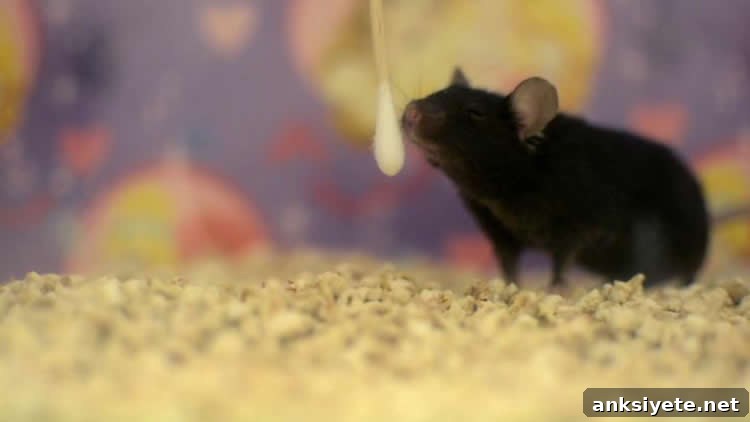
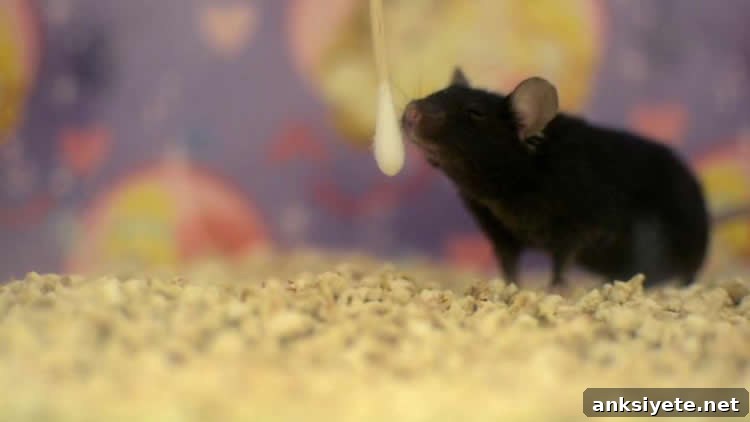
To probe AON function, the researchers utilized mice’s natural preference for novel odors: mice typically spend more time investigating unfamiliar smells than familiar ones. If a mouse no longer shows this preference, it implies the animal does not remember having smelled that odor before.
By mapping and manipulating neural pathways, the team discovered a previously unknown projection from the hippocampus—a structure crucial for contextual and episodic memory—to the AON. When communication between the hippocampus and AON was disrupted, mice behaved as if familiar odors were novel, repeatedly returning to sniff previously encountered scents. This mimicked the odor-recognition deficits commonly reported in early Alzheimer’s disease.
In contrast, mice with intact hippocampus-AON connections refrained from spending extra time investigating odors they had already experienced. Selectively impairing specific hippocampal inputs to the AON also showed that spatial and temporal aspects of odour memory can be independently disrupted, indicating a topographic organization of spatiotemporal information within these pathways.
“We now know which brain circuits govern episodic odour memory,” said Aqrabawi. “This circuit provides a model for studying how human episodic memory is constructed and why odour memory is often affected in neurodegenerative illnesses.”
Clinical and epidemiological research has long reported that olfactory dysfunction—particularly deficits in recognizing or recalling odors—often appears early in Alzheimer’s disease and correlates with disease progression. The AON is consistently identified among the first brain regions to exhibit degenerative changes in Alzheimer’s, including the accumulation of neurofibrillary tangles.
Because the AON degenerates early in Alzheimer’s disease, the authors propose that patients’ smell problems may stem from impaired recall of the context—when and where—an odor was encountered, rather than a pure inability to detect or identify odors. If true, diagnostic tests that evaluate the integrity of hippocampus-AON circuits by probing contextual odour memory could be more sensitive than tests that simply ask patients to name or recognize a scent.
“Tests designed to assess whether patients can recall the spatial and temporal context of odors might detect early dysfunction more reliably,” said Kim. “Such assessments would be quick, inexpensive, and easy to administer, and they could complement existing cognitive screening tools.”
About this research
Funding: The research was supported by the Canadian Institutes of Health Research and the Natural Sciences and Engineering Research Council of Canada.
Source: University of Toronto. Publisher: Organized by NeuroscienceNews.com. Image credit: Afif Aqrabawi.
Original research: Aqrabawi, A. J., & Kim, J. C. (2018). Hippocampal projections to the anterior olfactory nucleus differentially convey spatiotemporal information during episodic odour memory. Nature Communications. doi: 10.1038/s41467-018-05131-6
Abstract
Hippocampal projections to the anterior olfactory nucleus differentially convey spatiotemporal information during episodic odour memory
The hippocampus is essential for representing spatiotemporal context and associating that context with the sensory details of daily experience to form episodic memories. The olfactory cortex has direct anatomical connections with the hippocampus. In this study, hippocampal projections to the anterior olfactory nucleus (AON) were selectively inhibited during behavioural tests of contextually cued odour recall. The authors found that spatial odour memory and temporal odour memory were independently impaired when distinct, topographically organized hippocampal-AON pathways were inhibited. These results reveal a previously unknown function of the AON and offer mechanistic insight into how odours are represented in episodic memory.
Feel free to share this article.