
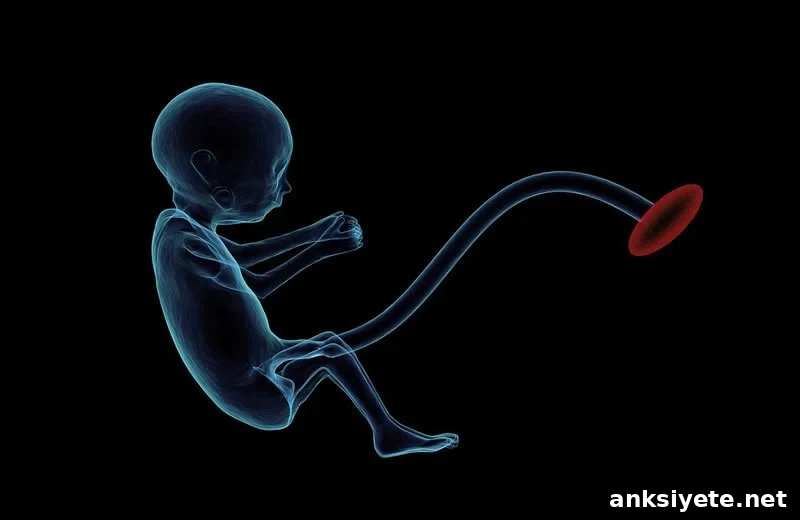
Summary: Exposure to alcohol very early in pregnancy can impede development of fetal brain regions involved in motor control. These changes are detectable before birth using in‑utero MRI techniques.
Source: Oregon Health and Sciences University
New in‑utero MRI images reveal the earliest detectable impairments to fetal brain development caused by maternal alcohol intake in a rhesus macaque model, according to a study led by scientists at Oregon Health & Science University.
Using high‑resolution magnetic resonance imaging, researchers observed altered brain growth during the third trimester, despite alcohol exposure taking place only during the first trimester. The findings, published in the Proceedings of the National Academy of Sciences, underscore the risk posed by binge drinking very early in pregnancy—often before a woman knows she is pregnant—and point to the potential of prenatal MRI to identify fetal‑alcohol effects prior to birth.
“The earlier the detection, the better,” said senior author Chris Kroenke, Ph.D., associate professor in the Division of Neuroscience at the Oregon National Primate Research Center at OHSU. “If we can predict which brain systems are at risk, targeted therapies can begin soon after birth, when the infant brain is most plastic.”
The study takes advantage of recent improvements in fetal MRI methods that reduce motion artifacts and produce higher resolution anatomical and diffusion images of the developing brain. These technical advances made it possible to assess how binge‑level alcohol exposure early in gestation alters structural and functional measures of brain development.
“We designed the experiment to test whether a common clinical MRI approach could detect the consequences of binge‑level drinking—roughly the human equivalent of four to six drinks in a single episode—during the period before many women realize they are pregnant,” explained co‑author Kathleen Grant, Ph.D., professor and chief of the Division of Neuroscience at the primate center.
In the controlled primate experiment, researchers followed 28 pregnant rhesus macaques and performed MRI scans at three gestational ages. In a protocol not possible in human subjects, half of the animals consumed an amount of ethanol equivalent to about six human drinks per day beginning before conception and continuing through the first 60 days of a 168‑day pregnancy; the remaining animals served as unexposed controls.
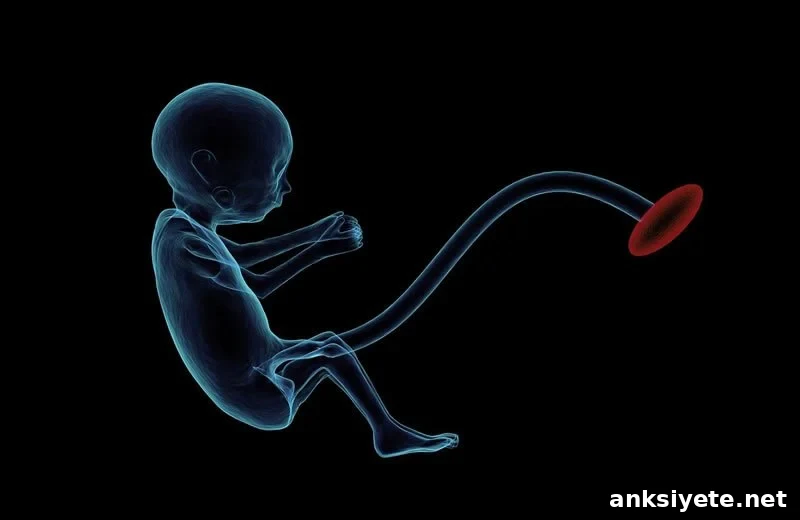
Serial imaging showed no measurable differences in the second trimester scans, but by gestational day 135 (of a 168‑day term), significant differences emerged. Fetuses exposed to early‑gestation alcohol had smaller brainstem and cerebellar volumes compared with controls. Diffusion MRI also revealed reduced anisotropy in several white matter tracts, indicating altered microstructural organization.
To determine whether these structural differences had functional consequences, investigators performed electrophysiological recordings on fetal brain tissue immediately following MRI. Those recordings linked microstructural changes to altered neuronal signaling: spontaneous excitatory postsynaptic current amplitudes in neurons from the primary somatosensory cortex and putamen strongly correlated with diffusion anisotropy in the tracts connecting these regions. The results suggest that early alcohol exposure disrupts development of brain systems involved in motor control and sensory processing.
Aside from demonstrating that fetal MRI can reveal alcohol‑related changes before birth, the study produced high‑quality brain atlases and imaging datasets that the authors expect will serve as useful benchmarks for other researchers investigating prenatal brain development and fetal alcohol spectrum disorder (FASD).
“We have made the brain atlases described in our paper available so other scientists can compare and build on this work,” Kroenke said.
Funding: This research was supported by the National Institutes of Health under grants R01AA021981, P51OD011092, R011NS055064, and R01AA024757. The project was reviewed and approved by the OHSU Institutional Animal Care and Use Committee.
About this research
Source:
Oregon Health and Sciences University
Media contact:
Erik Robinson – Oregon Health and Sciences University
Image source:
The image used in this report is in the public domain.
Original research: “In utero MRI identifies consequences of early‑gestation alcohol drinking on fetal brain development in rhesus macaques,” by Chris Kroenke et al., published in PNAS. DOI: 10.1073/pnas.1919048117
Abstract (summary)
Fetal alcohol spectrum disorder (FASD) is often driven by binge‑like alcohol consumption before pregnancy is recognized. Early detection improves treatment outcomes. Advances in motion‑corrected three‑dimensional fetal MRI have enhanced anatomical and diffusion imaging of the developing brain. Using a rhesus macaque model in which females self‑administered ethanol at 1.5 g/kg per day beginning before pregnancy and continuing for the first 60 days of a 168‑day gestation, researchers tested whether fetal MRI could detect alcohol‑induced brain abnormalities. Differences between ethanol‑exposed and control fetuses were evident at gestation day 135 but not at earlier time points. At day 135, ethanol‑exposed fetuses exhibited reduced brainstem and cerebellum volumes and decreased diffusion anisotropy in multiple white matter tracts. Ex vivo electrophysiology on fetal brain tissue obtained after MRI showed that these structural abnormalities corresponded with altered neuronal function, specifically linking synaptic current amplitudes in somatosensory cortex and putamen to white matter diffusion measures. The findings indicate that early gestational alcohol exposure disrupts development of circuits related to motor control in ways that are detectable with prenatal MRI.