
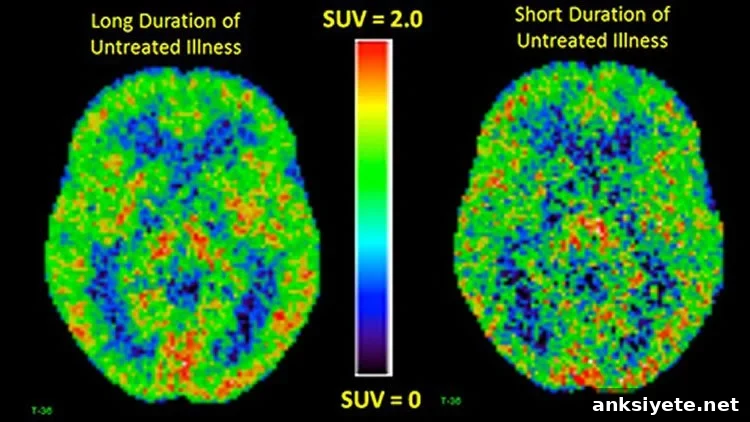
Summary: New brain imaging research indicates that people who experience persistent depression for ten years or more show higher levels of neuroinflammation.
Source: CAMH.
New imaging study from the Centre for Addiction and Mental Health (CAMH) finds that long-standing depression is associated with measurable changes in the brain, highlighting the need to rethink treatment as the illness progresses.
Led by senior author Dr. Jeff Meyer of CAMH’s Campbell Family Mental Health Research Institute, the study was published in The Lancet Psychiatry and provides biological evidence that depression lasting many years is linked to increased brain inflammation.
The research compared people with untreated major depressive disorder (MDD) for more than ten years to those with untreated illness for less than ten years, and to healthy controls. The team measured neuroinflammation by imaging a protein called the translocator protein (TSPO), which increases when the brain’s immune cells (microglia) are activated. Higher TSPO levels indicate greater neuroinflammatory activity.
Key findings showed that people with untreated depression for a decade or longer had TSPO levels about 29–33% higher in primary grey-matter regions—prefrontal cortex, anterior cingulate cortex, and insula—compared with participants who had been untreated for nine years or less. Compared with healthy controls, the long-duration group had 31–39% higher TSPO in the same regions. Overall, TSPO levels were roughly 30% higher across several brain regions in the long-duration group.
These increases in microglial activation mirror patterns seen in progressive neurodegenerative conditions such as Alzheimer’s and Parkinson’s diseases, although depression is not classified as a degenerative disorder. According to Dr. Meyer, the results suggest that, for some people, major depressive disorder may become a different, more advanced phase of illness that requires distinct therapeutic strategies.
Currently, standard clinical approaches treat major depressive disorder in a similar way regardless of how long a person has been ill. The study highlights that patients with persistent, longstanding depression—who often face worsening symptoms and greater functional impairment—may benefit from treatments tailored to this later stage. One promising direction is evaluating medications that target inflammation, including repurposing anti-inflammatory drugs used for other conditions.
The study used 18F-FEPPA PET imaging to quantify TSPO total distribution volume (VT), a validated marker of microglial activation. Researchers scanned three primary grey-matter regions and multiple additional areas. The sample included 51 participants with a current major depressive episode (one excluded for unreliable medication history), 30 healthy controls, and focused comparisons between subgroups defined by duration of untreated illness.
Dr. Meyer also notes that many clinical trials exclude people with severe, chronic depression, leaving a gap in evidence for how to treat long-standing illness. The present findings underscore the urgency of including this population in research and testing interventions that address neuroinflammation.
The joint first authors were post-doctoral fellow Dr. Elaine Setiawan and graduate student Sophia Attwells.
Funding: Canadian Institutes of Health Research (CIHR), Brain and Behavior Foundation, and the Neuroscience Catalyst Fund.
Source: Sean O’Malley – CAMH
Publisher: Organized by NeuroscienceNews.com.
Image Source: Image adapted from the CAMH news release.
Original Research: Abstract published in Lancet Psychiatry.
doi: 10.1016/S2215-0366(18)30048-8
Abstract
Association of translocator protein total distribution volume with duration of untreated major depressive disorder: a cross-sectional study
Background: Major depressive disorder can become more persistent over time, but evidence for progressive brain changes with longer illness duration (neuroprogression) has been limited. Microglial activation contributes to neuroinflammation and may underlie neuroprogression. This study examined the relationship between TSPO total distribution volume (VT)—a PET marker of microglial activation—and duration of untreated MDD, as well as total illness duration and antidepressant exposure.
Methods: In a cross-sectional sample of adults aged 18–75 recruited in Toronto, participants were assessed clinically to confirm current major depressive episodes or healthy status. Eligible participants with MDD met a minimum severity threshold on the Hamilton Depression Rating Scale and were medication-free or on a stable dose for at least four weeks prior to PET scanning. Exclusion criteria included smoking, recent substance dependence, neurological or autoimmune disorders, severe medical illness, recent brain stimulation treatments, or recent prolonged anti-inflammatory drug use. PET measured TSPO VT in prefrontal cortex, anterior cingulate cortex, insula, and additional regions. The primary predictors examined were duration of untreated MDD and the combined effect of total illness duration and duration of antidepressant treatment.
Findings: Of 134 screened participants, 81 were included (51 with current major depressive episode, 30 healthy controls). Duration of untreated MDD strongly predicted TSPO VT (p < 0.0001); total illness duration (p = 0.0021) and duration of antidepressant exposure (p = 0.037) were also significant. These factors together explained roughly half the variance in TSPO VT in the primary regions. Participants with untreated MDD for ten years or more showed 29–33% higher TSPO VT in primary regions versus those untreated for nine years or less, and 31–39% higher TSPO VT versus healthy participants.
Interpretation: The study found greater microglial activation in patients with chronically untreated MDD, suggesting a distinct illness phase characterized by increased neuroinflammation. Notably, the annual increase in microglial activation was not evident when antidepressant treatment was administered, indicating potential treatment effects on neuroinflammation.
Funding: Canadian Institutes of Health Research and Neuroscience Catalyst Fund.